
Does the master’s advice hold up in this century and for our genre?
Ernest Hemingway’s The Sun Also Rises was the first novel I couldn’t put down. I was in high school. I stealthily turned pages during class and continued reading as I walked through the halls between classes, bumping into anything in my way. I’d already enjoyed reading A Farewell to Arms, so I decided, in the habit teens have of attaching their own identity to things and people, that Hemingway was my writer of choice. Recently I discovered Ernest Hemingway’s 7 tips for writing, listed online on multiple sites. Would they hold value for memoir authors in 2025?
Hemingway never wrote out these 7 tips for writing as a prescription. Rather, observers gleaned them from his interviews, lectures and other opportunities to quote him. The Sun Also Rises was published 99 years ago, and Hemingway continued to be relevant until his death in 1961. As a writer he may have broken more rules than he followed. His crisp writing is known for its short sentences and generally minimalist style at a time when wordy, flowery descriptions were more the fiction fashion.
So I don’t think Hemingway would object to our going through his advice to see whether we, as 21st century writers, agree. We write memoir, not fiction, so that alone may impact how we perceive the 7 tips for writing.
1. To get started, write one true sentence.
I like this first suggestion, but in memoir it’s obvious. When you write one true sentence in fiction, you establish a concrete foundation to build upon. You know you have a believable, relatable start to whatever you will write next. In memoir, every sentence you write must be true or at least true-ish. And yet that doesn’t make the advice inappropriate. I might change this to “write one true sentence about one story in your life.” What Hemingway is addressing here is how to get started. If you write one sentence that’s a solid cue to the story in your mind, you’ll have something there. You’ll really have something.
2. Stop for the day while you still know what will happen next.
Hemingway said this was his most important advice, because if you always know what happens next you’ll never wake up with writer’s block. In fiction, you’re making up a story. I suppose it’s possible to conjure up your next scene before you quit for the day.
Memoir is trickier. I agree that this is a great goal, but you might not be able to fulfill the assignment at the end of every writing session. We tend to write memoir one story at a time and worry less about transitions between stories until our second draft. So I would say have a plan for what you want to write about next, but it doesn’t have to be “what happens next.” In fact, it may not be writing at all. You may know that your next step is to interview a friend or relative, search through records, or visit a location from your past. But I like the advice to have a plan for tomorrow so you’re not stuck staring at a blank screen.
3. Avoid thinking about the story when you’re not working.
I don’t know about this one. I certainly don’t follow this advice and wouldn’t want to shut off my creative faucet just because it’s not the right hour of the day. Ideas come into my head randomly all the time. How many of us keep a pen and paper on the bedside table for middle-of-the-night scribbling? I don’t actually do that, but I understand why people do.
For me, thoughts can come while showering, taking a walk, eating—pretty much anytime. When I’m writing a long piece, whether it’s a book or a magazine article, I’m kind of living it 24/7. It doesn’t keep me from going about the rest of my life; I still do normal things that end up distracting me from the work, and that’s healthy. But I’m still not going to try to force ideas out of my mind. I think it’s much less reasonable to expect your brilliance to show up only during the three hours or whatever time period you decide to sit down and write.
Compartmentalizing would weaken my writing, but it’s really my editing that would suffer. Sometimes in the middle of doing nothing special, a sentence I wrote will come back to me with the realization that there’s a much more precise word I could use, or I got a fact wrong, or I should insert that sentence into a different section. This happens to me all the time, and I consider it part of my writing method. So I’d say this guidance might be fine for some people but really bad advice for others.
4. When it’s time to work again, start by reading what you’ve written so far.
Hemingway elaborated on this point, saying, “The best way is to read it all every day from the start, correcting as you go along, then go on from where you stopped the day before. When it gets so long that you can’t do this every day, read back two or three chapters each day; then each week read it all from the start. That’s how you make it all of one piece.”
I’m really surprised at this advice. Today, I see most memoir experts recommending just the opposite—write it all out, and then go back and review/edit/tweak. But on this point I’m pretty much like Hemingway. I don’t reread sections every time I write, but I do it more often than not. I edit over and over, and reading what I’ve already written gets that voice going in my head and helps me maintain continuity as I go forward. I can avoid repetition, because the previous writing is fresh in my mind. Still, I don’t think this is for everyone. If your memoir recounts a painful episode in your life, you may want to write it once and not reread it at all until it’s time to edit the whole manuscript.
5. Don’t describe an emotion—make it.
I’m a little uncertain about what he’s getting at here, but I think it’s all about “show, don’t tell.” You probably are a good enough writer to know that instead of writing, “I felt so sad that day,” you should describe your tear-stained face and bloodshot eyes. Hemingway’s advice goes a little deeper. As a writer, you should present the scene in such a way that the reader is the one crying. You can describe yourself as well, but through your depiction, create strong emotion so that the reader feels it alongside you.
6. Write by hand first.
This is simply outdated advice. Hemingway supported writing by hand because it gives you a chance to improve the writing when you copy it by typing it out to make it more formal. Obviously, we don’t have that issue today. Word processing programs permit you to revise constantly; you’re never typing something out on clean paper to produce a final, pristine product.
Today, there is controversy around studies that conclude writing by hand works the brain in deeper ways than typing on a keyboard does. Even though it’s limited to taking notes in class and learning new material, this research has been disputed. I type a mile a minute and handwrite nothing longer than a thank-you note, so I completely reject the idea of writing a memoir in longhand. But there’s nothing stopping you if you prefer writing in that format.
7. Be brief.
Well, yes, that’s Hemingway’s signature move. I agree that every word should earn its inclusion in your memoir. Don’t be reckless with wordiness, don’t supply two adjectives when one will do, don’t offer a second story that just replicates the first and, most important, don’t indulge yourself by telling stories that go outside the lines of your memoir’s theme.
Within those parameters, though, you do get to have your own style. Not everyone writes clipped, Hemingwayesque prose. You go be yourself, and if your writing is not quite as brief as another writer’s work, that’s okay because it’s authentically your writing style.
I’m curious about how many of these 7 tips you practice. Leave a comment if you’d like to share.
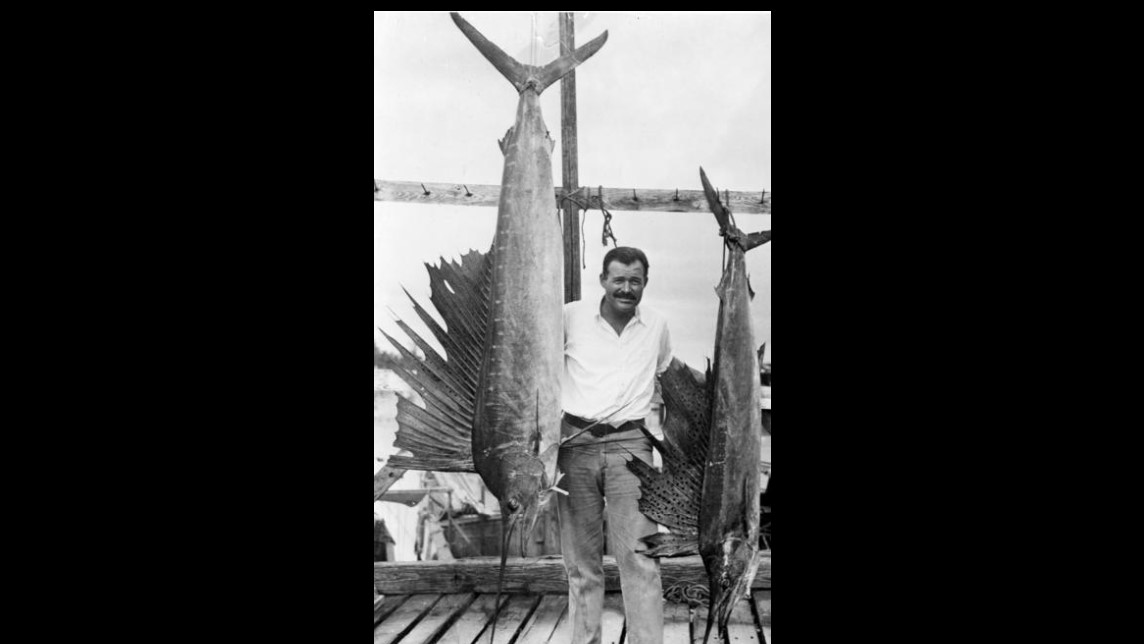
Photo is courtesy of World Digital Library.