
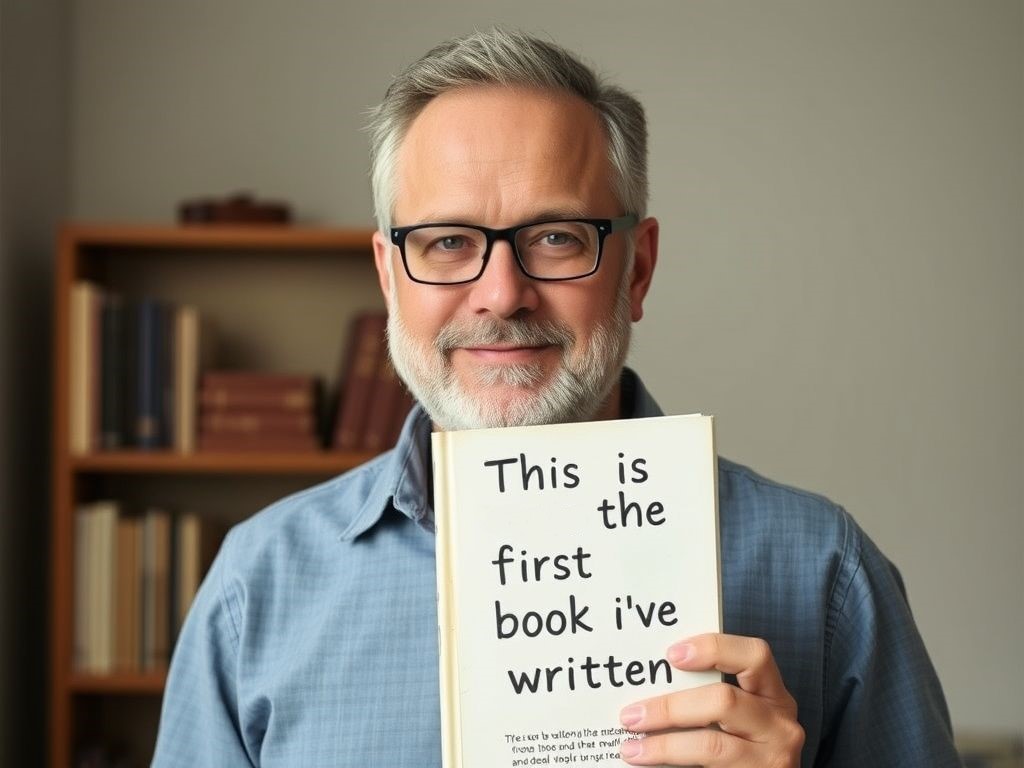
This is the one thing you should do.
Authors of memoirs tend to be people who have had something interesting happen in their lives, and many are not writers by profession. If you’ve decided to write a memoir, this may be the first book you’ve written. So before you start your memoir, maybe you should do one little thing—write something else!
Even a gifted singer sounds better with practice and guidance, and writing is the same kind of art. You start out with whatever level of talent you bring to your keyboard, and from there you can improve.
I think the hardest aspects of writing a memoir are, first, just making the commitment and getting started, and then establishing a routine and consistently moving forward. I don’t want to put up a hurdle for you between the stages of commitment and consistent progress. If you feel that you’re “on a roll,” go ahead.
But if you have doubts about your writing and want your memoir to be not just informational but actually also well-written, it makes sense that your memoir should not be your first major piece of writing or the only writing you’ve done outside of school. Block out some weeks or months on your calendar for sharpening your skills.
Taking a class is a great idea, because you’ll have the teacher’s guidance, you’ll have an end date, and you’ll write enough to start feeling comfortable with the process. But you also can do some of this on your own. As you write, hand your work over to someone who could be your target memoir reader. Ask whether the writing flows and feels compelling.
Writing Practice Ideas
What should you write in these practice sessions to prepare you for writing your memoir?
- Dialogue. Not every good memoir contains dialogue, but most do because life is full of conversation. When you write dialogue, you bring the reader right into the action and involve the senses of, at minimum, hearing and sight. Dialogue writing is both a skill and an art, so learn the mechanics. Don’t make the rookie mistake of writing more than one sentence before supplying the attribution. Some authors will write an entire paragraph and finish the last sentence with “he said,” as in: “Don’t force my hand. I will tell Mom your big secret if you leave me no other choice,” he said as he looked up to watch a plane flying overhead.” That is not the conventional format. This is: “Don’t force my hand,” he said as he looked up to watch a plane flying overhead. “I will tell Mom your big secret if you leave me no other choice.”
- Research. You may think you’ll write your entire book from your own memory. Sure, the stories you relate will rely heavily on what you remember, but you’ll still have to do research. In some cases the research will be general fact-checking and finding out whether it was Sycamore Lane or Sycamore Road. But you may have to dig deeper. Let’s say you want to tell readers about your first job. You were hired in 1980 to sell T-shirts on the Atlantic City boardwalk. Every day, you got off a bus and walked to the shop. What did you pass? You might try to find photos of that era so you can name and describe the jewelry stores, the breakfast spots, the salt water taffy stands. You might relate a scene that takes place on the beach at 5pm. Was the tide coming in or going out? What time did the sun set on the day you’re describing? What was the weather—the temperature, humidity, wind and other conditions? All of those pieces will add color to your narrative but require you to do some research. Today, data and details are relatively easy to access. Imagine yourself working on this project before the Internet. I won’t give you a “when I was young” lecture on how we would use the library, telephone and public records to chase facts, but what took us weeks now can take minutes. So consider yourself born at the right time for that.
- A throwaway story. Write about what you know—you! Choose an episode in your life that you do not plan on including in your memoir. Look, if it turns out great and you love it, maybe you can wedge it in there somehow. But the idea is to practice the craft of memoir by writing a simple and unremarkable narrative from your own experience. Choose a scene you remember vividly, but it doesn’t have to contain a lesson or represent a pivotal point in your life. It’s just a story. Can you make it come alive?
After you complete those three exercises, I think you’ll find that you’ll be better prepared as well as more confident to write a chapter of your memoir. If you want one more assignment before you start, though, my advice is to read some memoirs that have received good reviews. Every good memoir has the author’s voice, but what they all have in common is that they keep the reader interested. By reading those memoirs, you’ll pick up tips on how that happens. Good luck!
 I have a friend who just moved to a place that doesn’t allow pets, so she left behind, with trustworthy caretakers, a couple of cats she absolutely adores and misses terribly. This made me realize how large a role pets play in a lot of people’s lives. I urge you to include them in