We are experiencing issues with our Contact form.
Please Email Us Directly at: Su*****@************rs.com.

Every ordinary life story is extraordinary!

PLEASE NOTE:

oUR CONTACT US Form HAD A MALFUNCTION.
IF YOU HAVEN’T RECEIVED A REPLY, PLEASE FILL IT OUT AGAIN OR WRITE US DIRECTLY.

Every ordinary life story is extraordinary!

How to Use Pronouns Correctly in Your Memoir, Part 1

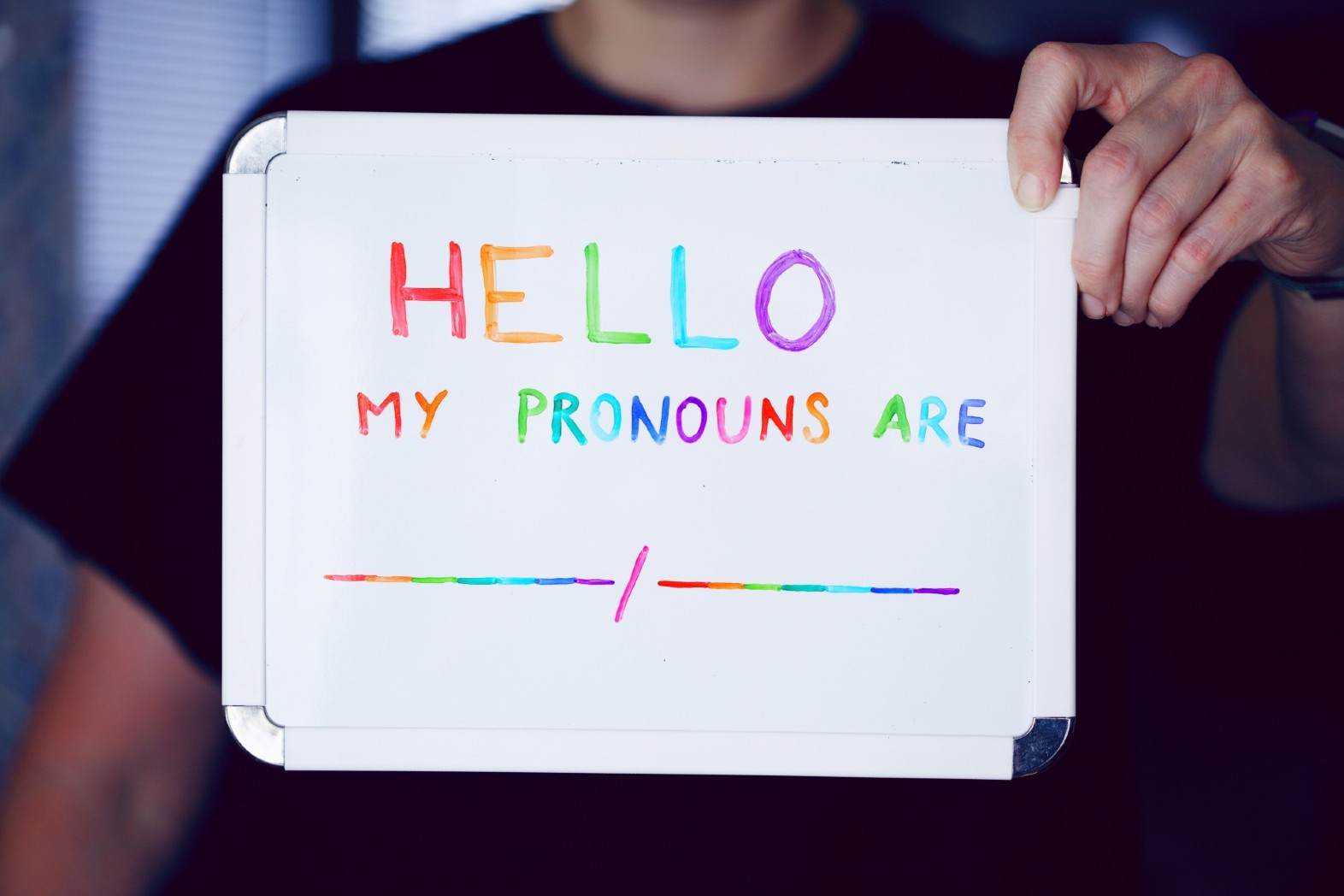
"Hello" badge announcing personal pronouns

The toughest part of speech is trickier than ever.

If you’re a writer, you may go through life cringing in public or constantly yelling at the TV, especially at unscripted reality shows and sometimes even the news. You’re correcting all of the “him and I” and “she and me” references. You’re rolling your eyes at “just between you and I.” You’re punching your monitor at “your” to mean “you’re.” Misuse of pronouns has become epidemic to the point that even though you’re a writer, you may be unsure of how to use pronouns correctly.

That’s okay, no judgment, especially since the option of the plural “they” as a singular personal pronoun has added a wrinkle to the whole business. Let’s tackle that first, starting with a history lesson.

The Absence of “Her”

Did you know that there used to be a gender-neutral singular pronoun? It was he/him/his. The masculine singular was considered the proper choice when the gender wasn’t known and with an indefinite pronoun such as everyone, nobody, or anyone. You’ve heard, “He who is without sin cast the first stone”? That’s the bible being male-centric.

Back then we would write:

  • Everyone who wants a cookie should raise his hand.
  • If you know anyone who’d like to join us, please invite him.
  • Nobody wants the car he drives to smell like old cheese.
  • I heard that someone came forward, saying he was an eyewitness.

This thinking also came with sayings like “every man for himself,” “man of the hour,” “teach a man to fish” and “dead men tell no lies.” When males were creating the sayings, there was not much thought to including females. So they decided that the male pronoun would be fine for all living beings. And I mean no offense to the bible, because this went on long after biblical times.

Then the women’s movement came along and introduced the concept of replacing “mailman” with “letter carrier,” “chairman” with “chairperson” and so forth until the conversation got around to pronouns. For a while, the feminists among us seemed to settle on some variation of these:

  • Everyone who wants a cookie should raise his or her hand.
  • If you know anyone who’d like to join us, please invite him/her.
  • Nobody wants the car s/he drives to smell like old cheese.
  • I heard that someone came forward, saying he/she was an eyewitness.

“Their” First Go-round

The “s/he” option doesn’t work in verbal communication, but it didn’t matter because people in general weren’t going with any of these clunky, cumbersome usages. But they weren’t using masculine-only pronouns, either. All along, there was some precedent and much will for using the plural they/them/their as the singular pronoun when a gender-neutral need arose:

  • Everyone who wants a cookie should raise their hand.
  • If you know anyone who’d like to join us, please invite them.
  • Nobody wants the car they drive to smell like old cheese.
  • I heard that someone came forward, saying they were an eyewitness.

Note that “they” in this construction takes the singular “an eyewitness.” That would change in a sentence with a plural noun:

  • I heard that several people came forward, saying they were eyewitnesses.

Educated Guesses

Grammarians never accepted the plural followup pronoun to a singular noun, proper noun or indefinite noun. The singular everyone should take the singular his or the singular her, they reasoned. Some language hobbyists, or perhaps pedants, even continued to use the old-fashioned one and one’s:

  • If one wants a cookie, one should raise one’s hand.
  • One does not want the car one drives to smell like old cheese.

As you can imagine, that construction did not catch on with the modern masses.

I remember Parenting magazine assigning either he/him/his or she/her/her to each article and then being consistent throughout that article. So it appeared as if some articles were written about parenting sons and some about parenting daughters. The words “baby” and “child” are gender-neutral until you have to follow up with a pronoun!

Female pronouns always were used when the writer or speaker knew the person was a woman. You could write or say:

  • The pediatrician handed the prescription to her assistant.
  • Our discussion leader was knowledgeable in her subject.
  • The student stated her name and took her seat.

At that time, with a subject like “nurse,” the writer would most likely assume that “she” and “her” were the most appropriate pronouns. That was the exception to always selecting the male pronoun for an unknown gender, and it was insulting. “Teacher” might be followed by a female pronoun, while “professor” would take the male.

Pronouns for Gender Identity

That’s the way things stood for quite a few years. Those who fancied themselves users of proper English grammar followed singular nouns with some form of singular pronoun, while the rest of the people used the plural and casual they/them/their.

Then gender identity entered the discussion, with people sharing their preferred personal pronouns and some asking to be identified by “they/their/them” as a nonbinary option. That legitimized the use of the plural pronoun to refer to a singular noun, so grammarians took another look at the option that already was the most popular in speaking, if not writing. Here it is again to remind you:

  • Everyone who wants a cookie should raise their hand.
  • If you know anyone who’d like to join us, please invite them.
  • Nobody wants the car they drive to smell like old cheese.
  • I heard that someone came forward, saying they were an eyewitness.

Is that acceptable now? You know what? Yes. It solves the problem so handily. It’s fast and dirty, yet also clean in terms of simple, intuitive and easily understood.

In formal writing, though, I’m still hesitant to use plural pronouns with singular nouns and proper nouns unless I’m referring to someone who I know uses the personal pronouns they/them/their. I admit that I got sucked into “he or she” and “him/her” for a while. Mostly, though, I’ve always tried to avoid the problem. I use plural subjects so that I can use plural pronouns, I get familiar and employ the second-person “you” and “your,” which conveniently are both singular and plural, and I even use passive tense to skirt the issue. Also, don’t underestimate the power of the word “a” to replace a pronoun.

Plural noun, plural pronoun:

  • People who want cookies should raise their hand.
  • If you know people who’d like to join us, please invite them.
  • No drivers want the cars they drive to smell like old cheese.

Second-person word instead of third-person word:

  • If you want a cookie, please raise your hand, or
  • All of you who want a cookie should raise your hand, or
  • Raise your hand if you want a cookie.
  • You do not want the car you drive to smell like old cheese.

Passive voice:

  • Anyone who wants to join us should be invited by you.
  • A car smelling like old cheese is not desired by anyone.

Replacing a pronoun with “a” and other rewording:

  • Raise a hand to receive a cookie.
  • I’ll hand out cookies to everyone with a raised hand.
  • Please invite anyone who’d like to join us.
  • Nobody wants a car smelling like old cheese.
  • Old cheese is not the best odor for a car.

Plural Pronouns for the Unknown

I still use those strategies to try to avoid the problem, but there are times I now use they/them/their even when not writing or speaking about a person who has shared their personal pronoun to be “they/them/their.” See what I did in that sentence? I wrote “their personal pronoun” following up the singular “a person.” I do that now, but I especially did it to demonstrate the case of knowing the person’s preferred identity.

Now the hardest question: What if you’re naming someone specific but you don’t know the person’s preferred pronouns? And see what I just did with that sentence. I repeated “the person’s” rather than using “their.” It avoids the issue. But you can’t keep repeating the noun or proper noun and never use a pronoun. Here’s an example:

  • I spoke with the new teacher over the phone, and the new teacher said the new teacher’s name was Terry. That’s all I know about the new teacher.
  • I spoke with the new teacher over the phone, and they said their name was Terry. That’s all I know about them.

In that case, let’s say you couldn’t tell much by the voice and have no idea what the new teacher looks like. But now let’s change that and say you met the new teacher in person, and the person appeared to be a woman. Should you stick with the above “they/their/them,” or should you say:

  • I met the new teacher, and she said her name is Terry. That’s all I know about her.

This is a tough call. Your interpretation that the person looks like a woman and then your decision that the person will prefer she/her/her are just assumptions. I think it’s still most respectful to figure out another way to say it. Language gives you so many options:

  • I met the new teacher, introduced to me as Terry. That’s all I know about the teacher.
  • I met Terry, the new teacher. I don’t know anything other than the name.

On this Topic, Memoir Writing Is Easy

Luckily, in writing a memoir you won’t have a lot of these problems. Mainly I want to tell you that if you find yourself cornered into using they/them/their with a singular noun, proper noun or indefinite pronoun, you probably can go ahead and use that plural. But if you can reword it, in my view, do that instead.

Part 2 will address pronouns in general, since even before this issue they were a pain in the neck.

Back to the Beginning: Your Memoir’s First Sentence, Part 3

Book with blank pages waiting for your memoir's opening sentence

Aim to grab the reader from the very start, but don’t sweat this too much.

In guiding you through writing your memoir’s first sentence, in the previous post I gave examples of openings from the celebrity memoirs I’ve read. That list contained memoirs of actors, and I left musicians and comedians for this post. So let’s jump in.

Patti Smith, Just Kids
“When I was very young, my mother took me for walks in Humboldt Park, along the edge of the Prairie River. I have vague memories, like impressions on glass plates, of an old boathouse, a circular band shell and an arched stone bridge.”

Smith begins her memoir in her childhood but, wisely, doesn’t waste her first sentence on something as mundane as pinpointing her childhood’s geographic identity. Yet, in her poetic prose she does just that. If you know Chicago, you will recognize the area of Humboldt Park or possibly the Prairie River.

The artistry of her phrasing is what’s important—memories are like impressions on glass plates, and items in the rest of the description roll out like a painting in front of your eyes. She lets you know that she had a mother who was engaged with her enough to take her on walks. She sets up the reader to expect skilled writing, and she follows through on that. Smith’s memoir won a National Book Award, and I think these are good first two sentences.

Leslie Jones, Leslie F*cking Jones
“I have this recurring nightmare. I want to quantum leap back to my younger self and tell that person all the stuff she needs to hear.”

Leslie previews for the reader that her memoir will look at all the mistakes she made and maybe reassure her younger self that everything will be okay. She uses “stuff,” indicating that she’s going to write the way she speaks. And, indeed, she does.

I liked this memoir a lot. As with most of these celebrity memoirs, I didn’t want it to end and missed Leslie when I finished the book and she stopped talking to me. But I’m not a fan of this type of opening sentence. It’s a tempting way to start—saying if I only knew then what I know now—but it’s not anything different from the rest of us. So, yes, it’s a sentence we can all relate to, but I want a memoir to begin with a nugget that belongs solely to the author.

Bruce Springsteen, Born to Run
“I am ten years old, and I know every crack, bone and crevice in a crumbling sidewalk running up and down Randolph Street, my street. Here on passing afternoons, I am Hannibal crossing the Alps, GIs locked in vicious mountain combat and countless cowboy heroes traversing the rocky trails of the Sierra Nevada.”

I really like the first sentence but not so much the second, which feels to me as if Springsteen is trying too hard, struggling to be a real Writer and, with that ambition, to create a visual simile from what he’s seen and prove to us that he knows about more things than music. But I do think the first sentence is relatable. As children, we all knew our streets like the back of our hand.

Ricky Lee Jones, Last Chance Texaco
“Oh, the skies were beautiful, pink and yellow and blue. Down along the end of the street was a well, a concrete circle about five feet in diameter. There you could find all manner of water-loving creatures, drawn from the desert to the shade.”

Jones had a chart-topping hit in 1979 called “Chuck E.’s in Love,” and the audio version of Jones’s memoir opens with a short song. I’m not sure how this is conveyed in print. Following the tune, the memoir’s opening line supplies an answer to the Chapter One title, “What Were the Skies Like When You Were Young?”

Jones reaches out to readers to get them to picture the skies of youth’s memory and imagination. She establishes her memoir as a detailed story, mentioning the desert right away because it influenced her art and life. Like Springsteen, she provides a description of her childhood street. So it’s not the most original beginning, but I think of the two of them, Jones wears it better.

Dave Grohl, The Storyteller
“‘Dad, I want to learn how to play the drums.’ I knew this was coming. There stood my eight-year-old daughter Harper, staring at me with her big brown eyes like Cindy Lou Who from How the Grinch Stole Christmas.”

Chapter One in Grohl’s memoir is titled, “DNA Doesn’t Lie,” which gives this sentence a little context. It shows Grohl as a drummer but also a father so involved with his children that he knows who Cindy Lou Who is. He’s introducing readers to his world, in which father and drummer are equally important, and he’s showing that he doesn’t take himself too seriously. I think it’s effective.

Molly Shannon, Hello, Molly
“I went to a nun psychiatrist who asked me to draw a picture of my family. I drew a picture where my dad had really long arms, and all the women had chopped-off arms.”

I like reading comedians’ memoirs because of all the humor in them. Molly Shannon was raised by her father after her mother was killed in a car accident. The preview of her limited, literally chopped-off, experience of having women as role models along with the funny image of trying to explain her childhood drawing to a mental health professional makes this a good opening sentence, kind of funny even in a chapter that deals with her mother’s death. Molly had me at “nun psychiatrist.”

Keith Richards, Life
“Why did we stop at the Fordice Restaurant in Fordice, Arkansas, for lunch on Independence Day weekend? On any day? Despite everything I knew from ten years of driving through the bible belt.”

In his very long but well-reviewed memoir, Keith Richards goes into detail about his childhood and pretty much everything else in his life. That’s why I’m happy with this opening that starts in his young adulthood, giving us the pleasure of meeting him right before the fame kicked into superstar gear, back when we formed our own opinions of all Rolling Stones. We can predict what goes wrong in this anecdote, but we want to know exactly how it goes wrong.

With this opening, Richards displays his naivete and arrogance all at once. And then the book goes on to fulfill our expectation to be candid and thorough.

One Non-celeb Example of a Memoir Opening

Let’s look at the example of probably the most successful recent memoir by a previously unknown author. Tara Westover’s opening two sentences to Educated are:

“My strongest memory is not a memory. It’s something I imagined, then came to remember as if it had happened.”

Brilliant? Not to me. I think Educated is an excellently written memoir, but it wasn’t the opening line that kept me reading. I find it almost a throwaway, nothing new to us or particular about the author. We all experience a blur between memory and imagination sometimes, especially as children. I think Westover, like Leslie Jones, could have launched her story without that introductory explanation of what she’s about to tell us.

Is the Opening Sentence the “Make or Break”?

From that example combined with those from the celeb memoirs I’ve shared with you in this post and the one before it, I think that maybe the trend today is that your opening sentence doesn’t have to be so much of a grabber. With online reviews readily available, people may start the book with an expectation already in mind and not depend on the first sentence to reel them in.

By the way, writing up these first-sentence posts made me realize that I’ve neglected one category of celebrity memoir—the sports memoir. So right now I’m listening to Andre Agassi’s Open, which is considered to be a well-written memoir about his tennis career. My beef is that Andre has someone else reading his memoir on Audible. But I do like his opening. He takes us right to a pivotal match very late in his career, and after that chapter we go back to his childhood. That’s my favorite structure.

Ultimately, the goal of your first sentence is to get the reader to want to read the second sentence. Then you want that to lead to the whole paragraph and little by little have your memoir become a book that readers can’t put down. So you do need to hook them immediately, but you also have to follow through with a lot of great sentences, some perhaps even better than sentence number one.

Back to the Beginning: Your Memoir’s First Sentence, Part 2

Blank screen with hand and stylus for writing a memoir's first sentence

Let’s look at some openings from published memoirs.

Last time, I threw out a few ideas to get you started on your memoir’s first sentence or couple of sentences. The beginning of your book will provide the hook to keep readers interested in finishing Chapter One and, you hope, beyond. But how critical is that first sentence? You probably want examples.

Into My Library of Celebrity Memoirs

As I often mention, my motivation to run is that it’s the only time I allow myself to listen to celebrity memoirs. By now, quite a few celebrities have talked me through my painful track training, so in a quick review I chose some of their memoir openings to share with you, along with my comments.

I have too many for one post, so I’m going to save half for a Part 3 on this topic. Today’s half offers only actors. I want to know about the author’s youth, but I admit to being partial to memoirs that start somewhere other than in childhood. Let’s see how these sentences introduce the reader to the memoirist’s world.

Jennette McCurdy, I’m Glad My Mom Died
“The present in front of me is wrapped in Christmas paper even though it’s the end of June. We have so much paper left over from the holidays because Grandpa got the dozen-roll set from Sam’s Club even though Mom told him a million times that it wasn’t even that good of a deal.”

You wouldn’t want a shocking beginning when you already have that irreverent title, so a somewhat banal first sentence provides balance. This bestseller lets you know you’re in for a story, not just a lengthy whine.

The sentence mentions her mom, so we stay on topic, but it doesn’t hint at why the author might be glad her mom died. If anything, she implies that she’s on the same page with her mother about the wisdom of her grandfather’s purchase. She gets you wondering what will happen with her mother. As my last post mentioned, it’s good to get readers to ask questions, because they’ll keep reading to find the answers.

This is a very young author, so starting in childhood isn’t going that far back. Still, note the choice.

Harvey Fierstein, I Was Better Last Night
“Philamina got the role of the evil witch, and I was cast as the king. The king? Who wants to be the king? Sure, he gets a crown and a cape, but the witch gets green skin, red lips and long, black fingernails. I wanted green skin, red lips and long, black fingernails. Second grade was not working out the way I’d hoped.”

The memoir of Harvey Fierstein, whom I hope no one confuses with Harvey Weinstein, focuses mostly on Fierstein’s professional life as an actor and personal life as a gay man. His opening sentences weave in both topics and then end with a surprise punchline that made me laugh out loud. Even if you read this memoir rather than listen to it, you can hear Fierstein’s distinctive, raspy voice in that last sentence.

I loved the book, and the first paragraph is probably my favorite of this group because it’s funny. But, again, here we are in childhood. And not every memoir can start with humor, so you may not be able to copy this style.

Viola Davis, Finding Me
“‘Cocksucker motherfucker’ was my favorite expression, and at eight years old I used it defiantly. I was a spunky, sassy mess, and when I spewed that expression, one hand would be on my hip, my middle finger in vast display, and maybe my tongue would be sticking out.”

Having Viola Davis read to you for hours is a treat, but I’m not sure about this opening sentence. Her description of her little self paints a clear mental picture, and the reader needs that because in her masterpiece of a memoir Davis spends a lot of time on her childhood.

I think my problem with this opening is that it feels like an early draft. I can see an author sitting and thinking about how to start her story and coming up with this, as if she’s looking at herself from an outside vantage point. It’s almost too cutesy or self-conscious or something. I’m a little torn on this one.

Rob Lowe, Stories I Only Tell My Friends
“I had always had an affinity for him, an admiration for his easy grace, his natural charisma, despite the fact that for the better part of a decade, my then-girlfriend kept a picture of him running shirtless through Central Park on her refrigerator door.”

The “him,” the target of Lowe’s affection as well as his girlfriend’s admiration, is John F. Kennedy, Jr. The two men were friends, and even though JFK Jr. doesn’t play a large role in Lowe’s memoir, he pops up later in the book in a pivotal way.

This opening, then, deftly previews for the reader that this friend will have something to do with Lowe’s life, but it’s so subtle that you might not see it coming when JFK Jr. shows up years down the road. The first sentence also gives you a feel for the way Rob Lowe saw people and hints at the role handsomeness will play in the book. I think it’s a good opening, and it’s nice to start somewhere other than childhood.

Minka Kelly, Tell Me Everything
“’Oh baby, I have something special in store for you,’ Mom gushed. She hugged her arms close to her chest as if she needed to keep the joy from bursting through her entire body, like it was a current of energy that pulsed through her, not always under the influence of her control.”

I feel as if I’m always going overboard in being transparent, and on this one my full disclosure is that I included Minka Kelly’s memoir because I really enjoyed it and hope to give it a little more exposure so more people read it. But then I’m a big fan of TV’s “Friday Night Lights,” in which Kelly had a lead acting role.

Like so many others, Kelly chose to begin her memoir in childhood and tell readers about her mother, the primary figure in her life. Bringing us into the heart of an anecdote, she leads with dialogue. I’m fine with using dialogue to open other chapters, but for Chapter One of the memoir I think it’s a bit of an easy way out. Don’t let that discourage you from reading the memoir. It’s good.

Henry Winkler, Being Henry
“It was the biggest audition of my life, and the sweat stains under my arms weren’t just clearly visible; they were a cry for help.”

I’m surprised this type of sentence doesn’t open more celebrity memoirs to immediately place us at the most pivotal point of the career. Maybe authors want to build anticipation so we keep reading until we get to the part of the celebrity’s life that most interests us.

We can make an educated guess about what the biggest audition of his life is—probably for the breakout role of Fonzie in “Happy Days”—but Winkler stops short of giving us the full story here. Readers don’t find out how that audition played out until much later in the book. I like the tease, and I also like the acknowledgment right away that the author knows why we bought his memoir.

Sally Field, In Pieces
“I wait for my mother to haunt me, as she promised she would, long to wake in the night with the familiar sight of her sitting at the end of my bed, to talk to her one more time, to feel that all the pieces have been put into place, the puzzle is solved, and I can rest.”

Field wants to quickly tell us what her title is about. I’m not sure that’s necessary; it’s not hard for readers figure out on their own. But the opening sentence is effective in letting us know that an Oscar winner now in her 70s is, if not still fixated on her relationship with her mother, at least writing her book in part to explore that relationship. I don’t think it’s the most original beginning, the most personal or even the strongest she could have come up with, but I think it’s not bad.

Is “Not Bad” Good Enough?

You can see that I’m not falling all over myself about how great these openings are. Some are very good; others are just adequate. But not one is a failure. I’ll let you know in Part 3 whether “not bad” is good enough.

Back to the Beginning: Your Memoir’s First Sentence, Part 1

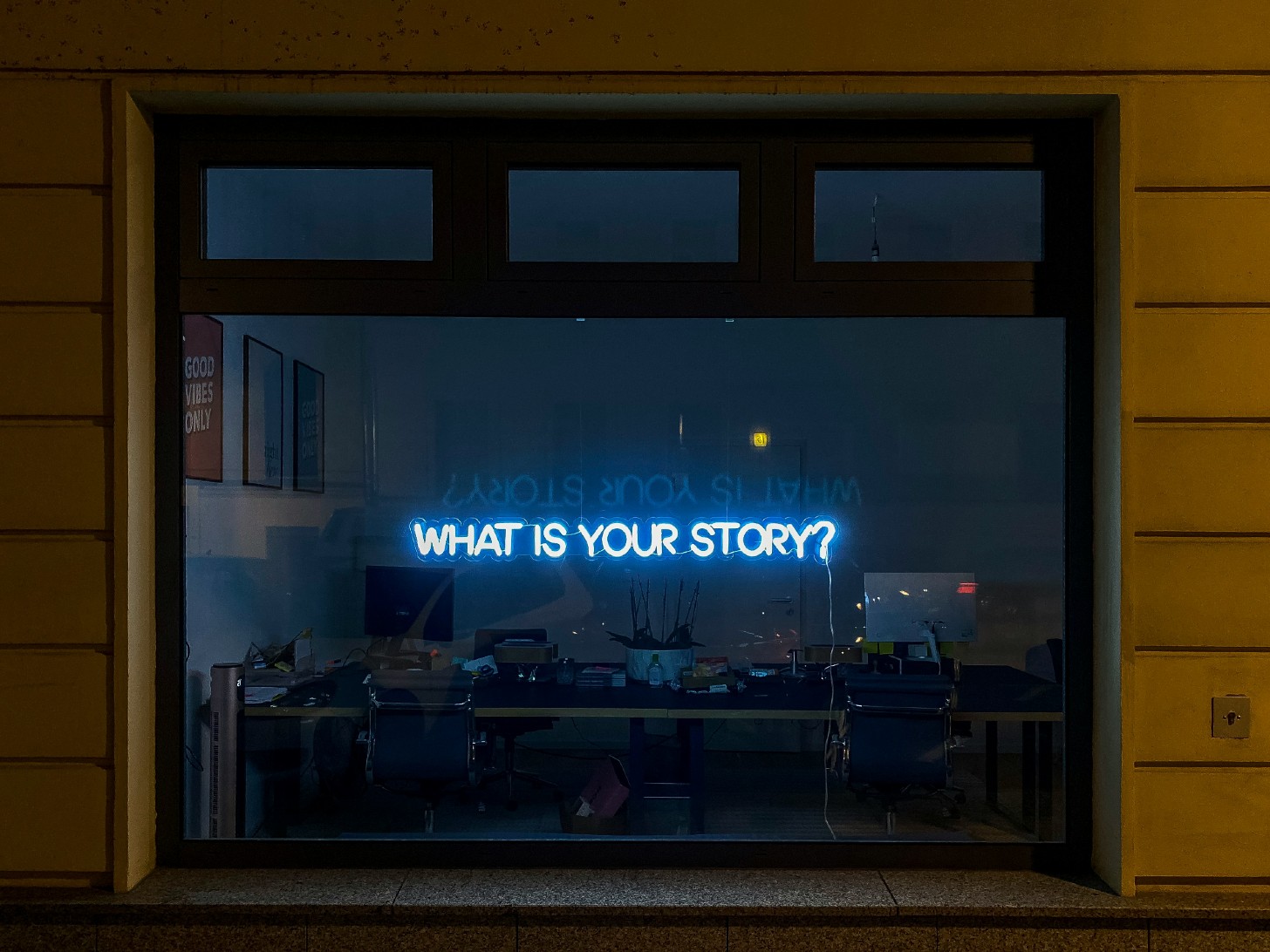
Neon lighting with text: "What is your story?"

Your opening introduces your readers to your world.

You’re in good company if you’re stuck on how to craft your memoir’s first sentence. Understandably, the opening line and paragraph of a memoir are important to every memoir author who wants to capture the reader’s interest right away.

You Don’t Have to Write the First Sentence First

Start writing your memoir anywhere you like, with any story from your life you think you’re going to want to tell. You may not end up including that story, but it will get you writing.

Then think it through a little. What happened in your life that will get readers to want to read the rest? Many memoirs today start at a pivotal moment or with the part of the author’s life most central to the memoir’s theme. Still, a lot simply begin in childhood, because there we find the seeds of who we are. Once you decide which moment of your life will launch your memoir, you’re ready to think about the words that will best express it.

So write something. The best sentence you’ve ever read may come to you immediately, or you may change your first sentence multiple times. When you have it, I think you’ll know.

What’s Trending in First Sentences of Memoir?

Good writing will always be good writing, but like everything else, memoir trends change. Readers are more sophisticated than ever, wise to a contrived opening line that’s trying too hard or designed to be clever above all else.

Writers rely on collective memory, a sort of modern-day lore that we know everyone knows. The thing is, though, that today you can’t count on all of us knowing the same things. We’re long past the days of three networks broadcasting nightly news and showing a regular weekly television schedule that everyone watches. Today, we seek information and entertainment from all over the place, from apps and social media, obscure cable TV shows, podcasts and blogs.

With our collective memory shattered, the opening sentence to Woody Allen’s memoir, Apropos of Nothing, wouldn’t ring a bell to a lot of people:

“Like Holden, I don’t feel like going into all that David Copperfield kind of crap, although in my case, a little about my parents you may find more interesting than reading about me.”

Holden? Holden Caulfield is the protagonist of Catcher in the Rye, which has an opening line referencing David Copperfield. I think most of us do get the reference to David Copperfield at least.

With society’s evolving norms, I think you’ll be wise not to assume that we all agree on anything. It will probably put off some readers if you call a thought “a truth universally acknowledged,” even if you don’t mean it to be one-hundred percent accurate. This opening sentence is not from a memoir but from the iconic novel Pride and Prejudice by Jane Austen, written in the very late 1700s:

“It is a truth universally acknowledged, that a single man in possession of a good fortune, must be in want of a wife.”

I mean, where do we start with that? Even the commas aren’t necessary, much less the thought.

What Should Readers Get From an Opening Line?

Experts in memoir suggest that your initial sentence should open the door to your world. It should intrigue readers about whatever you’ll be tackling in your memoir. You can achieve this in a number of ways:

  • Introduce a character—possibly the character of you—in a notable way. Make the introduction funny, self-deprecating, mysterious, surprising or truly shocking.
  • Start out with something very relatable to get readers to feel as if they are in your shoes, because they recognize your experience.
  • Plop the reader into the middle of the action of the most dramatic story in your memoir. Get the reader’s heart racing.
  • Provide a tidbit of information that gets the reader asking questions. Readers who need their questions answered will keep reading.
  • Craft a beautifully worded sentence to inspire confidence that your book will be full of wonderful descriptions at a high literary level.

“I didn’t realize I was black until third grade.” This is often cited as a great opening sentence. It belongs to Becoming Kareem: Growing Up On and Off the Court by Kareem Abdul-Jabbar and Raymond Obstfeld. This takes you into Abdul-Jabbar’s world by both introducing you to the character of little Kareem and getting you to ask the question, “Why? Do you not have a mirror?” And it’s just plain disarming. A-plus to the big man.

GreatOpeningLines.com, which bills itself as “history’s first website devoted exclusively to the celebration of great opening lines in world literature,” mentions that line along with this other one I noticed. As I write this, the news is breaking about Joe Biden’s decision to leave the 2024 presidential race. So it’s serendipitous that I find this opening line to Biden’s 2007 memoir, Promises to Keep: On Life and Politics:

“Joe Impedimenta, my classmates hung that nickname on me our first semester of high school when we were doing two periods of Latin a day. It was one of the first big words we learned. Impedimenta—the baggage that impedes one’s progress.”

Here, Biden divulges what was probably the most humiliating aspect of his life, either to get it over with, to garner some sympathy from the reader, or perhaps to offer something to which the reader can relate.

In Part 2 of this post, I’ll share a lot of first lines from celebrity memoirs and get to the bottom line of how important your first sentence is—or isn’t.

Make Your Memoir Timeless

Keyboard and old-fashioned typewriter illustrate how to make your memoir timeless

When writing about your past, how can you keep it relevant for current and future readers?

You probably want to make your memoir timeless, but you can’t expect readers to understand the fine points of, for example, current pop culture or past technologies. How much should you explain, and when should you trust the reader to have some historical knowledge about people, places and things?

Technology: The Moving Target

Along the time line of your memoir, you’ll likely deal with a series of obsolete technologies, their level of obsolescence influenced by the state of the technology at the time you’re doing the writing. All I know is that I’m tired of reading the sentence: “This was before cell phones,” or “This was before we had GPS to guide our journey.” We all know what came before cell phones and how people used to have to use maps and ask for directions. Even young people know this.

The exception would be if you’re writing about a moment in time when most people had more advanced technology than you did. You don’t want readers to think, “This isn’t true, because everyone used GPS by then.” So you might have to explain:

“I had forgotten to MapQuest the route. My friends all had GPS availability on their phones, but my parents had a habit of making sure I always had the most outdated tech.”

Your Memoir is Not a Tech History Book

Let’s look at music and say you’re writing today about an incident that took place as you were listening to your iPod. How might you approach that?

  1. Assume the reader knows nothing about anything and would rather be educated in context than have to Google every sentence:
    “I put on my clunky headphones, which everyone used before Airpods came along, and picked up my iPod, an upgrade from the previous era’s tapes and compact discs (CDs) but not yet replaced by streaming. It looked like a slim bar of white soap and contained all the songs I loaded onto it. I scrolled through my tunes by running my finger in a circular motion along the smooth part in the center of the front of my iPod, until I came to the song I loved by Jesse McCartney, who was not related to Beatle Paul McCartney but was a popular artist at the time.
  2. Provide some background but omit details:
    “I put on my headphones and picked up the music delivery method of the day—my iPod, which I’d customized to contain all of my favorite tunes. I scrolled through until I found my favorite song by Jesse McCartney, who was making it onto the covers of the teen magazines.”
  3. Trust the reader to figure it out:
    “I put on my clunky headphones, turned on my iPod and ran my finger along the small inner circle until I’d scrolled down to my favorite Jesse McCartney song.”

My preference is to do something along the lines of the second option. If the technology is more or less the same as it is today, just leave it. Headphones still come in clunky versions, but it also doesn’t hurt to use an adjective like that. I wouldn’t bother describing how the iPod’s unique scrolling was configured. If you know, you know. And if you don’t, it’s hard to describe well enough to give someone an accurate mental picture, plus it’s just not an important description. You’re writing a memoir, not a history of early 2000s tech.

People and Current Events

The Jesse McCartney mention previews the next problem: what seems universally known today can be forgotten tomorrow. I caution you against referring to “Taylor and Travis,” for example, not that you would. But you might mention a more historically prominent person:

“It was my first time voting. I remember entering the church on the corner, having no idea whether to vote for Jimmy Carter or Ronald Reagan for president.”

Or:

“It was my first time voting. The church on the corner served as our polling place, and I remember entering the room to see little open voting stations lining the perimeter. I had no idea whether to vote for Georgia democrat Jimmy Carter or Ronald Reagan, the Californian republican, in their head-to-head contest for U.S. president.”

If you want to describe the polling place, fine, but otherwise I prefer the simpler, first version. If the narrative follows your voting decision as taking into consideration the political party, where the candidates were from, the way they looked or whatever, you can explain that part. But you don’t have to educate the reader just for the sake of explaining the reference. Readers who don’t recognize the names of U.S. presidential candidates deserve to have to do the Googling.

But you do have to mention that it was a U.S. presidential election. That’s the fine line that can be hard to draw. You can give readers enough credit to assume they know that both men were presidents. But do readers who were not voting in 1980 know that they ran against each other? Maybe it was a gubernatorial or senatorial race. Help out the reader by giving the bare bones of the history.

Tips About Wording for a Timeless Memoir

I think it’s helpful to Future Reader to acknowledge that you don’t know what the world will be like in years to come. In the music example, you can smugly look down on past technologies and reference “streaming” as if everyone will know what that is only to find that five years from now there’s some other method of listening to music. Maybe we’ll all have chips implanted in our ears or something.

What about if you’re describing the ordeal of getting through a very bad weather system? I’m thinking of something like this:

“We paid little attention to the storms that would roar up the Atlantic coast, because they tended to lose strength as they approached Virginia. Or they’d go out to sea after destroying the Carolinas, gather wind power and slam into New England. Hurricane Camille was different, showing no mercy to our little state and remaining, as of 2024, the worst natural disaster on record in Virginia.”

I don’t go for a lot of “looking at the camera”—pausing your narrative to talk to the reader about today—but it does have a place in memoir. This treatment—“as of 2024″—is better than referring to Camille simply as “Virginia’s worst storm on record,” when a storm the very next season could knock that hurricane off the top spot. Then it’s your memoir that would be obsolete.

I want to mention one more method: “…showing no mercy to our little state and, at the time, standing as the worst natural disaster on record in Virginia.” Use that only if, at the time of writing, another storm already had rendered Camille the number-two spot, because that’s what it implies.

How Have You Handled Time Line Issues?

I think I’ve just scratched the surface. Have you had these time line challenges? How have you addressed them? I’d love to hear your ideas. You can leave a comment here, or you can go our Substack for the same entry and leave your comment there.

Bias vs. Objectivity in Memoir

Man holding big glasses a foot in front of his eyes to gain objectivity in his memoir

This is your truth, so does it have to also be THE truth?

One motivating factor for writing your memoir is that you finally get to tell your story from your perspective—the way you want people to hear it. You’re not thinking about objectivity in memoir, and why should you be? By definition, this is your biased account. Achieving a balance of bias vs. objectivity may seem out of place in the memoir conversation. Well, it’s not!

You as the Hero in Your Life Story

Many memoir authors hope that their story will inspire readers. They’ve overcome a hardship, and perhaps readers who are facing a similar challenge will be encouraged that if they fight hard enough, they, too, can make it to a happier place and move on with life.

As you describe all the hurdles you’ve had to jump and the negativity you’ve had to push out of your way, you can build yourself up to be a bit of a hero. Look at all you’ve overcome. That’s impressive.

But is it? Have you recounted all the mistakes you made along the way? Have you given credit to people who helped you succeed? Have you considered the simple factor of luck?

There’s a saying, “Don’t let perfect be the enemy of good.” To adapt that, I’d advise against letting any need to look perfect be the enemy of coming across real. Look at yourself objectively. You’re not perfect. Admitting where you messed up is the way you relate to readers and get them to root for you.

View Your Story from Outside Yourself

If you have any trouble admitting your shortcomings, try looking at your life from other people’s points of view. Maybe you talk about a job you held, and your boss was excessively tough on you. You can reveal that person’s shortcomings as a supervisor, but do you also share in any accountability? Was the boss’s criticism of you at all justifiable even if the communication method may have been too harsh? It’s usually more effective to talk about your struggles and the errors you made, and then how unhelpful it was to absorb criticism that was hurtful.

Picture yourself with the people you write about during the time you were together. Now imagine them reading your book in present day. What are they thinking? Are you being truly honest with the reader about your own contributions to negative outcomes in your life?

Fact-check Pesky Little Details

Memory is so tricky; sometimes it incorporates our biases and we’re not even aware of that. Let’s say you recall a traumatic incident with a teacher that happened when you were 14 years old, something that was hard for someone that young to handle. Don’t rely on your memory. Think it through, and fact-check wherever you can. You may pick up your yearbook to discover that you had to be at least 16 when the incident happened, because the teacher didn’t join your school’s faculty until you were a junior.

That kind of thing doesn’t make your story less powerful. If the incident traumatized you, it still traumatized you. But the truth was that you were 16. If a reader does the fact-checking and finds a discrepancy, that reader might regard your entire book as fictionalized. Getting the smallest details wrong—dates, places, people’s names—can undermine the core of truth you’re telling.

Does the Truth Mean the Whole Truth?

Some memoir writers get bogged down in too much truth! You have to explain enough for the reader to understand the point of each story in your memoir, but don’t be afraid to omit irrelevant details about the incident. Setting is important, and description of what you saw, heard and smelled puts the reader in the midst of the action. But sometimes we overexplain the background of what’s happening.

I think discerning how much to reveal is one of the hardest parts of storytelling. Think of someone you know with whom you’re always silently thinking, “Get to the point!” You don’t want your readers shouting that at your book.

Suppose in the chapter about your adolescent years you refer to Alice as your best friend. In the next chapter, you’re in high school and you say, “I felt relieved to see that my two best friends, Miguel and Samantha, had saved me a seat.” Will the reader notice the switch? Yes. So don’t leave the reader hanging. Say something like:

“I felt relieved to see that Miguel and Samantha, who at that point had replaced Alice in my best-friend hierarchy, had saved me a seat.” Or: “I was relieved to see that my two best friends, Miguel and Samantha, had saved me a seat. I still was in touch with Alice, but she had moved and was going to a nearby high school, so we weren’t as close.”

What you don’t have to supply is an entire backstory:

“I felt relieved to see that Miguel and Samantha had saved me a seat. I’d known the two of them since middle school, but Alice had never wanted to include other friends in any of our activities. When her family moved and she started going to a different high school, I got to be friendlier with first Miguel, and then Samantha, since those two already were good friends. Alice and I called each other less and less frequently, and later on I heard that her family moved out of state altogether.”

Objectivity Begets Catharsis and even Forgiveness

The process of writing about your life may remove a huge weight you’ve been carrying around. You finally are able to openly share with readers a long-held secret or a painful time in your life. It feels great to let go of the burden. The rub is that, once you’re healed, you don’t always like what you’ve written.

In an essay some years back, memoir author Amye Archer told about the way her view of her ex-husband changed as she wrote each new draft of her story about her marriage. The anger she felt at the beginning gradually dissipated. She sat down to write her memoir with a lot of indignation—look what this terrible man did to me! The more she rewrote her drafts, the more she saw her own role in the failure of the marriage. As more time passed, her current life brought her happiness, and she didn’t have the need for readers to be mad at her ex when even she wasn’t as mad at him anymore.

If you’re harboring anger like that, I think your memoir will be more authentic if you can get to the point that Amye Archer reached. You don’t want to publish it and then get there afterward. You don’t want to cringe when you read your own memoir.

There is such a big “but” to this. Even if you’re very much past the trauma, when writing the memoir you do want to get your head back to the way you felt at the time. You want to return to the pain so that the writing makes the feeling real for your reader. But then you can add perspective that has come with time.

This isn’t a textbook, a journalistic report or a historical account. It’s not even a biography of someone else. You’re writing your story about you. But it will ring truer with the reader and carry more authenticity if you layer your perspective with a little objectivity.

Editing Your Memoir for Word Choice: Part III

Word choice in memoir writing

Originality and a twist on clichés will help make your memoir memorable.

For the third post in this three-part series about editing your memoir for word choice, I want to discuss originality and ways to use clichés to your advantage. I remind you that this is your memoir. It’s not a famous writer’s story, and it’s not a term paper, either. Be authentic but creative; offer something the reader doesn’t ordinarily see.

Dip Into Your Speaking Voice

When you insert yourself fully into this personal storytelling, your speaking voice will blend naturally with your writing voice. Let’s say you’ve always called your mother “Ma.” Most of the memoirs you read refer to “my mother” or “Mom,” but if you’ve never called your mother “Mom,” your memoir is no time to start. Toggle back and forth between “my mother” and “Ma.” That is the best, most authentic word choice for your memoir. The reader will hear you, not some generic, watered-down version of you.

Now let’s say that you swear a lot when you talk. Confine that aspect of your speaking voice to the dialogue you enclose in quotation marks. The rest of the text will be too distracting if every sentence contains profanity.

Include a few Unusual Words or Ways to Describe Something

In a previous post, I gave an example from movie and television director Ed Zwick’s new memoir, and since that book remains fresh in my mind, forgive me if I use it for an example here as well. Zwick mentions that someone in his life luckily had “reservoirs of patience.” While “reservoirs” is a pretty common word, using it to describe someone’s patient nature strikes me as clever writing. She didn’t have “lots” of patience or “endless” patience; she wasn’t “super-patient” or “tremendously patient.” With “reservoirs of patience,” the author not only delivers a word that isn’t typically associated with having patience; he also creates a visual, stopping you just for a slight pause to consider how much he appreciates the person’s patience. And notice that he does not need an adjective such as “deep reservoirs of patience.” The unmodified noun says it precisely.

Now I’ll make up an example. Let’s say you like the word “serendipity.” Instead of calling something a “pleasant coincidence,” in your everyday speech you just tend to use the word “serendipity.” Then give the reader a taste of your unique flavor of language by using that word. However, using it once, or twice at most, will be enough.

What about including words that you never use? Maybe you’ve already described various people as “smart,” “intelligent,” “wise” and “brainy,” and you don’t want to repeat any of those words, but you have a smart friend you still want to write about. So you Google for synonyms of “smart” and come up with “sagacious.” You’ve seen the word and know what it means, but you’ve never used it. Should you write “sagacious” to describe that friend in your memoir? My vote is probably not. If you feel it fits comfortably into the rest of your memoir, then okay, but if you’re using mostly everyday words, I think a word like “sagacious” sounds as if you’re trying too hard to be, well, sagacious.

Remember that synonyms are not the only solution. You can always rework the sentence. Instead of describing your friend with a synonym for “smart,” you can say that your friend seemed to know everything about everything, or your school friend was always tops in your class, or your work friend sat around doing tough crossword puzzles during his coffee break. Again, get creative.

Not All Clichés Are Bad, and Most Clichés Can Be Made Good

You may have been told to avoid clichés, and that’s generally good advice. But lately I’ve felt more kindly toward the much maligned cliché. I think these common phrases can give your memoir a relatable quality.

Let’s consider the reasons you’ve been told to steer clear of clichés as well as overused similes and metaphors. This is a bad sentence: “She was running around putting out fires, busy as a bee, but when I walked in she looked as if she’d seen a ghost.” Not only are three clichés too many for one sentence, but those particular clichés are not the best choices.

But it can be charming to let a few familiar sayings creep in here and there. And you can control your clichés by altering them for effect. I’ll contrive a paragraph for this purpose:

I believed that every cloud had a silver lining, but I couldn’t find even one in the series of storms that rained on all of my parades that June. I’d hoped my graduation would bring my parents together in some sort of peaceful reunion, but Dad never even showed up. I thought moving out of Mom’s house would certify my entry into adulthood, but by August I’d moved back in, unable to juggle enough jobs to have anything left over after paying rent. Most of all, in Alex I thought I’d found my soul mate, my companion for riding into the sunset and leaving all of my anger and disappointment in the dust. Alex took me for a ride, all right, and the sunset did get darker and darker.

It’s not Shakespeare, but I think the clichés prove useful: “every cloud has a silver lining,” “rain on my parade,” “find my soul mate,” “ride into the sunset,” leave something “in the dust,” and take someone “for a ride.” I could see an editor saying, “Ugh!” But I think it all puts the reader at ease. I find that compelling memoirs tend to have a bit of folksiness in them, and common phrases work toward that end.

I’m just saying that when you edit your first draft, don’t automatically delete your clichés. Give a little thought to whether they might be adding something to your narrative.

Word Choice Is Your Choice

When you write a memoir, it’s motivating and inspiring to read other memoirs. But you don’t want to copy another author’s style. Your memoir is about your life, written in your voice. Every word you choose has a piece of you in it. If a sentence sounds as if someone else said it, replace it with words that are either yours alone or yours as representative of ordinary language.

Editing Your Memoir for Word Choice: Part II

Editing for word choice photo of glasses, pen and book

Give your memoir a professional touch by avoiding too much word repetition.

My last post focused on editing your memoir to fix any incorrect word usage and also to take the effort to find the most precise word to convey your thought. What else goes into editing your memoir for word choice? Repetition is a big concern.

Word Choice Using a Thesaurus or Digital Equivalent

It’s not a terrible error to unnecessarily use the same word twice in one paragraph or to use one expression frequently throughout your memoir, but it makes your memoir a little less interesting. Don’t permit laziness to keep your memoir from being the best piece of writing you’ve ever done. There are countless ways to say nearly everything, so give each sentence some thought.

As I advised in Part 1 on this topic, don’t be too proud to rely on searching Google for synonyms. Or if you still have some thesaurus you once received as a gift from a grandparent, this might be the time to dust it off and keep it on your desk at easy reach.

The funny thing about checking for word repetition is that you’re looking for opposite problems—super-common words and extremely distinctive words.

Vary the “Verys”—Common Verbs and Adjectives

On your first draft, when you’re just trying to get your story into some sort of narrative form, you might have a paragraph like this:

“I didn’t know what to do or where to go. I was mostly very interested in having him stay away from me. I knew that if I stayed home, I’d have the fear that he’d have the nerve to come back. If I went out, I knew I’d have all sorts of worries that he’d follow me. I would have been interested in going to Mom’s house, where I knew he wouldn’t dare show up, if I hadn’t had to deal with all of her questions. I thought about having a bite of food to eat, but I had no hunger and the thought of food had me feeling very sick.”

That’s an extreme example, but it’s not that much of an exaggeration in a first draft. Verbs like “have/had,” “do/did,” “go/went,” “feel/felt,” “know/knew” and all of the “be” verbs—is, are, were, have been, etc.—can roll off your fingers and onto your keyboard with no effort at all. An adjective like “interested” can sneak in there almost without your consent! And even one or two mentions of “very” is probably too many. A good edit cleans it all up.

This problem isn’t about finding synonyms. You can’t just replace “have” with “own” or “possess,” as in, “I’d possess the fear” instead of “I’d have the fear.” Sometimes you can swap out “interested” for “intrigued,” but more often you just need a different construction and will probably rewrite many sentences. A full edit takes time, but it’s still not as hard as getting your thoughts written down to begin with.

A rewrite of that paragraph could turn out like this:

“I didn’t know what to do or where to go. I focused on keeping him away from me. If I stayed home, I’d shake in fear that he’d have the nerve to come back, but if I went out, I’d worry that he’d follow me. I could have driven over to Mom’s house, where he wouldn’t dare show up, but she’d throw a barrage of questions at me. I thought about making soup, but just the thought of food turned my stomach.”

I wouldn’t call that rewrite a masterpiece, but I hope it gives you an idea of ways you can rework the presentation of your thoughts while retaining the message.

Use Distinctive Words Exactly Once

Whereas those common words are bound to be repeated throughout your memoir, unusual words merit mention only once. You may not realize how much you like a certain adjective or how little anyone else uses some word that you use a lot.

Maybe you’ve always referred to your son as “cantankerous,” so the adjective makes it into your memoir as you describe your little boy. But then three chapters later, you tell readers about your “cantankerous” boss. No. Find a different word. Your boss was crusty or argumentative or ill-tempered, or just tell a couple of stories about your boss and let readers fill in their own adjectival impressions.

This guideline is good for phrases, too. If early in your memoir you describe the meatloaf in your school cafeteria as “hard as a rock,” don’t repeat that description for the tumor you find in your neck later in your book. Or if you prefer it for the tumor, then go back and try a new idea for the meatloaf. You could say, “I practically broke a tooth when I bit into the meatloaf.” Again, language is so rich. You don’t have to find a synonym for “hard,” a different word for “rock,” or another phrase that means the same thing. You can restructure the sentence altogether.

Avoid Repetition of Names

The people you introduce in your memoir typically come with a relationship identifier, such as “mother,” “boss,” “friend” or “teacher.” That gives you two different ways to refer to each of them, so right there you’re breaking up the procession of using the same name or word over and over. With “my mother” and “my father,” you also have “Mom” and “Dad,” and here or there you also can refer to them with their given names, such as: “But James Turner was not one to back down from a challenge”—that sort of thing.

What else can you do? As an example, let’s say you’re writing about your sister Sara, and it goes on for a few paragraphs. You toggle between saying “Sara” and “my sister,” supported by “she” when you feel you don’t have to remind the reader who “she” is. That’s all fine, but with a little attention you can do better. Look at this paragraph:

“With her wholesome good looks and radiant smile, Sara was the quintessential ‘girl next door,’ so it only made sense for her to date the boy next door throughout high school. As the younger sister, I played the important role of covering for them when they’d sneak out of their respective houses to spend time together. I can’t count the number of times I told one parent or the other that the scamp had gone to the store after running out of tampons or notebook paper or her favorite gum. When Ronnie signed up with the US Army, he asked his girlfriend to follow the tradition of waiting for him, but the diminutive blonde cheerleader would have none of that. She’d already applied to work for a cruise line to see Caribbean ports in whatever capacity the employer chose for her. As it turned out, my mother’s first-born had inherited all of Mom’s charm and within a year went from making beds in the cabins to managing the food service. It was enough to spin my head around when we all took a cruise on her ship and saw the former boss of me bossing around everyone else.

I used “Sara” only once. The other mentions were “she” and “her,” “the scamp,” “his girlfriend,” “the little blonde cheerleader,” “my mother’s first-born,” and “the former boss of me.” I didn’t even use “my sister.” In addition to keeping the reader engaged, varying your terms like that provides the opportunity to supply more information. I needed no separate sentence to reveal that my sister was small, blonde, a cheerleader, or the oldest in the family.

More Next Time

We’ve still covered only a piece of the editing you can do concerning word choice. In my next post, I’ll talk about other ways to prevent your memoir from lulling readers to sleep with the same words over and over. And over and over.

Editing Your Memoir for Word Choice: Part 1

Editing your memoir for word choice requires you to choose your words wisely

Now that you’ve written your story, make sure you’ve worded it for impact.

If you’re like me, you go over your manuscript countless times—literally so often you lost count long ago—and one thing this process covers is editing your memoir for word choice. For your first draft, you likely followed the advice to just write and not worry about the quality of the writing. Get your story down, and you can fuss with it later.

Guess what—it’s later! And you’re probably fussing. I think it’s a good idea to do one read-through with just the storytelling in mind. Does it tell the story you want to tell in the order that works best for the reader? Are there holes, is there repetition, or is there extraneous information that distracts the reader from the main theme of your memoir?

To discern all of that, you’ll want to read your book as if you were your target reader. But it’s a topic for another day. The edit I’m referring to now is the one you do to check out everything else—punctuation, grammar and that devilish word choice issue. Let’s tackle two aspects of word choice—accuracy and precision—and in my next installment I’ll finish off the rest.

Correcting Outright Word Choice Errors

Between homophones, closely related words and word mixups unique to you, it’s easy to make errors as you focus on telling your story. Closely examine every word to ensure it’s the best word for its spot in all of English!

Sometimes we say something automatically that is flat-out incorrect, and we write it the same way because no one has ever corrected us. You may think conflate means the same as confuse, but take the time to make sure. When you look it up, you’ll discover that conflate means to mash together two or more ideas into one. So it relates to confuse, because conflating two things can create confusion, but the two words still are not synonyms.

Other times, since homophones sound the same, we write down the wrong one if they have different spellings. You can know the difference between your and you’re perfectly well but still absentmindedly write the error, “You know your heading for trouble when you start out that way.” It happens. During one of our phone chats, the author of a memoir I’m ghostwriting used the word gait, which I wrote as gate. It’s not that I don’t know the difference, but I’m not sure I’ve ever used the word gait myself, and the correct spelling just didn’t hit my brain as I was writing.

Choosing the Most Precise Word

Editing for precision is a task that might not come until you’ve read your manuscript multiple times. At that point, you have your story as you want it to read, but is every word chosen wisely?

English is such a rich language; don’t settle for a general word when a specific word is available. The replacement word doesn’t have to be esoteric; it’s often an ordinary word but still provides your reader with a clearer picture of the scene. This is not the easier route, since when you replace a word you may have to change other parts of the sentence so that it all works grammatically. Let’s try an example.

Maybe you start out with, “Dad put me on his shoulders so that I could see the parade better as it passed by.” Meh, right? So you change it to, “Dad put me on his shoulders so that I could view the parade better as it passed by.” View is a bit more specialized than see.

On your next read, you decide to try, “Dad put me on his shoulders to give me a better vantage point from which to view the parade.” You like that, but on reviewing later you get stopped by all of the from which wordiness, so you make another edit to combine the best of both: “Dad put me on his shoulders to give me a better vantage point as the parade passed by.” With vantage point, you eliminate the need to tell the reader that being on his shoulders helped you view the parade, so you have to let go of the word view you worked so hard to find.

On yet another read, the word put glares at you. It’s such a general word, so you change it to, “Dad lifted me on his shoulders to give me a better vantage point as the parade passed by.” Well, you lift people, but then you still put, not lift, them on your shoulders.

Now you have a decision to make. You decide to elaborate. “Dad lifted me by my waist and quickly raised me high, plopping me on his shoulders to give me a better vantage point as the parade passed by while he kept his safety hold on my waist.” Now you have the more colorful, distinct verb plopping to replace putting. But you’ve added a lot. Is it necessary? Is it better than the original? I think it helps readers create a visual in their mind’s eye.

Rely on the Simple Search for Synonyms

Often, I look at some general word I’ve written and I think, “I know there’s a word that means exactly what I’m getting at.” I google for synonyms all the time, and eventually I usually find the word I was trying to think of—or an even more suitable word.

Let’s say you’ve written, “Mother was good at making people feel bad.” Here, good works as wordplay with bad. But good is a general adjective, and in other cases your narrative can usually benefit from replacing it.

Let’s say your mother was good at something else. You might say, “Mother was adept at making every person in the family feel valued.” Or, “Mother was effective in using her icy stare to let me know I’d crossed the line.” Or, “Mother was skilled at all outdoor jobs, from mowing and planting to washing windows and patching the roof.” Or, “Mother was useful to have around when Dad would drink too much.” You could have used good in each of those cases, but in no case would good have been as good, er, successful, as the replacement.

On my first draft of two paragraphs up, I wrote that good was a general word. When I read it over, I replaced word with adjective. That’s exactly what I mean—find the most precise word available.

Next time, I’ll help you spot more areas for improvement in word choice to make your copy compelling for the reader. As always, if you need help editing, our editors at Write My Memoirs would be honored to help polish your memoir.

How to Professionalize Your Memoir Writing

Woman sitting on bed with books flying around her because they need to professionalize the memoir writing.

Fun with AI! We asked for some moderately bad prose so you can see what to avoid.

You can write well while still knowing there’s room to professionalize your memoir writing. The amateur quality can be distracting for readers, who pick up on the feeling that it just doesn’t sound like a “real” book even when it more or less keeps their interest.

Two Types of Unprofessional Writing

First-time book authors often have a nice flair for writing. They have an eye for detail, an adeptness at turning a phrase and a rich vocabulary of words that precisely hit the mark in descriptive prose. In school, these writers tended to receive high marks in their creative writing classes.

But it can all become, as they say, “a lot”—too much, in fact. Similes, metaphors, analogies. If one adjective is good, four must be four times better. No character is simply permitted to have “said” something. It has to have been “shouted” or “whispered,” “remarked” or “added,” “said confidently” or “said flippantly.”

You’ve probably heard “it was a dark and stormy night” referred to as a standard cliché for over-dramatic prose, and it’s nothing compared with what a lot of editors receive from inexperienced writers. And to compound the reader’s difficulty in getting through the flowery style, these writers often lack a full grasp of grammar and punctuation. A run-on sentence is hard enough on the reader when it’s not crammed with adjectives requiring that a dictionary be kept on hand.

The opposite category is expository writing, which also won’t serve you well if you’re trying to write a compelling memoir. An expository writer has all of the mechanics down pat and does well when writing essays. When it comes to memoir writing, however, which should more closely resemble a novel than a thesis, there’s no panache and little imagination.

Flowery Writing Samples From AI

I wanted to show you what editors sometimes encounter with first-time book authors, but I’m not good at writing badly. (I realize that brag wasn’t even humble.) So rather than spending hours trying to create authentic sub-par memoir writing, I thought I’d ask speedy ChatGPT for some help. I’ve read enough AI-generated copy that I knew a bad-writing assignment would come naturally to ChatGPT.

When I requested examples of “bad writing” without qualifying how the writing should fail, ChatGPT supplied the first category—the overdone writing that feels as if the author is trying too hard. See whether you can get through this paragraph, which ChatGPT criticizes for its “excessive use of clichés, purple prose, and melodramatic language. It lacks subtlety, coherence, and originality, making it difficult for the reader to engage with the text.” I have to agree:

“The ethereal moon hung in the sky like a silver coin, casting its shimmering light upon the tranquil landscape below. The stars, like diamonds strewn across a velvet canvas, twinkled and danced with a celestial elegance. Sarah gazed up at the heavens, her heart filled with a sense of wonder and awe at the beauty of the universe. Suddenly, a chill wind swept through the air, causing her to shiver involuntarily. It was as if the cosmos itself had conspired to send a shiver down her spine, reminding her of the fragility of existence. Lost in the vastness of the night, Sarah felt a profound sense of loneliness wash over her like a tidal wave, engulfing her in its icy embrace.”

ChatGPT’s second attempt earns its own thumbs down because “it suffers from exaggerated and melodramatic language, as well as clichéd descriptions. The imagery is heavy-handed and lacks subtlety, making it difficult for the reader to become immersed in the scene. Additionally, the prose relies on tired metaphors and fails to evoke genuine emotion or intrigue.” Again, the criticism is warranted:

“The old house stood on the hill like a brooding sentinel, its weather-beaten facade telling tales of forgotten yesteryears. Ivy clung to its walls like a lover desperate for affection, while the windows stared out like vacant eyes, haunted by the ghosts of bygone days. Inside, the air was thick with the scent of must and decay, as though time itself had seeped into the very bones of the building. Sarah hesitated at the threshold, her heart pounding like a drum in her chest. She could feel the weight of history pressing down upon her, suffocating her with its oppressive presence. But still, she pressed on, driven by an insatiable curiosity that refused to be quelled.”

You may be thinking that these paragraphs aren’t so bad. I understand that and don’t mean to trash it too much. It’s really hard to know how much metaphor and simile to throw in there. I don’t hate the comparison of an old house to “a brooding sentinel” or the clinging ivy to “a lover desperate for affection.” But by the time it gets to her heart “pounding like a drum in her chest,” I’m pretty tired of reading that stuff.

The first example is more problematic. Its analogies are less original—how many times have you read that something washed over the character like a tidal wave?—and the images are more corny, as in “as if the cosmos itself had conspired to send a shiver down her spine, reminding her of the fragility of existence.”

This is the type of writing that an editor might not even attempt to fix and, instead, send it back for the author to rework, because the embellished, self-conscious style has come to define the author’s voice. An editor does not want to replace the author’s voice. So if your voice tends to sing with melody, harmony and falsetto all competing for the reader’s attention, maybe you should clear your throat and see whether that gives your writer’s voice more clarity. If you noticed that the previous sentence provides my own example of questionable metaphor, you’ve got a keen ear for that sort of thing.

Stiff Writing Sample from AI

Next, I asked ChatGPT for a sample of dry, stiff writing. It devised the type of writing that answers the “what, when, where, why and how”—straight reporting. ChatGPT describes this as “characterized by formal language, lengthy sentences, and a lack of natural flow. It often feels rigid and overly formal, lacking in warmth or personality.”

This isn’t even worthy of being called expository writing, and it certainly will not sell a memoir:

“The meeting commenced promptly at 9:00 a.m. with the chairperson introducing the agenda items sequentially. Each participant was called upon in turn to provide updates on their respective projects. The proceedings proceeded in a systematic manner, with minimal deviation from the predetermined schedule. Discussions were primarily focused on task completion timelines and resource allocation, with little room for extraneous discourse. The meeting adjourned at 10:30 a.m. as scheduled.”

Among other issues, passive tense dominates in that text, which never helps a narrative. I want to caution you not to feel that you have to avoid passive tense altogether, but active tense vs. passive tense is another topic for another time.

Write From the Gut

I’d advise writing from the heart, but your heart is not exactly the best source. Write from your gut. What feels natural to you? How do you speak? What have you written that you’ve reread over and over and still feel good about? Now that you’re aware of the over-embellished or too-formal extremes, how can you aim your voice to avoid both?

Read your work as a reader would. If you have to slow down to catch all of the big words, or if you’re wanting to skip ahead because you’re falling asleep, go back and rewrite that part. As an author, you are most authentic, most compelling and most distinctive when you’re just yourself.

Login

Then just set up a chapter and start writing your memoir. Don’t worry about rules. There are no rules to writing your memoir; there are only trends. These trends are based on techniques and features identified in current top-selling memoirs. At best, they’re the flavor of the month. If you’re capturing your life in print for your family, for your own gratification or to inspire readers, rather than aiming to set off Hollywood screenplay bidding wars, these trends don’t even apply to you. You’ll write the memoir that suits you best, and it will be timeless, not trend-driven.There are no rules, but there are four steps:

1. Theme/framework
2. Writing
3. Editing/polishing
4. Self-publishing

You’ve researched this, too, and you’ve been shocked at the price for getting help with any one of those steps, much less all four. That’s because most memoir sites promise to commercialize your work. They’ll follow a formula based on current memoir trends, because they want to convince you that they can turn your memoir into a best-seller. These sites overwhelm you with unnecessary information not to help you, the memoir author, but to address Search Engine Optimization (SEO) algorithms so they can sell more.

That’s not what we do at Write My Memoirs. Our small community of coaches, writers and editors are every bit as skilled as any you’ll find, and we charge appropriately for their expertise and the time they’ll spend helping you craft a compelling, enjoyable read. But you won’t pay an upcharge for other websites’ commercialization, the marketing that follows, and the pages of intimidating “advice.” You can sell your book if you like—we have ISBNs available for you—but our organic process of capturing your story takes a noncommercial path.

If you want help with any or all of the four steps above, choose from our services or save money by selecting one of our packages. If you’d like to talk about what’s right for you, schedule a call. One year from now, you can be holding your published memoir in your hand. And at that point, it will be a big deal!