We are experiencing issues with our Contact form.
Please Email Us Directly at: Su*****@************rs.com.

Every ordinary life story is extraordinary!

PLEASE NOTE:

oUR CONTACT US Form HAD A MALFUNCTION.
IF YOU HAVEN’T RECEIVED A REPLY, PLEASE FILL IT OUT AGAIN OR WRITE US DIRECTLY.

Every ordinary life story is extraordinary!

The Famous Kitchen Timer Method for Writing Motivation

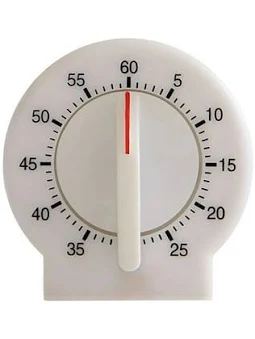
An ordinary white 60-minute kitchen timer

This technique guarantees that you will finish your memoir. In theory.

I always learn a lot from every memoir I read/listen to, but Lauren Graham’s I’m Talking as Fast as I Can supplied a little bonus information that has nothing to do with her life or memoir style. She wanted to pass along a 10-step writing motivation technique called the Kitchen Timer Method. After learning it from director/screenwriter Don Roos, Graham adopted it herself and says she never had another problem with procrastination, writer’s block or anything else that can keep writers from making progress.

This is how it goes, but of course below each step I have to add my two cents. The all-caps sections are original, not mine ever!

  1. Buy a kitchen timer, one that goes to 60 minutes.
    Me: Translation for 2026: know how to set your watch or phone alarm for one hour.
  2. We decide on Monday how many hours of writing we will do Tuesday. When in doubt or under pressure or self-attack, we choose fewer hours rather than more. A good, strong beginning is one hour a day.
    Me: I think this is a great idea. Rather than commit to a long-term calendar or plan even a week ahead day by day, wait until the day before. You’ll know your schedule and can somewhat anticipate any surprises that come up. This also lets you plan the rest of your life without much regard to your writing goal, because even if you schedule other things that day you know that you won’t set your writing time until all of those other plans are made.
  3. The Kitchen Timer Hour:
    No phones. No listening to the machine to see who it is. We turn ringers off if possible. It is our life; we are entitled to one hour without interruption, particularly from loved ones. We ask for their support. “I was on an hour” is something they learn to understand. But they will not respect it unless we do first.
    No music with words, unless it’s a language we don’t understand.
    No internet, absolutely.
    No reading.
    No “desk re-design/landscaping,” no pencil-sharpening.
    Me: Don Roos developed this before so much of a book’s research could be done online. The “listening to the machine” and “no pencil-sharpening” are the giveaways. So the problem I have with this rule is that then we must define what an hour devoted to “writing” looks like. When you’re writing a memoir, other nonfiction or even a novel, the hour you devote to writing can turn out to be 60 valuable minutes of online research. There are chapters you can’t write without determining a sequence of events or other information that is in the public record. I would say turn off your phone’s ringer but leave the buzz on for emergencies, and definitely no social media or responding to email/texts. But I would replace “no internet, absolutely” with “internet for research purposes only.” And it counts as research when you spend your time emailing requests to friends and relatives for stories, documents or facts they may remember.
  4. Immediately upon beginning the hour, we open two documents: our journal, and the project we are working on. If we don’t have a project we’re actively working on, we just open our journal.
    Me: Roos’s idea here is that you write, and if that means nothing but writing in your journal, well, good enough. But as a memoir author you always have a project: your memoir. And writing a memoir doesn’t automatically mean you also even have a journal. So on this one, just open your memoir document.
  5. An hour consists of TIME SPENT keeping our writing appointment. We don’t have to write at all, if we are happy to stare at the screen. Nor do we have to write a single word on our current project; we may spend the entire hour writing in our journal. Anything we write in our journal is fine; ideas for future projects, complaints about loved ones, even “I hate writing” typed four hundred times.
    When we wish or if we wish, we pop over to the current project document and write for as long as we like. When we get tired or want a break, we pop back to the journal.
    The point is, when disgust or fatigue with the current project arises, we don’t take a break by getting up from our desk. We take a break by returning to the comforting arms of our journal, until that in turn bores us. Then we are ready to write on our project again, and so on. We use our boredom in this way.
    IT IS ALWAYS OKAY TO WRITE EXCLUSIVELY IN OUR JOURNAL. In practice it will rarely occur that we spend the full hour in our journal, but it’s fine, good, and right that we do when we feel like it. It is just as good a writing day as one spent entirely in our current project.
    Me: If you can get yourself to write in your journal, you can put the same thoughts into your memoir. You may delete them later, and I think that’s the key to this #5 point—don’t give in to writer’s block. Write anything, and edit later. It’s all part of your life. For me, the problem is that I’m a writer. So devoting an hour to writing is no problem since I write all day long. For someone like me, that hour has to be devoted to the memoir or whatever project I’m avoiding. And the part about staring at the screen? I think the idea is that if you sit there for an hour, you’ll write something.
  6. It is infinitely better to write fewer hours every day than many hours one day and none the next. If we have a crowded weekend, we choose a half-hour as our time, put in that time, and go on with our day. We are always trying to minimize our resistance, and beginning an hour on Monday after two days off is a challenge.
    Me: I respect this point of view when it functions for you, but it is actually opposite of my experience. I used to work at least a little bit seven days a week. I made all my professional deadlines, but sometimes the rest of my life would get away from me. For many years now, I’ve taken Saturdays off from working. Saturday is a great day to spend on the phone or in person chatting with friends, getting some shopping done, cooking something special, cleaning a closet, assembling some apparatus that’s been sitting in a box, packing for an upcoming trip, and so forth. I think that when you set such a high bar of never skipping a day, when you do inevitably skip a day it’s like cheating on your diet—you think everything is ruined now. But I do agree that two days in a row make this writing goal feel less like a habit and more like a hobby. So try to write on day two, but busy life today doesn’t always cooperate. Maybe you’re traveling or dealing with a sick child or hosting out-of-town friends. A day off here and there, even weekly if that is what becomes you habit, is just fine.
  7. When the hour is up, we stop, even if we’re in the middle of a sentence. If we have scheduled another hour, we give ourselves a break before beginning again—to read, eat, go on errands. We are not trying to create a cocoon we must stay in between hours—the “I’m sorry I can’t see anyone or leave my house, I’m on a deadline” method. Rather, inside the hour is the inviolate time.
    Me: I don’t agree with this except that you should get up and stretch after, maximum, an hour. Touch your toes, walk up a flight of stairs, certainly eat if you’re hungry. But if you’ve scheduled two hours to write, there’s no need to split them in half to the point that you’re running errands in between the two hours. It’s fine if you want to do it that way, but I don’t see why it’s imperative.
  8. If we fail to make our hours for the day, we have probably scheduled too many. Four hours a day is an enormous amount of time spent in this manner, for example. If on Wednesday we planned to write three hours and didn’t make it, we subtract the time we didn’t write from our schedule for the next day. If we fail to make a one-hour commitment, we make a one-hour or a half-hour appointment for the next day. WE REALIZE WE CANNOT MAKE UP HOURS, and that continuing to fail to meet our commitment will result in the extinguishing of our voice.
    Me: I fully agree with this one. If you scheduled two hours but made it only through the first hour, the natural response might be to try to make it up the next day and schedule three hours. As he notes, doing that is probably setting yourself up for failure. Let it go. If you made it through only one hour, then set one hour as the nest day’s goal. You know you can keep that promise to yourself.
  9. When we have fulfilled our commitment, we make sure we credit ourselves for doing so. We have satisfied our obligation to ourselves, and the rest of the day is ours to do with as we wish.
    Me: Sure. Get it done, and go about your day. Or do everything you need to do all day, and then write at night. Let your memoir be part of your life rather than having it consume your life. That’s good advice, but I can’t say I follow it. I recently ghostwrote a memoir, and I lived and breathed it a lot of each day. When I saw one of the people in the book boarding the same plane as I was, I thought that perhaps I was just imagining it was that person because the players in the book were always in my thoughts. Don’t be like me!
  10. A word about content: This may seem to be all about form, but the knowledge that we have satisfied our commitment to ourselves, the freedom from anxiety and resistance, and the stilling of that hectoring voice inside of us which used to yell at us that we weren’t writing enough — all this opens us up creatively. When we stop whipping ourselves, our voices rise up inside.
    Me: Absolutely. Under the pressure of our own burdensome self-chastising, we lose the freedom of mind and soul that it takes to create. I remember this from college. I felt frozen facing papers and tests for three or four different classes. A friend urged me to let go of all but one and just get started on that one. It was amazing how much better I felt—instantly—once I made progress on the first one, and then I went to the next and the next.

Well, that’s the Kitchen Timer Method. Follow it to the letter, try my tweaks, or come up with your own version. Good luck!

Memoir Authors: Use the Holidays!

Cover of Meat for Tea literary journal issue

Family Gatherings Can Further Your Project

A lot of memoir authors don’t look forward to the holiday season because of all the family gatherings. Through your memoir, you may hold family members responsible for challenges you’ve had in your life. But as long as attending a holiday gathering does not endanger your mental health, use the holidays to your advantage! They hold a lot of promise for a memoir author. Bring a laptop, notebook or recording device!

  1. Memories. You know what your older relatives love doing? Reminiscing. You may think they keep everything close to the vest, protecting secrets and hiding background circumstances, but the older they get the less they care, or maybe they don’t quite remember which information they’re not supposed to disclose. And typically there’s alcohol to loosen those lips. Most holiday celebrations last hours and include casual sitting around, so focus on that and consider the advantages of being able to reach everyone at once:
    -Bring old photos. Family members will enjoy going through them, and you won’t have to say a word because the photos will generate comments and conversation all by themselves.
    -Approach relatives one by one to ask a few questions. You get a face-to-face interview without having to make a separate appointment with each person.
    -Walk up to a group and throw out a question that might provide a big-picture view for you when different people respond with different recollections. It can be anything from “Why don’t I know much about the years Mom’s family lived in California” to “What do you recall about me as a little kid?”
    -Talk to the family members you know the least. What insight can they give you into your own life?
  2. New memories. Even if your memoir’s timeline ends long before current day, hanging with your family can influence your memoir. Perhaps because you’re writing a memoir, you’ll be paying attention to the dynamics of relationships and traditions, and that will guide you in the tone of your writing. Maybe something dramatic will take place—a reconciliation, wedding announcement, memorable or clever remark, or empty chair due to a recent death. This can give you an idea for a good ending for your book.
  3. Test the publishing waters. If your family isn’t aware that you’re writing a memoir, this could be a convenient time to give them a heads-up that they may see their name in your upcoming book. You can even bring printed passages if you feel that you need someone’s permission to publish a detail, you want to check the accuracy, or you’d like to just let the person know how you’re presenting an aspect of your life. This may give your relatives comfort rather than having them fear the worst. Of course, you may get blowback as well, so don’t spoil the party with a preview if you’re determined to write an unforgiving tell-all. If you’re finished or close to finishing your book, you can ask whether anyone knows a literary agent or has connections to a publishing house. Again, this is easier with everyone in the room than making a series of phone calls or relying on word-of-mouth methods to spread the information.
  4. Trigger your writing habit. So much happens at the holidays, especially if you have house guests or you’re the one traveling and staying with relatives. Let the pile-on of experiences inspire you to write something unrelated to your memoir, just for practice. Call it a writing exercise, and I’ll give you the assignment: Write a short story or poem about your 2025 Thanksgiving or winter holiday. Some years ago, I found myself writing fiction, which I never do, based on our family’s Thanksgiving. I knew I could report in a narrative way, but I have no imagination and didn’t realize I could write fiction if I sat down and just did it. A lot of the story I crafted was truly made up, and I wrote in first person but from my daughter’s point of view, not my own. And guess what! A little literary journal, Meat for Tea, accepted it for publication after I reworked the story according to the issue’s parameters—the story had to revolve around “mugwort.”

While Meat for Tea sells its books and I encourage you to read the stories because they demonstrate good writing, my story is from 2022 so I think it’s okay if I just let you read it here. I hope you write something in 2025 yet that will give you confidence to work on your memoir in 2026. And Happy Holidays to you all.

Why Memoir Authors Procrastinate

Books with text "Turn the page"

It has nothing to do with being lazy or busy or distracted.

It’s common to put off your goal of writing a memoir either before or after you’ve started writing it. We beat ourselves up for this, annoyed that we can’t just sit down and write. But it’s not that we’re lazy. And, yes, we’re all busy and get distracted by everything, but we also prioritize and can find time. I hope looking at why memoir authors procrastinate will either motivate you to stay on task or help you at least to forgive yourself for periodically abandoning the project.

Writing a Memoir is Like Everything Else You Do

It’s not just writing; we procrastinate all tasks. And writing can really be a challenge. The thing with procrastination is that it quickly becomes an “out of sight, out of mind” condition. First you tell yourself that you’ll start on Monday or the first of the month or after the holidays. But once you’ve delayed it, you give yourself permission to put it off again, when Monday or whatever targeted date arrives.

Or if you’ve started your memoir and you pause, you get out of your writing habit. Like any habit, then it takes effort to get back into the swing.

Writing a Memoir is Like Nothing Else You do

Writing is hard, but you’ve written before, at least in school. The new aspect is your subject matter. Maybe you’ve put yourself into previous work—perhaps you’ve written an opinion piece or based an essay on a personal experience—but this book reveals so much about your life that you may not have even thought through, much less written about for others to read.

With a memoir, you’re running head first into obstacles thrown by two bullies—general writer’s block and naked exposure. When one’s not bombarding you, the other one is.

A Writer’s Procrastination

All writing projects carry inherent roadblocks:

  • How to begin your story? You may get so obsessed over grabbing the reader with a catchy lede that you can’t move on until you’re satisfied with your opening paragraph. This can be true whether you’re writing an article, essay or book. It’s a trap, and all you have to do is step around it. Start somewhere in the middle, with a story you remember well. Keep adding stories, and eventually you’re likely to intuitively know how to begin.
  • Structure. How to begin an article, story or book is just one of the decisions in the bigger picture of how to structure the piece. If you’re telling a story, do you go chronologically, jump back and forth, or start with a pivotal event and then go back and trace the roots before picking up where the event left off? Considering your structure also opens the doors to form. Should you craft your writing as a diary? Even a poem? Should you write in present tense or past tense?
  • Research. Nothing stops creativity in its tracks like finding yourself at a loss for facts. You may tell yourself that you’ll continue that chapter as soon as you have time to interview a key person, get access to some public records, read a history book, find an old map/telephone book/Yellow Pages, or get hold of whatever source you need to consult to provide detail or accuracy. You have two choices: put that chapter aside but keep writing from a different point in time, or start on the research right away. It’s harder to go back to it after you’ve lost momentum and still haven’t done the necessary research.
  • Edits. Being unhappy with some part of what you’ve already written is another hurdle writers easily trip over. Until you fix this or that, what you want to write next won’t have enough background to make sense, or the opposite—it will be somewhat repetitive. Or you’re just feeling that the writing isn’t that good and you should improve it before starting the next chapter. But writing a flawed first draft is absolutely permissible. I confess that this issue often slows me down. I want to be satisfied with the part that’s done, and sometimes I edit it over and over before I continue. That’s okay, too, as long as, at some point, you get yourself to accept that it’s in good enough shape to move past it.
  • Insecurity/imposter syndrome. Before you start writing, and periodically as you write, your insecure side may be needling you about not being a good enough writer. You’re either writing this or you’re not. Make up your mind, and stick with it! Worry about how good it is after you finish. At least then you’ll have fulfilled your promise to yourself to write it.
  • How to end? If you get to the ending, know that finishing a piece of writing is easier than starting it. But in any dynamic writing, you can be unsure of whether you should wait and see what happens next. Or you may not know how much to include. So you put the writing aside again, hoping to come to terms with an ending. That’s when insecurity can creep back in to sabotage your project and keep you from going back to it at all.

A Memoir Author’s Additional Procrastination

With all of the circumstances that can derail any kind of writing, it’s not a surprise that a memoir carries even more threats to completion. Memoir authors specifically also have to deal with:

  • PTSD. Many memoirs focus on a traumatic event. The only way to write about trauma, at least when you’re writing it out for the first time, is to more or less relive it. You have to gear up for that, and it’s understandable when you let days or months pass before getting yourself to go through that. Or you start, and then the next time you try to pick it up again you just can’t. This is hard, and you have to really commit to getting it done, but then it’s often cathartic and the event stops haunting you.
  • Simple sadness. Maybe you’re humming along fine until you reach the part about your mother’s death, and you are just never in the mood to write about that. Again, it’s having to relive something that was difficult the first time.
  • Second thoughts. A lot of memoir authors struggle with whether to publish their life story. Even after starting the project, they may hit a point of delaying because they worry that their life isn’t interesting enough for anyone to want to read about it, or that what they’re writing about will hurt the feelings of some of the people in their life, or that some of those people may even take legal action against them. They don’t know the first thing about getting a book published and worry about that process. People who write about a happy life may start to worry that they’re jinxing their own chance for joy in the future—as soon as you proclaim you’ve had a great life, something bad happens—and that can stop them from finishing the work.

So you may be insecure or worried or traumatized, but you’re not lazy! Give yourself a break, identify what’s keeping you from finishing your memoir, and dive back in.


How to Tell Whether You’re a Writer

How to Tell Whether You're a Writer little girl writing in a book

And why you don’t have to be a writer to write a great memoir

When you’re a writer, you write. You can tell whether you’re a writer just by looking at the sheer volume of your work. Do you have notebooks full of essays, poems, stories or even just thoughts? Is your computer filled with files of creative or expository writing?

Writers Write 24/7

When you’re a writer, your mood and the outside world may influence your subject matter, but none of that keeps you from writing. When you’re happy, you write. When you’re angry or sad, you also write. When you’re bored, you write, but when you’re so busy you don’t have a minute to spare, you still write. You don’t have to be an avid reader or a student of writing to be a writer. Some writers just have a feel for language without all that much example to follow.

Sometimes the writing is just in your head. This is when you’re not in the stage of getting it down on paper or into the computer. You’re more in the gathering stage—observing life in a way that writers do, with chapter titles or lines from a movie scene script scrolling across your mind.

Parents sometimes seek my advice. “My kid wants to be a writer,” they’ll say. “Is it easy to make a living from writing? Should my kid major in writing in college?”

I have only one response. “A writer writes,” I say. “Whether writing as a living or doing it as a hobby, if your kid is a writer, your kid will write.”

I think you might as well try to make money from what you love to do, but if you have another calling you’d rather pursue professionally, writing will still be there. Kids like that can become lawyers, and then the part of the job they love most is writing the brief. They can graduate with a major in business and still find lots of writing opportunities in marketing and other aspects of their job description. And if it does just end up as a hobby, it can be a very satisfying one.

Skill Level Is No Measure for Whether You’re a Writer

You can be a writer and yet not write very well. You may have an amateur hand at poetry or grammar errors in your essays or poorly constructed transitions in your short stories. Still, you get joy from the process of putting your thoughts into words, the words into sentences, the sentences into paragraphs, and you see where I’m going with this.

The opposite is true as well: you may write very well but not be a writer. Your boss may ask you to do a lot of writing in your job because you’re good at it. Maybe you’re able to knock off a speech for your sister’s wedding in an hour, and perhaps grammar and spelling come naturally to you. But you don’t choose to write for pleasure. You’re out doing other things. If you’re that person, you are not a writer.

Think about a natural athlete. How many of those have fallen by the wayside? The star high school basketball player, the gifted Little League pitcher, the promising tennis prodigy. Something else catches their interest, and the sport fades because, while they have more talent than everyone around them, their heart is not in the sport. If your heart is not in writing, you’re not a writer. But you still can write.

What skill level can determine is how much validation you receive about your writing. Typically, gifted writers receive a lot of encouragement in school, but I worry about writers who have more love than talent. A teacher who gets overzealous in criticizing your writing can kill the passion in you. That’s a real shame.

For one thing, you can improve in time. But mostly, if you love to write you should be encouraged even though you won’t be writing for a living or maybe even sharing your writing at all. The process of writing can be healing, so don’t give it up just because some teacher didn’t nourish your desire to write.

Both Writers and Non-writers Can Write a Memoir

If you’re trying to write a memoir, don’t worry about whether you’re a writer. Just keep at it until you finish your memoir. It may be your only completed written work or the only writing you’ve ever taken on voluntarily. Writing a memoir may be important to you for a lot of reasons; enjoying the writing process doesn’t have to be one of them.

And if you’re a writer in your heart and soul, a memoir may just be another format you feel like trying out. You may believe that you’ve lived an ordinary life, but you find it an exciting project to describe in writing the world that is uniquely yours.

My Own Example

I think I was pretty much born a writer. I wrote a song when I was about twelve, I always wrote my own cards for my parents’ birthdays, and I started writing poetry in high school. None of that came about as a conscious decision. The way a friendly person makes friends from childhood on, I just wrote as part of who I was.

My English literature major in college seemed an obvious choice, since in high school I received good grades on my term papers and enjoyed writing them. But halfway through college, when I took a couple of journalism courses, I had a name for what I really was: a journalist. I was a reporter. I could write up any set of facts. I realized that I enjoyed doing research and conducting interviews more than relying on my imagination to come up with plots and develop characters for creative writing. I never dreamed about writing the next great American novel.

Since then, I’ve been lucky to have been a working journalist, a grammar teacher, and eventually a memoir coach, editor and ghostwriter. But even though I write professionally, I still write for myself. My computer files’ labels tell the story: “old writings,” “miscellaneous writings,” “song lyrics,” “parenting reflections,” “speeches,” “TV pilot,” “poems,” “script ideas,” and dozens of titles of stories.

Even this blog—no one forces me to write it. I just like getting my thoughts down. I’m a writer. Maybe you are, too. Or maybe you’re not. That’s okay, and your memoir may still be amazing.


2,024 Reasons to Write Your Memoir This Year

2024 reasons to write your memoir

Numerology Offers a Lot of Motivation to Say: New Year, New Book.

Like a lot of people, memoir authors look for signs. Should I write my life story? I’ve started my memoir, but should I finish it? Will my memoir be any good if I write it? Give me a sign. Please!

According to numerologists, the coming year is full of signs that point to: Yes, write your memoir already. Wait no longer.

The First Two-Thousand Reasons

This is a lot to bite off, so let’s swallow the first 2,000 reasons in two big chunks and then take our time chewing on the last 24 reasons. The first 1,000 reasons boil down to the simple fact that you wanna do it. You want to chronicle your entire life or a segment or more of your life. You probably have even more than 1,000 reasons for wanting to write your book. In general, you should do what you want to do as long as it’s legal. So do it.

We can group the second 1,000 reasons as well, which come down to a sort of obligation to live authentically and leave a legacy or some type of inspiration. Your life, every life, is fascinating in its uniqueness. Your life, every life, is worthy of documenting. Your life, every life, provides lessons that you can pass along to others. There are at least 1,000 reasons for someone to want to read about your life and derive inspiration from it.

The Rest of the Reasons for Writing Your Memoir in 2024

Now let’s go more slowly as we tackle the remaining 24 reasons for you to write your memoir this year. I can come up with 24 generic reasons for you to start or complete this project—it makes a perfect New Year’s resolution, writing about your life is cathartic, writing a book is a very satisfying project, you’re not getting any younger, etc. Or you can customize 24 reasons that apply to you in particular. Maybe you have a high-number birthday coming up this year, or your children asked you to write up your life, or the part of your life you want to document has just ended and it’s fresh in your mind. Go ahead and write out those 24 reasons—can’t hurt!

But the 24 reasons I’m supplying here have their foundation in numerology. Even though I don’t believe at all in the non-science of numerology, I’m finding it interesting that the characteristics numerologists are assigning to the year 2024 align extremely well with the goal of writing a memoir. And maybe you do have some belief in this. Those of us who are skeptical still can have some fun and accept whatever motivation the universe seems to be sending us.

I’ll explain them first and then list them 1 through 24 in summary.

The Numerological Process of Evaluating the Year

Numerologists combine three approaches when predicting a year’s mood. First, they take each of the numbers individually. This coming year, then, since I don’t think zero counts, we’ll look at the numbers 2 and 4. Second, they add up the digits—2+0+2+4=8. They use the sum, which is 8 in this case, as the most significant number to analyze. Third, they drop the two-thousand and consider only 24, add those digits, and come up with the number 6.

To me, this means they cover a lot of bases. If 8 doesn’t work that well, they still have 6 and 2 and 4. But I’ll try to keep my snarky comments out of this and get back to taking the leap of faith.

A Close Look at the Numbers 2, 4, 6, and 8

According to The Times of India, the number 2 refers to the moon, and the moon is a sign that indicates money, work, jobs, abundance and emotions. Since there are two incidences of the number 2 in the year 2024, we can expect an abundance of abundance.

The number 4, according to the same source, is associated with Rahu, which is connected to new technology, ideas, opportunities and gains. Rahu is an imaginary shadow planet, so take that signage for what it’s worth.

When we drill into the sum of 2+4, which is 6, we connect to the planet Venus. This softens the year with a focus on love and affection, but it’s accompanied by challenges and growth. Numerologists encourage us to be true to our emotions involving love and affection.

The number 8 is associated with a lot of positivity. You know how a figure 8 loops around with no end? When you think about it, that’s a sideways infinity symbol. So 8 represents eternity and the totality of the universe. Picture it as “what goes around comes around,” and you’ll see why 8 is considered a sign of karma.

The Significance of 2024 Numerology for Memoir

According to horoscope-focused refinery29.com, the Egyptians saw 8 as bringing balance and cosmic order, while in tarot it’s a card of magic and inspired action. That website provides the perfect message for this year’s hopeful memoir authors: “Whenever this tarot card shows up in a reading, the message is: ‘You have everything you need to make stuff happen — so, go for it!’”

That same energy comes up in other descriptions of 2024 numerology. Well and Good quotes numerologist Novalee Wilder, who predicts that 2024 will be a year of “radical honesty and transparency.” That sounds like a candid memoir to me!

The same website notes that another numerologist, Sarah Faith Gottesdiener, urges people to confront “the ways in which you’ve been lying to yourself or holding yourself back from living the way you truly want.” She says it’s a time for finding and nurturing your inner spark and following your heart’s true path. To me, that means that 2024 is the year to stop holding back from being the memoir author your heart wants you to be.

That article paraphrases Gottesdiener’s advice: “Another aligned way to uncover your desires and identify your bigger-picture goals is to self-reflect through journaling. Just being able to put those goals on paper might just point you toward the first step you’ll want to take in 2024 to bring them to life.” Instead of your goals, put your whole memoir down on paper!

Angel Number

Over on astrology.com, they talk about “angel numbers.” You guessed it—2024 is an angel number. This website notes: “Number 2024 is a spiritual awakening number, as it symbolizes the beginning of a spiritual journey, developing your inner wisdom, and trusting your intuition.”

Again, is there any better description of the journey of writing a memoir? To add to that, astrology.com also mentions 2024 as “a positive sign for your career and financial prospects.” If you’re hoping to sell your memoir, better get it out in 2024!

If you haven’t yet put pen to paper or finger to keyboard, make this the year you write that first sentence. If you’re well on your way, decide to finish a first draft by the end of the year. If your first draft has been sitting in a drawer, get past your fear or whatever roadblocks are keeping you from polishing the draft, finding an editor, querying publishers or self-publishing. Get your book finished!

If you’re not feeling the numerology for 2024, I’ll offer some final inspiration by sharing what I learned in my numerology research about the last day of the current year. That will be 12/31/23. Dropping the slashes turns it into 123123. Consider that your count to get started. 123… 123… go!

Here’s the listing 1 through 24:

The number 2 is for the moon, which promises conditions perfect for writing and publishing a memoir:
1. Money
2. Work
3. Abundance
4. Emotions

The number 4 indicates:
5. Ideas
6. Opportunities
7. Gains

Add 2+4 to get the number 6, which offers the full experience of reviewing your life’s important points:
8. Love
9. Affection
10. Challenges
11. Growth

Add 2+0+2+4 to get the number 8, which is associated with words you could pair with what your memoir creates in the world:
12. Eternity
13. Balance and order
14. Inspired action and magic

Based on the full number 2024, numerologists give advice that easily applies to goals of memoir:
15. Stop holding yourself back
16. Live your true desires
17. Find your inner spark
18. Reach levels of radical honesty and transparency
19. Write it all down

2024 is an “angel number” that means:
20. The beginning of a spiritual journey
21. Developing your inner wisdom
22. Trusting your intuition
23. Career advancements and financial increases

The last day of 2023 tells you to get started:
24. 12/31/23 = 123 123 go!

Why Do People Write Memoirs?

Person leaving footprints in the sand on a beach

Facebook has several memoir groups, and on one of them a member posted the question, “What is the primary reason for writing your memoir?” Quite a few people responded in the comments.

Memoir as a Family Legacy

Some reflected the thoughts of many of our Write My Memoirs members—to write a memoir, as one commenter put it, simply for “posterity.” Another person hoped her memoir would become a “family heirloom.” She noted, “If I never amass a fortune to bequeath, at least I will be able to share my story.” Similarly, someone said she was writing her memoir “for my kids and grandkids to have a record of me should they someday want to read it.”

Memoir to Honor Someone Close

Some memoirs have the theme of capturing the life of someone who had a significant impact on the memoir author. The memoirist may intend to honor a parent, mourn a child who died young, or maybe relate the story of a great friendship or marriage.

In the comments on the Facebook post, someone wrote about writing her memoir to bring awareness to deaths from Agent Orange. Her husband was a sailor in the US Navy who died from the effects of the chemical. Another said her memoir commemorated the short life of her sister, who died at 19, and someone else said she was documenting all the good advice from her mother.

Memoir to Serve as a Note of Caution

One typical reason people write memoirs is to help readers learn from the author’s mistakes or warn them about dangers the author encountered. A number of responses fell along this theme.

One commenter said she was writing her memoir to help people who have been shunned by their families. Her family shunned her after she left what she calls a religious cult. Another person wanted to caution people about “medical gaslighting” and the medical community not believing you when you describe symptoms. Yet another person had addicts for parents and crafted her memoir to offer ways to break the cycle of addiction.

Memoir to Heal, Share and Reflect

Many lives are infused with humor and interesting anecdotes, and if you’re sharing those stories you might as well compile them into a memoir. One commenter had 30 snippets of stories she’d written over the years, so she went through them and laced them together. Another wanted to relate her quirky tales from being a lesbian southern belle. One said he simply wanted “to tell the world my fascinating story,” while another wanted to write about his “unusual existence.”

One commenter wanted to write her memoir before it was too late. “I feel the need to tell my story for future generations,” she said. “As a child during the Cold War, I was part of an exodus of unaccompanied children from Cuba fleeing Communism….We are elderly now. If we don’t write about it our stories will die with us.”

A couple of commenters mentioned writing as a way to heal; memoirs are well known to help people heal from trauma or work through grief. One commenter said she was motivated “for self-healing and to share life experiences.” Another said sharing her life story was “nothing short of transformation, for myself and others.”

For some people, writing a book is a goal. One commenter said she wrote her memoir “to prove I could do it. I first dreamt about publishing a book when I was a little girl.”

And for people who are natural writers, a memoir is an obvious task. “I write because writers can’t not write,” one commenter remarked. “And I write my story because I believe we all have stories that matter.” At Write My Memoirs, we agree with that!

5 Ways Your Memoir Will Be Unique

Unique memoir standing out from other books on library racks

A lot of memoir authors worry that they have nothing new to add to the nonfiction literary category and will not have a unique memoir. At Write My Memoirs, we feel that concern is unnecessary. We assure you that your memoir will be unique! Here are five reasons.

  1. Your life is unique, so any chronicle of your life, by definition, will be unlike any other. You can think about the person closest to you—maybe a sibling, whose parents are the same as yours and who grew up in the same place as you, under at some points identical circumstances. And yet you know that your life has not mirrored any of your siblings’ lives. You are you—different from everyone else. Your story is yours alone.
  2. No other memoir includes your specific anecdotes. The aspect of your life on which you’re focusing is narrower than your full life, so you’ll be taking a close look at small incidents. Those various stories came together in your life but no other life. So much of life is happenstance. You happened to have met someone. It happened to have rained that day. Some pivotal event happened to have set your journey off on a new direction. It happened to you, but not to other people.
  3. Every relationship is different, and relationships are a big part of most memoirs. Even within your own set of relationships, each one has its own dynamic. As you write your memoir, keep that in mind and don’t minimize it. Think about the way you act around different people and how they’ve each influenced you and impacted your life. Don’t assume the reader has had the same relationship with a parent or a colleague or a friend that you have.
  4. Your surroundings are unique. From the time period to the location, your story is set against a background that will not replicate anyone else’s. You were the one born on your birthday, living in your home somewhere on the map and going through life as it was during that era at that spot.
  5. Your writing voice is unique. This is important! Two people can report on the same event, and the results will not be the same. Writing styles vary, and so do the choices of which facts, players and issues to include. The way you roll out a narrative is all your own. Like a vocal voice, a writer’s voice is special to each person.

So of all the concerns that might trip you up—finding the time to write, facing past traumatic incidents, fearing you’ll hurt people’s feelings with your candor—don’t worry that your memoir won’t be unique. There absolutely will be no other story like it.

Lessons for Athletes Who Want to Write Memoirs—And Vice Versa

Far view of a track meet
This week in July 2023, the National Senior Games are taking place in Pittsburgh, and I’m competing in track and field. If you’re over 50 and enjoy athletic competition in any sport, check out Senior Games. It’s fun. But that’s another topic for another time, or here’s a link to read a piece I wrote about a previous Nationals event. But what you all want to do is write memoirs.

We All Have Our Gifts

In regular life, I’m a writer, editor and memoir coach. I’m good at all three. My writing comes naturally, so that part’s a gift. I learned to edit by going to graduate school in journalism, so that’s my training. When I kind of accidentally became owner of Write My Memoirs, I taught myself little by little how to coach memoir authors, so that expertise comes from trial and error, consulting with colleagues and other types of experience.
In athletic competition, I run, jump and throw. I’m bad at all three. I was never an athlete of any sort. I can swim and I played tennis as a teen, but I was never good enough to compete in any sport. Track and field is way out of my wheelhouse. Despite that, in middle age I started running for exercise—just two miles most days. So when my husband began competing in Senior Games, I got tired of being a spectator and decided I’d enter some of the running races. Eventually I added javelin and two jump events.
The best I can say for myself is that I don’t always come in last. Sometimes I do. In this group of exceptional senior athletes, I am simply not very good. I don’t have a gift the way I do with writing, but I don’t mind. I can train and practice and teach myself.
If you’re feeling that, as a writer, you’re simply not very good, I can relate because of what I do that I feel inadequate about. But you know what we say in Senior Games? Even when you land in last place, you beat all the people sitting at home on the couch. Try thinking in those terms when you write your memoir. You’re doing something a lot of people want to do but never get past page one.
Here are a few ways I can align your desire to write with my desire to compete in track and field.

Lessons from Comparing Athletic Competition to Writing a Memoir

  1. Like my triple jump, your writing is something you can improve. I watched videos and read information to figure out the steps for the triple jump. I knew that it wasn’t a popular event, which is how I came in seventh place in my age category in this year’s Nationals! Okay, that also was last place, but I got a ribbon. I know it seems as if everyone is writing a memoir, but in terms of percentage of the population, you are a rare bird if you take your memoir the whole way to publication. Even if you don’t write the best memoir ever published, you still get a ribbon! You’ll be an author. You’ll have a book to hand out to friends and family. It’s huge.
  2. Just as I don’t enjoy running, you don’t have to enjoy writing in order to write a memoir. I run as part of my general fitness program, not because I attain a “runner’s high” or whatever dedicated runners seem to feel. You can look at your memoir as something you’re doing for yourself—not the part of yourself that wants to spend time doing something enjoyable, but the part of yourself that wants a targeted result. You want to produce your memoir. To realize that goal, you have to sit down and write it, or at least hire someone to take your information and write it for you.
  3. In competition, experts tell us all to just compete against yourself. Go at your own pace. Don’t burn out. So I run as much as I can as long as I can get myself to do it. That comes to two miles at least three times a week. If it rains or something unexpected comes up in my schedule, I wait until the next day. Writing is not that different. You don’t have to finish your memoir within one year or commit to a writing regimen of at least 30 minutes a day or set up an ideal writing environment. You know when you’re slacking, so at that point pick up the pace. Just don’t let it go completely. As with running, you keep putting one foot in front of the next, and sooner or later you get to the finish line.
  4. I’m the only “me” there is. Each of us is unique. There are so many aspects to being a person, and we differ in all of them, from the way our bodies are built to the way we think to the way our lives have progressed. My challenges in competing are different from other athletes’ challenges. Some have it easier, but many have it harder. I’m lucky to be able to run at all. Because you’re unique, your memoir will be special. If your story were already out there, you wouldn’t have to write it. Value the way you approach a project like memoir writing in your own way. Appreciate that your unique life will make an interesting narrative.

Your Memoir is Important

This isn’t a zero-sum game. I can compete alongside athletes much better than I am, with no delusion that I might win, and still be valuable as a participant in Senior Games. And you can offer a memoir that will add to the literature of what it’s like to live a particular life.

Build Buzz About Your Memoir by Publishing Articles and Comments Online

Screen capture of author's online article

First-time memoir authors are likely to have no solid writing credentials, much less an agent or publisher. How do you get writing credentials? Write!

Bylines Validate You as a Writer

Even a handful of online articles with your byline can build credibility for you as a writer as you begin to market your memoir, which you can do before it’s ready for publication. Write about things you know, and research websites that invite people to submit essays. There are lots of advantages to doing this:

  • Typically, your byline will be accompanied by a short bio. Given even just two or three sentences, your bio can easily mention that you’re the author of an upcoming memoir. If you can be more specific with the memoir’s name and the exact date or just month of publication, even better.
  • If you want an agent to represent you, or if you send your memoir manuscript to a publisher, impress them by including links to articles that carry your byline. That shows them that some professional outlet thought your work was worthy of publication.
  • These links look good on your own book website or blog as well. They say: I’m a professionally published writer. You can trust that my memoir is a well-written book.
  • Many articles offer readers the ability to leave comments. Keep an eye on your article, and respond to comments. This establishes a conversation with the very people who are potential buyers of your memoir.
  • You may get a little money for your efforts. But while some online outlets will pay for your material, that shouldn’t be your main consideration.
  • Writers write, and they constantly get better and faster at writing. Now that you’re a memoir author, writing frequently on other projects will help your writing flow so that it’s easier to motivate yourself to sit down and work on your memoir.

What to Write About

Ideally, you’ll find a website to carry your article about something directly related to your memoir. From your memoir’s theme to anything your memoir covers—your work, specific issues in family life, the geography you describe—you can speak as an expert by virtue of the fact that you’re writing a memoir that includes information on that subject. You are an authentic voice in that community. Don’t diminish the right you’ve earned to be an authority and the contributions you can make with a good article.

To just get your name out there, you also can write about something completely unrelated to your memoir. This won’t necessarily reach the target market for your memoir, but it will provide the other benefits of giving you a byline, links to share and a bio paragraph.

Here’s an article I wrote about a hot pop-culture topic that was published on sixtyandme.com. You can see that it’s been generating comments, and it’s even popping up on searches. Am I using my own blog here to help promote it? You bet.

Comment on Other People’s Articles

Another way to establish a familiar name with potential readers is to comment on articles that address your memoir’s theme. Any knowledgeable, informative comment you post will add to the discussion and set you up as a valuable voice on that topic.

On your comments, you may be able to sneak in a plug for your memoir, especially if you say something vague such as: “I’m writing a memoir about my experience with this same type of childhood.” Or you may be able to direct people to your book’s website.

How This is Different from Social Media

It’s helpful to build an online presence through Twitter, TikTok, Instagram, Facebook or whatever social media combination appeals to you. Articles are different, though, because they represent acceptance and a little bit of vetting by someone out there in the field. Anyone can tweet, but not everyone can submit an article and get it accepted for publication.

In addition, articles carry URLs that may stay there for years as you continue to send links to anyone interested in your writing. Social media is more about “follow me” and what’s coming next than what’s already out there. You don’t have to keep up with an article the way you do with a social account.

Good luck as you navigate all of this! Let us know if Write My Memoirs can help you with editing or self-publishing.

Have 4 to 12 Wednesdays Free? Take an Online Memoir Writing Course!

Sign saying "This is the sign you've been looking for"

The very beginning of your memoir journey can be the most daunting phase. Once you get going, momentum can carry you through. As you get comfortable and confident with writing, you’ll make steady progress on your memoir.

How do you start?

A friend of Write My Memoirs specializes in coaching new writers through the first steps. She’s offering a 3-part online workshop beginning January 18, 2023, with each part made up of four weekly sessions. You can take all three segments or just one or two.

“I help non-writers focus on getting their story down and generating pages,” our friend and colleague Barbara of Writing Life Stories says. “It’s all about leaving your stories as a legacy to your family and friends! Not about learning to be a writer! Or publishing!”

In her coaching, Barbara motivates, teaches and inspires using a process proven to be effective for thousands of people over more than 30 years. While this process results in a full memoir for the participants, it has benefits that go even beyond that.

“Research shows that you will gain increased resilience and self-confidence, more compassion for others and a greater appreciation for life using this method,” Barbara says.

When you finish the workshop and complete your first draft, come back to Write My Memoirs for editing/polishing and publishing! We will finish the project so that you have a wonderful book to distribute to friends and family in 2023. It’s still only January. This is the year you’ll do it!

“You may wish you knew more about your father or grandmother who passed away, but it’s too late,” Barbara says. “Your family loses by not knowing YOUR story. Isn’t it time to write it?”


Login

Then just set up a chapter and start writing your memoir. Don’t worry about rules. There are no rules to writing your memoir; there are only trends. These trends are based on techniques and features identified in current top-selling memoirs. At best, they’re the flavor of the month. If you’re capturing your life in print for your family, for your own gratification or to inspire readers, rather than aiming to set off Hollywood screenplay bidding wars, these trends don’t even apply to you. You’ll write the memoir that suits you best, and it will be timeless, not trend-driven.There are no rules, but there are four steps:

1. Theme/framework
2. Writing
3. Editing/polishing
4. Self-publishing

You’ve researched this, too, and you’ve been shocked at the price for getting help with any one of those steps, much less all four. That’s because most memoir sites promise to commercialize your work. They’ll follow a formula based on current memoir trends, because they want to convince you that they can turn your memoir into a best-seller. These sites overwhelm you with unnecessary information not to help you, the memoir author, but to address Search Engine Optimization (SEO) algorithms so they can sell more.

That’s not what we do at Write My Memoirs. Our small community of coaches, writers and editors are every bit as skilled as any you’ll find, and we charge appropriately for their expertise and the time they’ll spend helping you craft a compelling, enjoyable read. But you won’t pay an upcharge for other websites’ commercialization, the marketing that follows, and the pages of intimidating “advice.” You can sell your book if you like—we have ISBNs available for you—but our organic process of capturing your story takes a noncommercial path.

If you want help with any or all of the four steps above, choose from our services or save money by selecting one of our packages. If you’d like to talk about what’s right for you, schedule a call. One year from now, you can be holding your published memoir in your hand. And at that point, it will be a big deal!