
Religion and spirituality are big topics for self-reflection.
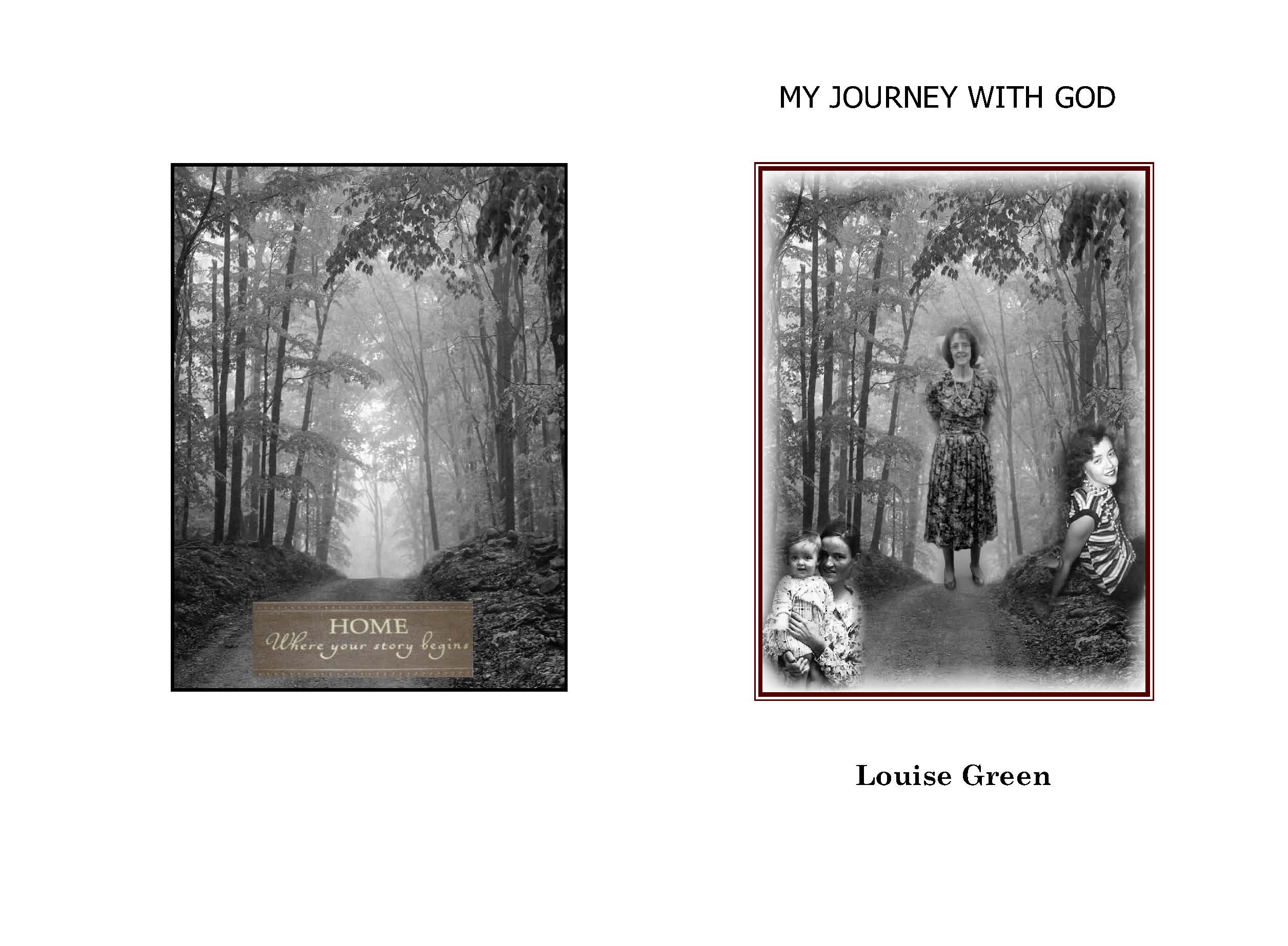
One of the first books I helped someone self-publish through Write My Memoirs falls into a category of a faith or spiritual memoir. Titled “My Journey With God,” it was more of an autobiography than a memoir, covering the author’s full, not terribly unusual, life. When I asked the author what motivated her to write the book, she said her way of publicly thanking God for a good life was to celebrate faith in memoir form. The book’s front and back cover appear above.
Gratitude in Memoir
This was a revelation for me. Of all the reasons to write a memoir, I had not considered that one. But I get it—it’s a type of gratitude journal. Some authors chronicle their faith journeys and perhaps lead readers along a similar path. There’s a whole Christian book publishing industry built around this concept, and those publishing companies can provide publishing opportunities for authors whose manuscripts may get rejected elsewhere.
In Faith Unraveled: How a Girl Who Knew All the Answers Learned to Ask Questions, author Rachel Held Evans writes about straying from her Christian fundamentalist roots before recommitting to God with an approach that she found more adaptable to her life. In the recently released Mostly What God Does: Reflections on Seeking and Finding His Love Everywhere, Samantha Guthrie of NBC’s “Today Show” uses personal essays of questioning and searching to open readers’ hearts and minds to a life exploring faith.
God as Redeemer
It makes sense that religion pops up often in memoirs, since it plays a role in many lives. Sometimes, it’s the memoir’s main topic or shares the limelight as the solution half of a problem/solution memoir. One of the earliest and best-known accounts, from 1948, is The Seven Storey Mountain: A Journey of Faith and Transformation, Exploring Vulnerability, Forgiveness, and the Quest for Spiritual Fulfillment in the Midst of a Turbulent World by Thomas Merton, who became a Trappist monk and guided readers toward spiritual reward. More recently, both Wired for God: Adventures of a Jewish Yogi by Dani Antman and Native: Identity, Belonging, and Rediscovering God by Kaitlin B. Curtice discuss the intersection between religious roots and the yearning for broader spirituality.
The author’s story of redemption is a popular theme in memoirs, and here, too, religion can enter the discussion when the author talks about overcoming illness, abuse or other adversity. Lacey Buchanan’s Through the Eyes of Hope: Love More, Worry Less, and See God in the Midst of Your Adversity, published in 2017, credits God for the strength to face her life’s challenges. Her son was born with a rare medical condition.
Religious Exposés
Religion in memoir is not always presented with gratitude. One trend in memoir is exposing abuse disguised as, or excused through, religious devotion. The best-selling memoir Educated presents author Tara Westover’s experiences with her family’s variety of Mormonism in quite an unflattering light. The truth behind the facade presented by television’s religious Duggar family is revealed in Counting the Cost by Jill Duggar, Derick Dillard and Craig Borlase.
The Inner Circle Book One: My Seventeen Years in the Cult of the American Sikhs, a 2021 memoir by Peter MacDonald Blachly, similarly traces the author’s experiences inside a cult-like religious group. In Devout: A Memoir of Doubt by Anna Gazmarian, published earlier this year, the author does not condemn her evangelical Christian upbringing, but she shows how she struggled to retain her spirituality while diagnosed with bipolar disorder and dealing with a medical community that did not easily fit within her religion’s parameters.
Part of Life
When not the memoir’s primary focus, religion still can bring a valuable dimension to the story. In her 2003 memoir, Leap of Faith: Memoirs of an Unexpected Life, Queen Noor of Jordan writes about her life as an American who married Jordan’s King Hussein. She addresses family life, her views of historical events, and her humanitarian efforts, and she drops a lot of famous names of people she’s met. But for readers to fully understand her life, she also discusses her Muslim faith and the way she blended her American upbringing with her life as a member of a prominent Middle Eastern monarchy.
Happy Holidays to You, Readers!
If you’re incorporating faith into your memoir, this time of year gives you a good opportunity to get in close touch with your feelings. And whether or not you have faith in your memoir or in your life, I wish you the happiest of holiday seasons.