We are experiencing issues with our Contact form.
Please Email Us Directly at: Su*****@************rs.com.

Every ordinary life story is extraordinary!

PLEASE NOTE:

oUR CONTACT US Form HAD A MALFUNCTION.
IF YOU HAVEN’T RECEIVED A REPLY, PLEASE FILL IT OUT AGAIN OR WRITE US DIRECTLY.

Every ordinary life story is extraordinary!

Another 10 Writing Tips from Stephen King

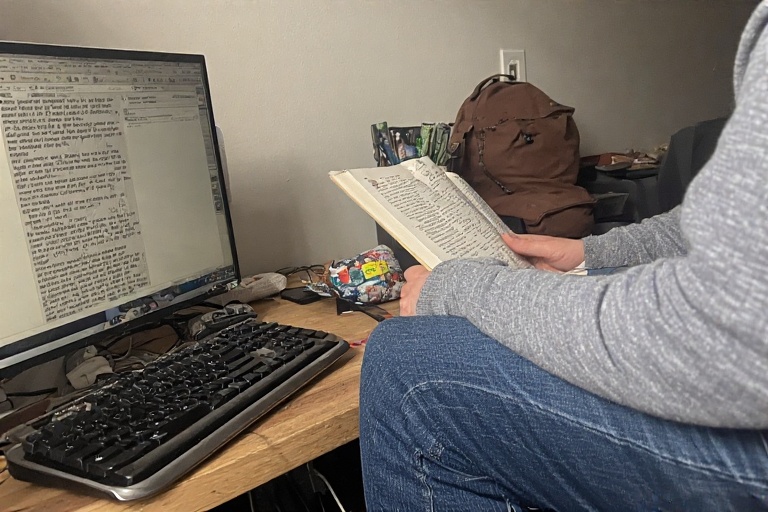
Someone reading notes while sitting at the computer

What memoir authors can learn from the master of horror narratives.

Following up on the previous post, as promised here are the second 10 of the 20 writing tips from Stephen King.

11. There are two secrets to success. “I stayed physically healthy, and I stayed married.”
Assuming King means success in writing and not in life, I think this boils down to: don’t forget to take breaks. Don’t neglect exercise. Go shoot baskets or walk with your friends. If you eat dinner with your spouse at 6 p.m., continue to eat dinner with your spouse at 6 p.m. Don’t let writing your book serve as an excuse that you’re too busy to pick your socks off the floor or attend your workout classes. I think this is great advice, but it will be hard for you if the way you reach a goal is to become obsessed with the process. Balance is important.

12. Write one word at a time. “Whether it’s a vignette of a single page or an epic trilogy like ‘The Lord of the Rings,’ the work is always accomplished one word at a time.”
This is the kind of thing that makes me wonder whether King had 19 tips and a deadline, and he just threw anything in here to round up to 20. I don’t see the profundity in this tip. And in some ways, it’s not even true. Phrases tend to work because of the whole, not because of each word, one at a time. So you can just skip Tip #12.

13. Eliminate distraction. “There should be no telephone in your writing room, certainly no TV or videogames for you to fool around with.”
Sigh. I’m not sure there’s anyone left who’s old school enough to be in this old of a school. I don’t watch TV when I write, but I pause to do Wordle or check Facebook. I keep my telephone right at my side. I could see turning off the sound even though I don’t do that, but I do not believe it’s necessary to eliminate all distraction. When I get into heavy writing, I’m really in the zone. That doesn’t mean I don’t want to be notified of an emergency. We just don’t live in these little isolated pockets anymore, and it’s ok. You’ll still get your book done. Also, this is another sort of cheat on the number of tips, because #9 was “Turn off the TV.”

14. Stick to your own style.
If you’re like me, you arrive home from a visit to London with a decent British accent. Imitation comes easily in writing, too. You may naturally start writing in a voice sounding a lot like that of your favorite author. Stephen King recommends fighting that temptation and, instead, figuring out your own style. The thing is that no one has your voice except you. It’s as big a draw as your plot, so develop your individual voice and treasure it.

15. Dig. “Stories are relics, part of an undiscovered pre-existing world. The writer’s job is to use the tools in his or her toolbox to get as much of each one out of the ground as intact as possible.”
This is a complex instruction. How do you know when you’ve written enough about that one story? It’s not always obvious or intuitive. Even though he’s talking about fiction, I think keeping this in mind will help you with your memoir. Don’t skimp on the details or get lazy with descriptions.

16. Take a break. “You’ll find reading your book over after a six-week layoff to be a strange, often exhilarating experience.”
I don’t know about this. If you have the time to write, take advantage of that. Life has a way of throwing in those layoffs without our help. But then I agree—after you haven’t read it for a while, if you like the way you write you’ll find it satisfying to go through it.

17. Leave out the boring parts and kill your darlings.
Obviously, don’t write boring content or write in a boring manner. But the second part of this statement is said so often that “kill your darlings” is now a cliché. I’m not a big fan of this advice. It would be hypocritical of me to suggest it, since I rarely kill my own darlings. I don’t understand why the parts I love most should be the first on the chopping block. Makes no sense. But don’t be self-indulgent. If you love a story from your life but it really has no place in this book because it’s out of the time frame or off-theme, then kill it. Otherwise, let friends read your book and ask them specifically about stories that you’re unsure whether to include. Or wait until you have an agent or publisher, who will tell you which darlings to murder.

18. The research shouldn’t overshadow the story.
Typically, memoir authors do not face this problem. If anything, they should do more research, not less. Everyone is eager to tell the story and not always so willing to provide background information. But if you do find that you’re writing more of a term paper than a memoir, you’re emphasizing the research over the story and should correct that.

19. You become a writer simply by reading and writing.
I would change this to say you become a better writer by reading and writing. So yes, read and practice writing as much as you can.

20. Writing is about getting happy.
Oh, I hope so. Once you’ve written your book, you should be pleased with yourself. But that’s not what King means. Especially with memoir, writing your book will lift a burden, work out a lot of psychological issues and let you tell your own story in your own voice. King says this shouldn’t be about the money you hope to earn from the work. I agree with that. You have no guarantee about sales, so write your memoir as a way to get happier with your life.

A Look at Stephen King’s 20 Tips for Writers: The First 10

Photo of Stephen King

Even though you’re probably kidding when you refer to the “horror story” that is your memoir, it’s worth checking out this advice.

When I came across Stephen King’s 20 tips for writers, I thought they’d probably be apt for memoir authors, not just writers of horror and other fiction. Many do apply, although some are just obvious suggestions you’ve heard over and over, which kind of surprised me. Let’s look at them one by one, ten this time and ten the next time. My comments follow each tip.

  1. First write for yourself, and then worry about the audience.
    There’s really no other way to write. Only when you have something tangible can you try to view it as a reader who’s coming to your story for the first time. On a first draft, if you’re not pleasing yourself, or if you don’t feel accomplished after writing it, you’ll never finish this book. Stephen King is right: please yourself first.
  2. Don’t use passive voice.
    Never? That’s an extreme position. There’s plenty of room in your book for a bit of passive voice. Think of ’Twas the night before Christmas….The stockings were hung by the chimney with care. Could you improve the poem by saying The children hung their stockings by the chimney with care? No. Sometimes passive voice is the better voice, even if not all that often.
  3. Avoid adverbs. “The adverb is not your friend.”
    Well, right, more or less. It’s not that you can’t describe the how or when, but using an adverb is kind of lazy and, worse, the adverb reflects your own impression of the action rather than leaving that to the reader to decide. Here’s an example: She graciously offered me some tea. That’s easy! You tell the reader how the gesture was made—graciously—so you’re finished with that image. That’s what I mean when I say it’s lazy. Instead, let the reader get the feel of that gracious gesture: As she offered me some tea, she touched me lightly on my arm. I knew it was long past tea time and appreciated that she would go to the trouble of making me a cup so late in the day. All of that says “gracious.” And I know what you’re thinking—while eliminating “graciously” I added “lightly,” just another unwanted adverb. This is the problem with taking an extreme position and then refusing to break the “rule.” Still, be careful when you do.
  4. Avoid adverbs, especially after “he said” and “she said.”
    Nothing sounds more like high school writing than: “I wish you still lived here,” he said wistfully. Again, instead of giving into the urge to describe how he said it, supply the reader with more information—more show, less tell. “I wish you still lived here,” he said, looking out toward the setting sun. The reader understands the “wistful” aspect.
  5. Don’t obsess over perfect grammar.
    Um, you don’t have to obsess over perfect grammar as long as, eventually, some editor does. We don’t speak with perfect grammar, so it’s not easy to develop your authentic writer’s voice that has, I’ll call it, close-to-perfect grammar. But it will make a better book if the narration—not the dialogue, where anything goes—is grammatically correct. So while I agree that you shouldn’t pay grammar so much attention that it distracts you from writing fluidly, at some point you still have to address the grammar.
  6. The magic is in you.
    About this point, Stephen King says, “I’m convinced that fear is at the root of most bad writing.” I’ve edited a lot of work by nonprofessional writers, and if the content is interesting, the writing comes from the heart, and the writer’s voice is consistent, the magic is there. Sometimes it needs digging through some weeds to find it, and it always needs editing, but it’s usually there. So yes, feel confident that the magic is in you.
  7. Read, read, read.
    This is essential. You have to get into a writing rhythm and specifically a memoir writing rhythm. So go read some memoirs! And read fiction, read narrative history, read classic literature. Other authors will influence you. You’ll learn options in structure, patterns of dialogue, and methods in describing scenes and scenery. There’s really no way around it no matter how much talent you have.
  8. Don’t worry about making other people happy.
    No rule applies to memoir authors more than this one. You have to write your truth. You can’t worry about hurting the feelings of people you name or obscurely refer to in your book. As for the general readership, you want readers to recommend your book, but that doesn’t mean you want your book to make them happy. You just want them to enjoy the experience of reading about your life even if “happy” is nowhere in the process.
  9. Turn off the TV.
    I guess so? Who tries to write a memoir while watching TV? If you’re following a football game while writing chapter five, you are not disciplined enough to write a serious book. I think we all know this.
  10. You have three months.
    This is astonishing! We are not all Stephen-King-level writers. Just about no one is. Maybe three months for a rough first draft of fiction is possible for a full-time, professional writer spending at least 40 hours a week on it. But for you? There’s no time limit, really. You may not be watching football while you’re writing, but you probably have a job and maybe a family and other obligations. This is your memoir. Take the time you need to get it right.

Check back in two weeks for the next ten Stephen King tips!

Login

Then just set up a chapter and start writing your memoir. Don’t worry about rules. There are no rules to writing your memoir; there are only trends. These trends are based on techniques and features identified in current top-selling memoirs. At best, they’re the flavor of the month. If you’re capturing your life in print for your family, for your own gratification or to inspire readers, rather than aiming to set off Hollywood screenplay bidding wars, these trends don’t even apply to you. You’ll write the memoir that suits you best, and it will be timeless, not trend-driven.There are no rules, but there are four steps:

1. Theme/framework
2. Writing
3. Editing/polishing
4. Self-publishing

You’ve researched this, too, and you’ve been shocked at the price for getting help with any one of those steps, much less all four. That’s because most memoir sites promise to commercialize your work. They’ll follow a formula based on current memoir trends, because they want to convince you that they can turn your memoir into a best-seller. These sites overwhelm you with unnecessary information not to help you, the memoir author, but to address Search Engine Optimization (SEO) algorithms so they can sell more.

That’s not what we do at Write My Memoirs. Our small community of coaches, writers and editors are every bit as skilled as any you’ll find, and we charge appropriately for their expertise and the time they’ll spend helping you craft a compelling, enjoyable read. But you won’t pay an upcharge for other websites’ commercialization, the marketing that follows, and the pages of intimidating “advice.” You can sell your book if you like—we have ISBNs available for you—but our organic process of capturing your story takes a noncommercial path.

If you want help with any or all of the four steps above, choose from our services or save money by selecting one of our packages. If you’d like to talk about what’s right for you, schedule a call. One year from now, you can be holding your published memoir in your hand. And at that point, it will be a big deal!