We are experiencing issues with our Contact form.
Please Email Us Directly at: Su*****@************rs.com.

Every ordinary life story is extraordinary!

PLEASE NOTE:

oUR CONTACT US Form HAD A MALFUNCTION.
IF YOU HAVEN’T RECEIVED A REPLY, PLEASE FILL IT OUT AGAIN OR WRITE US DIRECTLY.

Every ordinary life story is extraordinary!

Memoir Is More Forgiving Than Biography

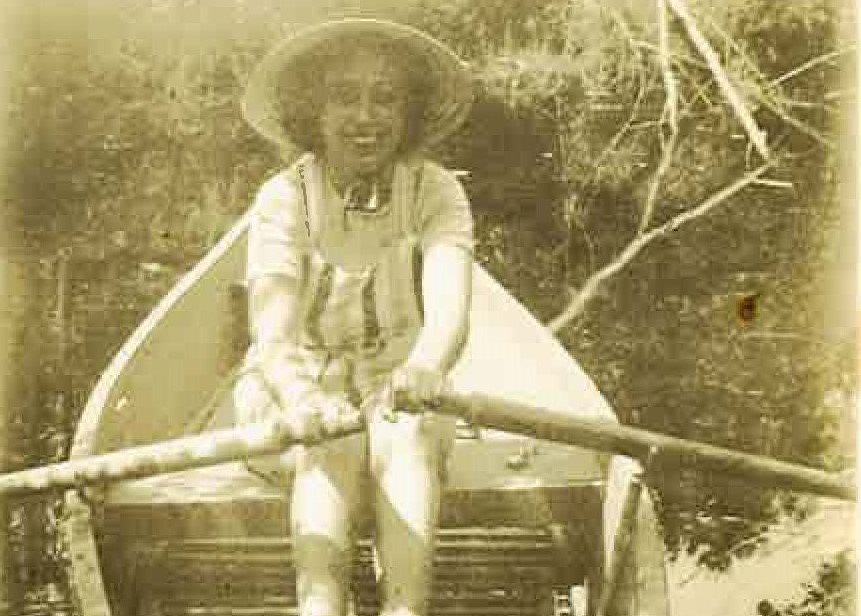
Old photo in a memoir of woman paddling a canoe

Fuzzy facts provide one more reason to write your story from the first-person perspective.

I was reading a recent book review of a biography—not a memoir—of Dr. Mary Putnam, a pioneering doctor in women’s medicine, when a single criticism struck me. Writing in The New York Times Book Review section, the reviewer noted that the author “indulges in sentimental moments of seeming speculation.” This is why memoir is more forgiving than biography—in memoir, speculation is accepted as accurate enough, and if anyone has the right to be sentimental, it’s a memoir author.

Biography is History

The sentence the reviewer quoted was: “Sometimes while they worked, their hands touched, causing Mary to feel electrified.” The author created this visual in order to bring to life a courtship, explaining how Mary Putnam came to marry a fellow scientist at a time when women in a serious profession like medicine were commonly considered too masculine for a man to marry. Is it a stretch to think that a brush of their hands might have occurred as they were in close proximity in the lab together, working toward a common goal and appreciating each other’s scientific mind? Not at all.

But did it actually happen? Probably not, but who knows? In a biography, though, I agree with the reviewer that the description feels contrived. There’s no footnote to credit a source for this “fact.” There’s no descendant or witness to interview. The author can’t know what happened between the two people, and the reader understands this.

Memoir is True-ish Story

Memoir carries different rules. You may conjure up out of your imagination the very same scene about a relationship you had, with no memory of hands touching or not touching. But when you write that your hands touched and sent electricity flowing through you, the reader accepts it—even appreciates that you’ve included such intimate detail.

This is the beauty of memoir. It must be accurate in dates and in the facts of the events, and the author must present the information in a sincere way. But your descriptions of little backstory events can include a blurriness of accuracy. You’re not expected to remember every aspect of a setting or encounter.

Maybe the lady at the counter didn’t say the exact words you quote in chapter two, but your account of the exchange still captures the intent of her words. Perhaps you’re not sure whether it was your brown jacket or your blue one that you had on the day your dad walked out, but you know you were wearing one or the other so you just choose one because the narrative becomes more vibrant when you include the jacket’s color. And your hands probably touched as you flirted with your lab partner senior year of high school, but you can’t be sure. You just like the image so you throw it in there.

In memoir, that’s all okay. In a biography, it’s cheesy, “indulgent” as the book reviewer calls it, and insulting to the reader. Isn’t that funny? As a memoir author you can get away with a lot more, and you should try. Your memoir should read more like fiction than like history, whereas a biography, even with elements from fiction such as a lot of dialogue, still is meant to be taken as a historical account.

Stick to As Much Truth as Possible

That doesn’t mean everything is loosey-goosey in your memoir. It’s still easy to alienate readers when your story develops a feeling of falseness. So follow a few principles:

  • Don’t exaggerate! If you say that your mom hit the city street at a speed of 100 miles per hour, it doesn’t ring true. Either refer vaguely to a “high speed,” or you can say it felt to you as if you were moving at 100 miles per hour. Better yet, find a creative way to describe a child’s impression while riding in a fast-moving car.
  • Keep any fact-fudging believable. Beyond just exaggeration, everything you contrive must sound at least plausible. Going back to the example of the lady at the counter, the conversation has to be close enough to the truth to sound as if it could have taken place. Let’s say I want to write a chapter about my mother. The photo above is of my mom attending a summer resort before she was married. I have little idea what she did there, but owning a picture of her paddling a canoe gives me a point of accuracy to cite.
  • Stay consistent. One of the biggest pitfalls in writing a memoir is letting your information clash—not keeping your facts straight. If chapter three takes place in 1967 and mentions that you spent your summer with your eight-year-old cousin, chapter six can’t have the same cousin coming home from the army in 1973.
  • Fact-check what you can. Dates, names, spellings, street names—was it a road or an avenue? Anything the reader might know or can google is something you should check before you get to the final manuscript. If you visited western Pennsylvania, the city is Pittsburgh with an “h”; if you were in Kansas, it’s Pittsburg, no “h.”

But when you tell your own story, you are the number-one source for facts. You’re not only the author but also the main character. The reader trusts you to tell the truth about your life—or a version that captures the truth in spirit.

What’s Wrong with “It Was a Dark and Stormy Night”?

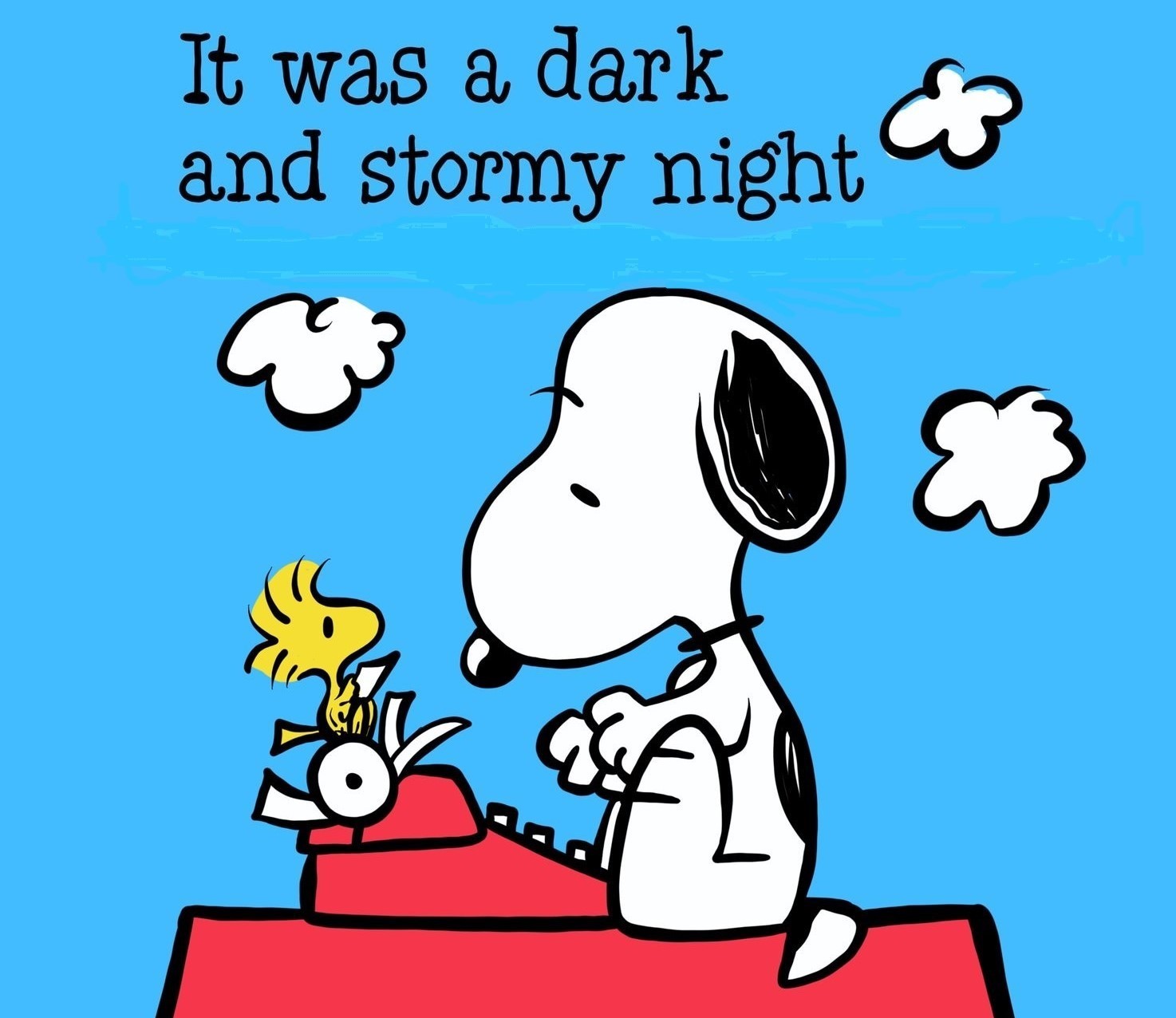
Snoopy on his doghouse with his typewriter and Woodstock

An analysis of the iconic, quintessential example of bad writing.

You’re told to give readers visual images—“show, don’t tell.” In his 1830 novel Paul Clifford, Edward George Bulwer-Lytton did just that. Yet the first seven words of his opening sentence have become the quintessential example of bad writing. Is there anything wrong with beginning a story, “It was a dark and stormy night”?

History of the Phrase

Madeline L’Engle didn’t think so. She began her 1962 young adult novel, A Wrinkle in Time, with the very same wording. And the phrase’s French version appears in the famed 1844 Alexandre Dumas story, The Three Musketeers.

Bulwer-Lytton may or may not have come up with the phrase. According to Wikipedia, “a dark and stormy night” was mentioned in an 18th century journal about a shipwreck. But Bulwer-Lytton was a successful novelist and did originate the saying, “The pen is mightier than the sword,” so it’s conceivable that the same phrase came into two minds independently.

It was Peanuts cartoonist Charles Schulz who brought broad awareness to “it was a dark and stormy night” as the trashy writing cliché that it has remained to this day. In his multiple depictions of Snoopy, in the company of his pet bird Woodstock, sitting at the typewriting and tapping out his war-time memoir, Schulz showed his favorite beagle beginning his work with, “It was a dark and stormy night.” Schulz even released a short book with the phrase as the title.

In 1982, Scott Rice, a professor at San Jose State University, built upon the phrase’s unflattering reputation by launching the Bulwer-Lytton Fiction Contest, named after the earliest known author of the phrase and welcoming writers to submit dismally florid opening sentences for pretend novels. Prizes are still awarded annually.

How Bad Is It?

In evaluating whether the disparaged phrase deserves its lowest-bar standing, let’s consider the entire sentence:

“It was a dark and stormy night; the rain fell in torrents—except at occasional intervals, when it was checked by a violent gust of wind which swept up the streets (for it is in London that our scene lies), rattling along the housetops, and fiercely agitating the scanty flame of the lamps that struggled against the darkness.”

For me, that is pretty bad in just the way Charles Schulz implied—overly dramatic with too many adjectives and a resulting passage that becomes laughingly overwrought. I also have some technical issues with the sentence.

Parsing the Sentence

Granted, my critique is from the perspective of American English in 2025. With that caveat, I take exception to the very first two words. Try not to start your book with “It was” or “There is.” A sentence here and there can read that way, but I advise writers to minimize “be” verbs like “is,” “are,” “was” and “were.” You may think that the “it was” and “there is” structure is passive voice, but “be” verbs are intransitive verbs, so neither active nor passive voice applies. Still, “is” is not compelling.

While I admit there are times I do start a sentence with “there is,” “there was” or even “it was,” I wouldn’t start a whole book that way. The structure can create drama in a good way, but in Bulwer-Lytton’s sentence it sets up a foreboding that feels cheesy. And then we come to a semicolon. If you have a semicolon in your opening sentence, you most likely use too many semicolons. Just give in and use a period.

I’m okay with “the rain fell in torrents.” The author then goes into a little wordiness about the occasional intervals, the checking, the violent gust—but I probably would hang in there through all of that. It does create a visual image.

Next, I’d replace “which” with “that,” but I recognize that this is an American distinction. In the U.S., we use “that” to introduce a restrictive clause and “which,” preceded by a comma, to introduce a nonrestrictive clause. I can see this clause being either restrictive or nonrestrictive. It’s either “a gust of wind that swept up the streets,” or it’s “a gust of wind, which swept up the streets.” In the first case, the restrictive clause indicates that it’s not just any gust of wind but the one that swept up the streets. In the second, it’s a gust of wind, and by the way another fact about it is that it swept up the streets. If the author intended it to be read as nonrestrictive, using “which” correctly, he needed a preceding comma. If he intended it to read fluently without the comma, he should have used “that.”

I have long been on a rampage to ban most parentheses, so you can imagine I am not pleased with what comes next in this sentence. Find another way to tell us this takes place in London. Don’t refer to “this scene” in a contrived, breaking-the-third-wall manner. Furthermore, Mr. Bulwer-Lytton, have you never been to Chicago? Boston? Dallas on a bad night? I assure you that London does not hold the unique claim of either streets or dark and stormy nights rife with violent gusts of wind accompanying torrents of rain.

The end of the sentence just tops off the ornate description. If you’re already thinking this sentence is a lot, the end becomes too much. If not, then I suppose it’s not terrible. But the final comma is wrong. The “gust of wind” is the sole subject that was both rattling and agitating. Throwing in “along the housetops” and “fiercely” doesn’t change the fact that this is not a compound clause with separate subjects. It requires no comma before “and.”

Decision About the Sentence

Is this the worst sentence ever written? Or even the most elaborate? Heavens, no. That’s what makes it the perfect foil for our amusement. Professionally crafted and well-intentioned, “a dark and stormy night” becomes a cliché precisely because it’s viable. But don’t begin your memoir with anything like it!

Memoir Writing Sample

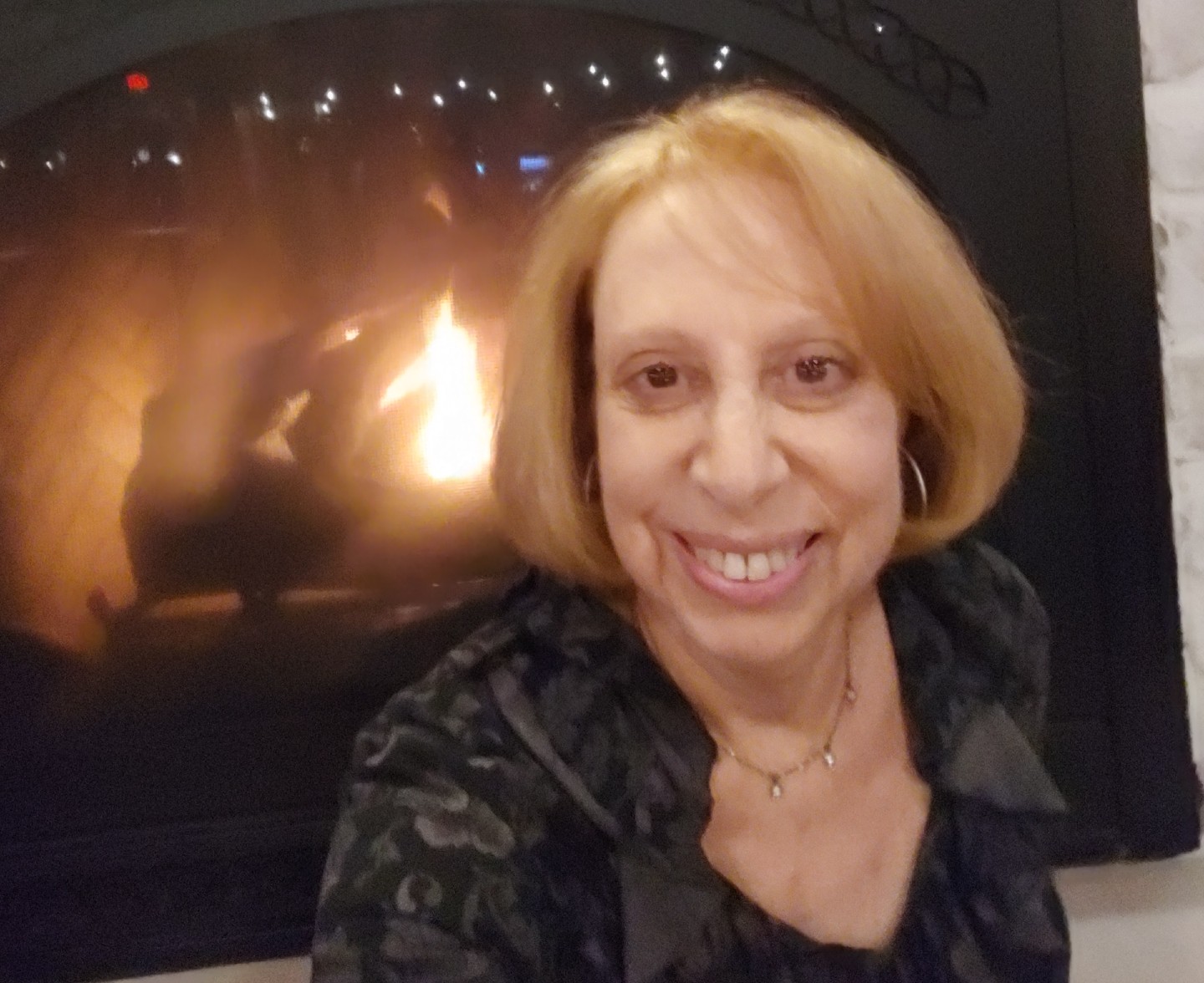
Rosanne in front of a fire at a restaurant

The year 2024 in my life

To start off 2025, I thought I’d give you a memoir writing sample of my own work. This doesn’t really work as a chapter, because I tweaked and adapted it from my annual holiday letter. But it might give you some ideas about infusing humor and weaving a theme throughout a story arc. I changed the family names.

Chapter Sample
The Year 2024

I fractured my right foot’s fifth metatarsal the day after Thanksgiving 2024 to end the year on a low note. As always, life was presenting a learning curve, and I vowed never again to break my own rule about switching on a light when walking at night through a rented house with a sunken living room.

We were in Chicago at the time, once again gathering the immediate and some extended family to enjoy late autumn until it devolved into 14-degree weather. The cold of the north can look good next to—counting backwards for Sarasota alone—Hurricane Milton, Hurricane Helene and Tropical Storm Debbie. Early one October day had me watching, from the safety of a hotel room west of Miami, Milton slamming straight into Sarasota. Our house weathered the weather, while a couple of our tall trees and some fencing were not as fortunate.

As Hurricane Milton raged, Rita was at her D.C. office, breathlessly monitoring the storm tracker. “Wait, that’s my street!” she exclaimed as the map showed the eye of the hurricane looming directly above our neighborhood. When the skies calmed, Rita returned her attention to matters in her government job in food security, where her learning curve had to do with crops and soils in various climates. This did not help her figure out why I couldn’t find a decent locally grown orange in the Orange State.

In my continual learning about hurricanes, I was informed that flooding on our street was unlikely, since it stretched between a manmade reservoir and a main road’s drain and was engineered to send the standing water to one or the other, plus we were situated too far from the coast to be affected by a storm surge. Wind, though, was always a worry.

And well before hurricane season, there was always humidity. I would try to get away, so in August when Judith and Chris sold their sweet Boston home of 12 years and moved not far away to a newer house with space for me to stay with them, I immediately flew up there for a few days. They appreciated my help during parents’ dreaded black hole—the weeks between camp and school, where eventually Sophie entered third grade and Cody started fifth. They didn’t have to change schools; in fact, their school was just steps from their new house.

Our relationship grew closer in 2024, when the kids took to video chatting on their own with me. Sophie liked sending memes of herself as a cat, while Cody mostly grunted “I don’t know” in response to my questions, just as he would do in person. It came with the 11-year-old territory. In the fall, Sophie got into the habit of ringing me up early as she prepared for her day. One morning, when Judith reminded her daughter that it was time to go to school, Sophie said she needed a minute. “I’m on a call,” she explained. When I supported her mom’s direction that she’d better leave soon, Sophie held her iPad up to the window so I could see the outside. “Grandma,” she countered, “the school is right there.”

We knew that Paul was popular with the kids, but we hadn’t pinned down a reason until Judith related the deliberation Cody and Sophie had when their parents were serving them ice cream. “Should we have two regular scoops or two ‘granddads’?” Cody asked his sister, referring to the term they apparently used when they wanted the supersized portions Paul doles out during their Florida visits.

Anna and Dylan were stretching the honeymoon phase of married bliss. After a decade of working alongside her dad, Anna floated her résumé for in-house counsel jobs and in January began working remotely as senior counsel at a California-based fintech firm. I had to google “fintech,” even though Judith coded in that sector for years. Blame my neverending learning curve in tech. And in fin. Paul was so impressed when Anna was offered the job—impressed with himself, of course. “Being my associate attorney can really take you places!” he concluded.

Paul missed his former associate and had to do all the work himself, but he took breaks by continuing to play on two old-man softball teams, each with a weekly double-header. There also was our Senior Games training. With my bum foot I was glad we didn’t wait for Florida’s December games to qualify for the following summer’s Nationals but, instead, earned our qualifying medals in South Carolina and Georgia. At the South Carolina games’ javelin event, one competitor in my age group had never thrown before. Paul coached her a little, offering tips and correcting her movements. And then she beat me. I gave my husband the silent treatment, while he contended that it was my own fault, because despite my steep learning curve in javelin, I never listened to his advice.

In late June, while the others opted out, Paul, Rita, Anna and I spent time in the ancient ruins of Rome and Pompeii. Paul loved every minute of watching all he’d read about come to life. The Vatican, the Colosseum, the Pantheon—everything was fascinating. Having studied there one college semester, Anna made all the plans—from the nightly restaurants to designing our walking route so we’d pass the Trevi Fountain precisely at dusk to driving us to Pompeii in a rental car she’d prebooked from a company owned by “some guy online.” Sounded reliable.

Then Anna returned home while the three of us continued on to Bologna, one of few Italian spots Rita had never visited. She wanted to learn something new, so we hopped a train and then took a walking tour of what turned out to be an interesting city. From there we went to Modena to see the Ferrari Museum with a lot of cool cars and the home of Pavarotti, where his opera costumes were displayed along with the Emmy awards he’d received for some PBS specials. It was fun to see Emmys up close.

It was on this trip that our learning curve really climbed. Not only did we pick up information about Italy and of course wine, but we discovered we needed to get better in touch with our bodies. I thought I was sensitive to the extreme heat because it was drier there than on the Gulf Coast, and I couldn’t get enough water in me even when surrounded by an aqueduct. But when we arrived home, a little test told Rita and me that we’d been walking around with Covid, which Rita had brought with her from Washington. Paul stayed Covid-free, and Anna felt fine as well. But a completely different type of test revealed that in Italy Anna was, as they say, just a little bit pregnant. She and Dylan ended the year looking forward to a baby due the following March.

Faith in Memoir

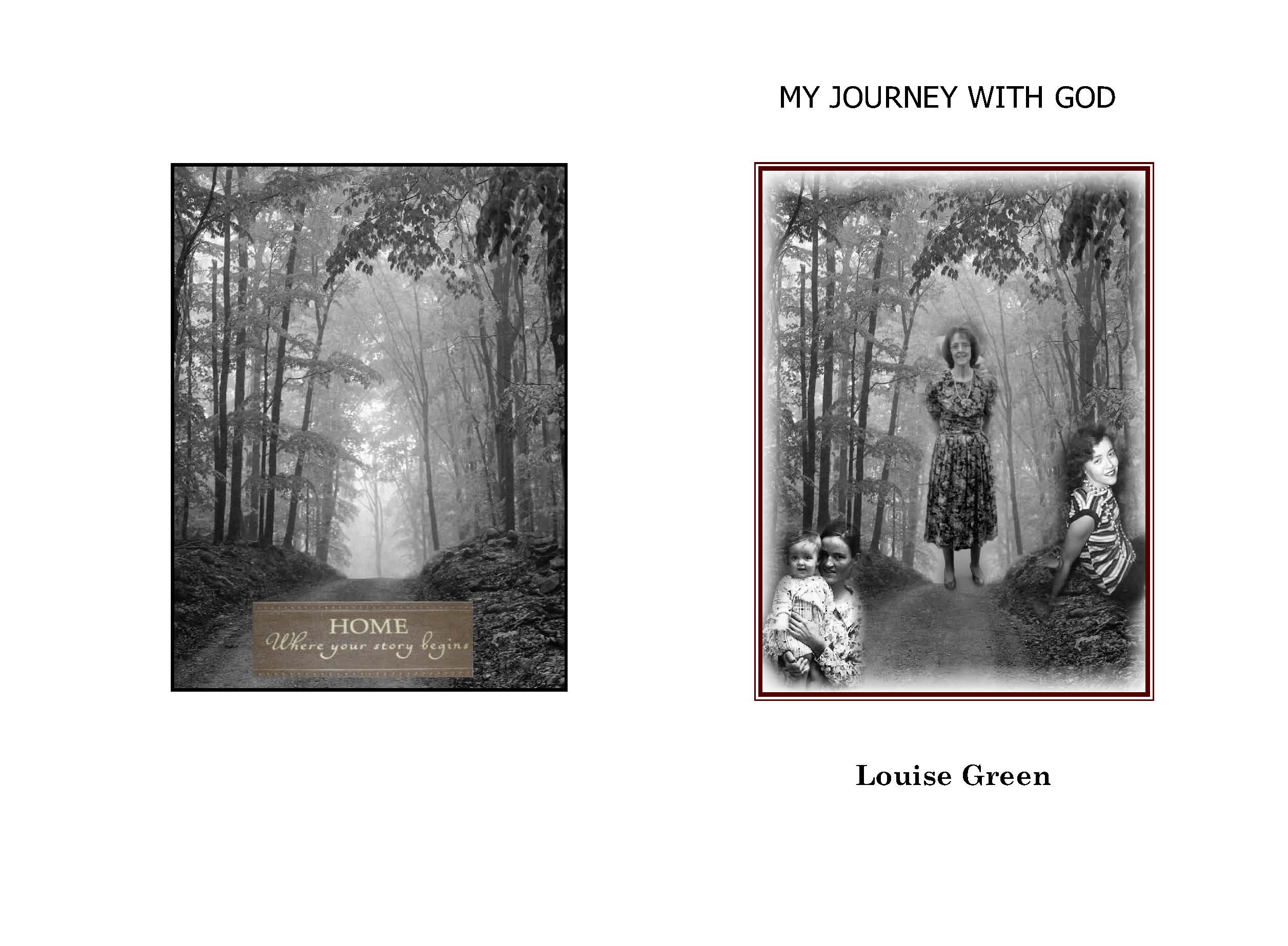
Front and back covers of "My Journey with God"

Religion and spirituality are big topics for self-reflection.

One of the first books I helped someone self-publish through Write My Memoirs falls into a category of a faith or spiritual memoir. Titled “My Journey With God,” it was more of an autobiography than a memoir, covering the author’s full, not terribly unusual, life. When I asked the author what motivated her to write the book, she said her way of publicly thanking God for a good life was to celebrate faith in memoir form. The book’s front and back cover appear above.

Gratitude in Memoir

This was a revelation for me. Of all the reasons to write a memoir, I had not considered that one. But I get it—it’s a type of gratitude journal. Some authors chronicle their faith journeys and perhaps lead readers along a similar path. There’s a whole Christian book publishing industry built around this concept, and those publishing companies can provide publishing opportunities for authors whose manuscripts may get rejected elsewhere.

In Faith Unraveled: How a Girl Who Knew All the Answers Learned to Ask Questions, author Rachel Held Evans writes about straying from her Christian fundamentalist roots before recommitting to God with an approach that she found more adaptable to her life. In the recently released Mostly What God Does: Reflections on Seeking and Finding His Love Everywhere, Samantha Guthrie of NBC’s “Today Show” uses personal essays of questioning and searching to open readers’ hearts and minds to a life exploring faith.

God as Redeemer

It makes sense that religion pops up often in memoirs, since it plays a role in many lives. Sometimes, it’s the memoir’s main topic or shares the limelight as the solution half of a problem/solution memoir. One of the earliest and best-known accounts, from 1948, is The Seven Storey Mountain: A Journey of Faith and Transformation, Exploring Vulnerability, Forgiveness, and the Quest for Spiritual Fulfillment in the Midst of a Turbulent World by Thomas Merton, who became a Trappist monk and guided readers toward spiritual reward. More recently, both Wired for God: Adventures of a Jewish Yogi by Dani Antman and Native: Identity, Belonging, and Rediscovering God by Kaitlin B. Curtice discuss the intersection between religious roots and the yearning for broader spirituality.

The author’s story of redemption is a popular theme in memoirs, and here, too, religion can enter the discussion when the author talks about overcoming illness, abuse or other adversity. Lacey Buchanan’s Through the Eyes of Hope: Love More, Worry Less, and See God in the Midst of Your Adversity, published in 2017, credits God for the strength to face her life’s challenges. Her son was born with a rare medical condition.

Religious Exposés

Religion in memoir is not always presented with gratitude. One trend in memoir is exposing abuse disguised as, or excused through, religious devotion. The best-selling memoir Educated presents author Tara Westover’s experiences with her family’s variety of Mormonism in quite an unflattering light. The truth behind the facade presented by television’s religious Duggar family is revealed in Counting the Cost by Jill Duggar, Derick Dillard and Craig Borlase.

The Inner Circle Book One: My Seventeen Years in the Cult of the American Sikhs, a 2021 memoir by Peter MacDonald Blachly, similarly traces the author’s experiences inside a cult-like religious group. In Devout: A Memoir of Doubt by Anna Gazmarian, published earlier this year, the author does not condemn her evangelical Christian upbringing, but she shows how she struggled to retain her spirituality while diagnosed with bipolar disorder and dealing with a medical community that did not easily fit within her religion’s parameters.

Part of Life

When not the memoir’s primary focus, religion still can bring a valuable dimension to the story. In her 2003 memoir, Leap of Faith: Memoirs of an Unexpected Life, Queen Noor of Jordan writes about her life as an American who married Jordan’s King Hussein. She addresses family life, her views of historical events, and her humanitarian efforts, and she drops a lot of famous names of people she’s met. But for readers to fully understand her life, she also discusses her Muslim faith and the way she blended her American upbringing with her life as a member of a prominent Middle Eastern monarchy.

Happy Holidays to You, Readers!

If you’re incorporating faith into your memoir, this time of year gives you a good opportunity to get in close touch with your feelings. And whether or not you have faith in your memoir or in your life, I wish you the happiest of holiday seasons.

Interview with a Memoir Author

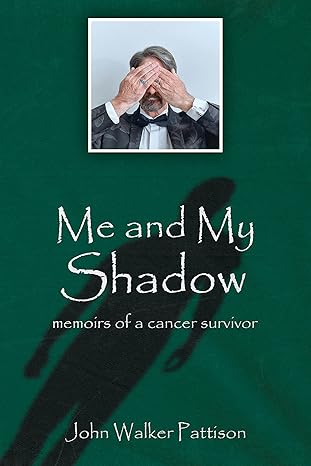
Photo of book "Me and My Shadow: Memoirs of a Cancer Survivor"

John Walker Pattison speaks with Write My Memoirs

Always up for an interview with a memoir author, over Zoom recently I met with John Walker Pattison, author of Me and My Shadow: Memoirs of a Cancer Survivor. You can watch our exchange on my YouTube channel. John wrote about beating his own cancer when he was still a young man and then watching his daughter survive hers when she was just four years old. Motivated to help the next patient, John became an oncology nurse and participated hands-on in many cancer battles. Although British, Pattison found spirituality through visits to the Lakota Sioux in Montana. All of this felt unique enough to warrant a memoir.

Memoir Writing to Inspire Others

Non-famous people who decide to write a memoir tend to have lives that they see as out of the ordinary, often because of the unusual challenges they’ve faced. Many also hope to share lessons they learned from overcoming those challenges and, in that way, inspire readers or at least let them know they’re not alone.

John Pattison falls into this pattern of aiming to help readers with cancer feel less alone. It gives them hope, because not only did John survive against the odds, but his daughter Donna baffled the medical teams with her triumph over leukemia. At one point, the doctors doubted that Donna would survive the night. Decades later, she is still bringing joy to her dad.

An Individual Process

In my conversation with John, once we established his reasons for writing a memoir, I was interested in his process. I hear a lot about people who write in fits and starts, making great progress for a few months only to get stuck at a hurdle and languish until they realize one day that they haven’t looked at their work in more than a year.

Sometimes the roadblock has something to do with the writing itself, such as having second thoughts about revealing the author’s truth when that can be hurtful to family members, or maybe they need to research some facts before they can continue. But it also can just be a time constriction. If you get busy at work or your spouse becomes ill or a new grandchild monopolizes your focus, you may have trouble finding the time to finish your memoir.

John had none of those issues. He began writing after he retired, with time on his hands, and he finished his first draft in just six months. Then he wrote and rewrote many subsequent drafts after asking a lot of friends to read his manuscript and give him candid feedback.

Publishing a Memoir

When John felt satisfied that his draft was ready, he sent it to both agents and publishers with a specialty in memoir. Like many manuscripts from first-time authors, his did not find a home with any of them. But a hybrid publisher accepted the book and published it in 2022. Hybrid publishers charge authors a fee, and John says that his book sales have not yet matched what he spent, but he’s hopeful and patient.

Writing Changes a Life

John has mixed feelings about how writing his story affected him. While it was cathartic to have it written and see it in book form, he found it extremely painful to relive his ordeal, especially the experience of watching his daughter suffer from cancer treatment.

Still, once he wrote one book he was hooked. Since then John has published several children’s books, with one of his upcoming books accepted by a standard publisher. For a first-time memoir author to become a working writer is quite an achievement, and I wish John all the best in this post-retirement writing career.

How Thanksgiving—Or Any Holiday—Can Fit Into Your Memoir

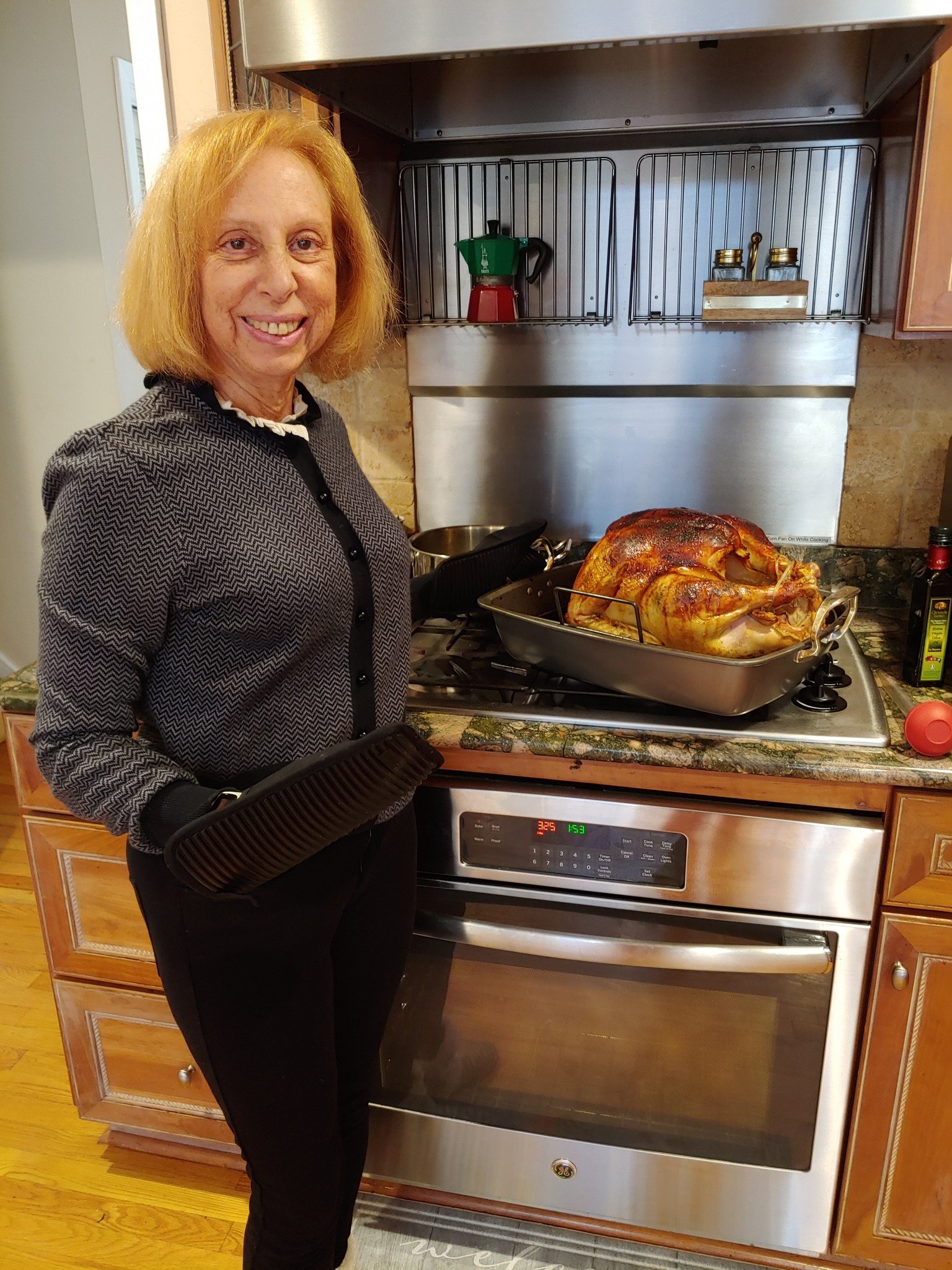
Rosanne at the oven showing her Thanksgiving turkey

Family gatherings reveal a lot about a life through dialogue-rich stories.

My mother died on November 25, 1991. It was the Monday before Thanksgiving, which was November 28 that year. This year repeats that exact pattern, bringing back thoughts of that unusual Thanksgiving, when one of the people in the small group of family who had traveled to the previous day’s funeral reminded the rest of us that it was Thanksgiving Day. We bought deli turkey and sat at Mom’s dining room table, sad to have her seat vacant. A dramatic event like that is only one way to show how Thanksgiving—or any holiday—can fit into your memoir.

Holidays provide a constant measuring stick to mark changes in your life. Any other “Friends” fans here? Nine of the ten seasons of the popular comedy series featured a Thanksgiving episode in November, and the funniest one included Thanksgiving flashbacks. You probably can picture Monica with a turkey on her head. Just seeing all of the Thanksgiving episodes gives you a good idea of what was going on with the characters each year. “The Simpsons” follows a similar path with its succession of Halloween episodes.

An annual occasion with a consistent routine organically comprises many dynamics of a life:

  1. People. The individuals sitting around the holiday table will likely vary over the years. Babies are born, divorces occur, maybe a pair of brothers aren’t speaking so one stays home or an aunt brings a different “plus one” every year. Just the head count can indicate the state of the family. You’re also watching everyone age and their relationships with each other ebb and flow; in later years maybe the kids’ table morphs into the old people’s spot. In our family, Thanksgiving is poignant not only because of my mom’s death but because the one deceased sister in my husband’s large family used to be a fixture, always stirring the gravy and mashed potatoes at the stove. She didn’t live locally, so Thanksgiving was one time we could count on seeing her. There’s always a little bit of emptiness now that she’s not with us.
  2. Place. Perhaps your most memorable Thanksgiving took place at a restaurant because that year no one could host it for some reason. Or it was at your parents’ home until the year you moved them into an assisted living facility. These types of developments can be revealed through the holiday story instead of just rolling them out in a chronological but unrelated thread. We moved from the Chicago area to Florida, so now we travel back up north, rent a house and host from there. It’s slowly feeling as if the rental house is our holiday home. Including that in a memoir would illustrate how important it is to us to keep holiday traditions going.
  3. Food. Many memoirs make food a major player, with some authors describing meals in detail and including in the book their most beloved recipes. Food brings people together, gives a peek into personalities and serves up something every reader can relate to.
  4. Football or a movie. Whether your family plays it or only watches the games on TV, American football has a hold on what’s happening Thanksgiving Day. You can find creative ways to weave football through the stories you tell about yourself and your family’s Thanksgivings. Or maybe your family watches the same movie every year. This adds color to your memoir.
  5. You. Your book is about you, your journey, your challenges and triumphs. What are you feeling one year in contrast to the previous year? How does this family gathering—or Friendsgiving if you spend the holiday with “chosen family”—change you from year to year? If you’re not American, which holidays are important in your culture? Thanksgiving Day 2014 was significant for me because of a health issue I’d ignored for eight days. I knew my heart was racing off and on, but I didn’t know that a chord on my mitral valve had ruptured and I needed heart surgery. On Thanksgiving Day, I looked down at my chest and could see my heart beating even through my heavy sweater. The next day I finally went to the doctor. This surgery was a major event in my life, and by chance it neatly fits into a Thanksgiving theme or chapter.

Structure Within a Memoir

With all of my Thanksgiving-related situations, a chapter called “Thanksgiving” could become a vessel to hold those memories. I could insert it at the 2014 point, relate my heart scare, and then flash back to all the notable things that happened at earlier Thanksgivings. We even take our annual family photo at Thanksgiving.

You don’t have to create a separate chapter, of course. You could sprinkle several Thanksgivings—or Christmases or Mother’s Days or your own birthdays—throughout your memoir. Maybe you mention that at one Thanksgiving you introduced your family to your future spouse, but a decade later you broke up. Then you could say something like, “That year, by the time November rolled around, I had no one to bring to the Turkey Day dinner.” From there, you could recall a few other family gatherings when you’d brought your spouse.

Authors are always asking how to write a memoir. Using a device such as a recurring holiday, as long as it’s meaningful in your life’s story, can help you jump from one point to the next while providing the continuity you need in your book.

What Andre Agassi’s Memoir Teaches Memoir Authors

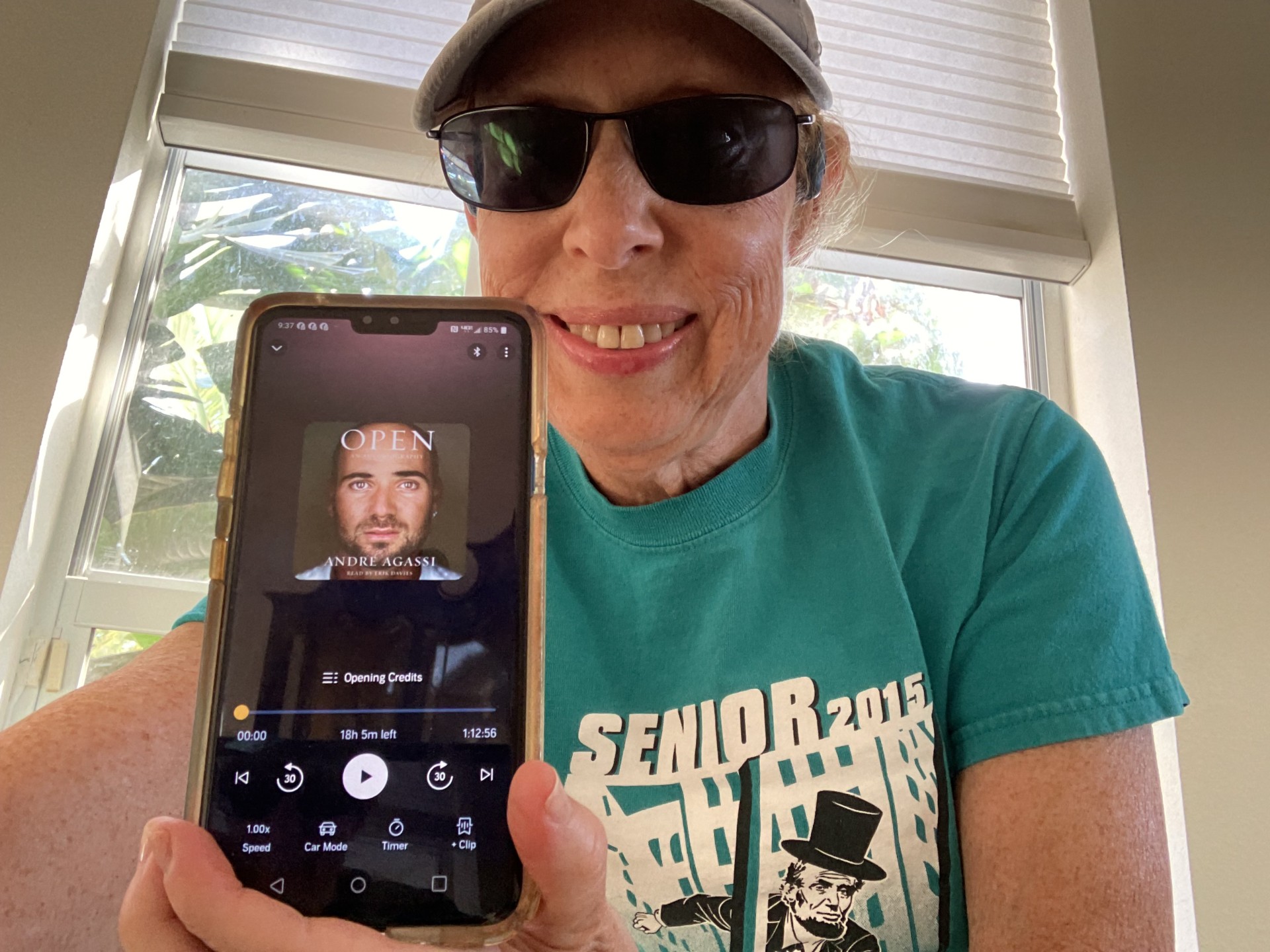
Woman holding her phone showing the audiobook "Open" by Andre Agassi

Open is compelling, dramatic and raw

I hate finishing a memoir—I always miss the author. I want to tell you about the one I just finished, Open, because Andre Agassi’s memoir teaches memoir authors a lot of lessons, and because I’m missing the tennis legend and writing this drags out the goodbye.

Audiobook Issues

Do yourself a favor, though—read it, don’t listen to it. I listen to celebrity memoirs while I run, and it’s like having the celebrities running next to me and telling me about their lives. Not this one. Instead of narrating it himself, Agassi has actor Erik Davies doing the narration for the audiobook. I understand why non-actor authors conclude that they’re not the best choice to read the book aloud. Keith Richards didn’t read his excellent memoir, either. So let’s start out with the benefit of the doubt and say fine, let this Erik Davies do the audiobook.

Davies does an adequate job until there’s dialogue. Then he uses one higher-pitched voice for all the women and one lower-pitched voice for all the men except for Agassi’s father, for whom he must add an Assyrian-Iranian accent, which I doubt he does very accurately. It sounds ridiculous when this man goes into a higher pitch every time a woman speaks and fakes a deep voice for all the men. It’s what you do when you’re eight years old and playing house and you’re supposed to be the mom or the dad. In at least one instance I noted, he also changes the voice for Andre himself. So wait a minute. You’re reading this memoir, written in the first person, as if you’re the person who wrote it. But in dialogue, your voice is different?

Excellent Ghostwriter

Agassi farmed out the writing as well, hiring a “collaborator” to ghostwrite the book. I don’t really have a problem with that. I ghostwrite or heavily edit memoirs for people, and I think that’s fine. Interviews with Agassi and his collaborator indicate that they worked very closely together, and I believe their contention that Agassi went over every word and gave input.

And unlike the narration, the writing is really good. It should be, since collaborator J.R. Moehringer is a Pulitzer Prize-winning journalist. Published in 2009, Open is widely regarded as one of the best pro athlete memoirs ever released. So what can Agassi and Moehringer teach us about writing our own memoirs?

  1. Present tense can be effective in some cases. Despite my preference for past tense in a memoir, Open works well written in present tense probably because there’s so much point-by-point tennis play. The present tense still began to wear thin with me, but I can understand the choice in order to create excitement during the sports action.
  2. Rely on records. Every match Agassi played as a professional tennis player most likely is available on video somewhere. I picture Moehringer and Agassi watching the match together as Agassi describes what he was thinking at every moment, and then Moehringer writes it up. In all likelihood, you do not have video footage of key moments of your life. If you kept a journal, you are one lucky memoir author. Otherwise, gather what you can—letters, artifacts, photos, home movies. Your memory is not as good as the contemporaneous records.
  3. Stay honest, forthcoming, candid. In some places, I would say Agassi overshares. That doesn’t mean we hear about any sexual exploits. We don’t, and graphic descriptions are not necessary in a memoir unless they’re pertinent to the theme. But fearless, raw candor is the lifeblood of memoir. If you deliver that, the reader will understand your motivations and vulnerabilities, accept your mistakes in life and continue to root for you. In Open, it often seems as though the author doesn’t realize how off-putting some of his actions are. That’s okay. At least he’s not hiding them.
  4. Remember the four descriptors. In my last post, I suggested four adjectives to keep in mind as you write your memoir. I advised you to make your book entertaining, relatable, informative and accurate. Open is all of that. You wouldn’t think a memoir stuffed with sportscaster-level competition descriptions would be entertaining, but somehow it is. That’s compelling writing. These accounts go up to the precise line of where compelling turns to boring without ever reaching that line. It’s relatable because of the raw honesty. No one knows more about the game of tennis than Andre Agassi, so it’s informative. While his first wife Brooke Shields disputed some of the facts, the reader understands that every memoir is told from the author’s point of view, and this narrative comes across as accurate.
  5. Be careful with your account of other people in your life. Agassi’s life is intricately involved with the lives of his parents, then his coaches, one lifelong friend and, at different times, an early girlfriend and his two wives. He talks a lot about all of them, and while nearly all of it is positive, I still feel that he must have asked them for their blessing before publishing, because some of what he tells us about them could be considered private. One coach has a very sick daughter for a while, for example, and Brooke Shields reportedly asked him to change some parts. She comes across brainy and small-minded all at the same time; tennis great Jimmy Connors is the other one portrayed as less than appealing. But that’s about it. So be honest about people who matter in your life, but don’t dwell on the negative more than necessary.
  6. Every life, every journey, is significant. Agassi has a nearly groupie admiration for the late Nelson Mandela, whom he gets to meet. He sits and listens to a speech Mandela gives, and he quotes Mandela as telling the audience that every life is worthy. That’s a great thing to keep in mind as you write your memoir. Your life is worthy in telling and worthy in itself.

Sometimes I review memoirs on Goodreads. You’ll see that I gave this one a lot of stars.

Craft Your Memoir with Four Descriptors in Mind

Hand showing four fingers raised

Use these cornerstones to shape a compelling narrative.

As an author, you want to write well and craft your memoir in a fashion that keeps people reading. That requires attention to both picky rules and broad conventions. It takes talent and practice, and to some degree one can compensate for the other. But telling a story that people want to read entails more than good writing. I suggest you craft your memoir with four descriptors in mind.

Make it Entertaining

You may think of “entertaining” as amusing, but it’s not quite that. If you’re watching your favorite drama or even horror movie, you’re entertained, right? Shakespeare’s tragedies are as entertaining as his comedies. If you’re a history buff, even his histories will entertain you.

So don’t think of an entertaining memoir as a funny memoir or even a happy memoir, but if you’ve had happy moments, include them. There should be some parts that aren’t dismal. Infuse suspense, because a gripping memoir is an entertaining memoir. Weave in little surprises to entertain the reader with something unexpected. Describe something familiar in a new way—that also will entertain readers.

Make it Relatable

Your readers will not have lived your life, and some of your readers’ lives may not resemble your life at all. But if readers feel empathy for you and can relate to your experiences, they will want to see what happens next. They will want to know whether you make the choices they would have made in your place.

You want your readers to feel the same emotions you felt throughout your experiences. That’s the “show, don’t tell” part. Don’t tell them how you felt in the hope that they can relate to those emotions. Just describe what happened, and if your story is relatable they will feel the same emotions on their own. That’s the magic.

Make it Informative

Books educate us on all sorts of things. Sometimes, books spark interest in a topic we didn’t previously care about. When you’re determining how much text to devote to describing a city you’re visiting or your mother’s medical condition or the professional projects that earned you an award, at least on your first draft write it all out. You can always cut paragraphs during the editing process.

Picture a curious reader, because people who read tend to be curious people. When readers finish your book, they want to have learned something about their world, not just your world. They want to have new knowledge that they can carry with them in general, not only in relation to your story. I’m currently reading Andre Agassi’s Open and learning a lot about tennis competition!

Make it (Mostly) Accurate

Relying on memory is a sure way to include inaccuracies. As a memoir author, you should always do your best to tell the truth. But your truth, as you remember it, is not necessarily how things really went down. This is a challenge for every memoir author.

Lucky are the authors who have spent their lives journaling. In those journals can be fine descriptions and details you wouldn’t even think about twenty years later. You have the feelings you’re feeling in real time.

But if you have no diary to draw from, at least do some fact-checking. Make sure you’re using the correct spelling of the names of streets, people, businesses. Check dates! They’re important to your story but elusive in the memory. Ask people involved in your stories to tell you their recollections of what happened, and compare their accounts with what you’ve written. If you can get your hands on transcripts of proceedings, video footage or any other record of events, take the time and trouble to do that.

You might want to include a disclaimer that you are presenting the events as you remember them. But if your memoir is mostly accurate as well as informative, relatable and entertaining, you will have a book worth reading.


Story Example for Memoir Writers

Rosanne at a casino

Trying to glean lessons from my own tale of Hurricane Milton.

Here on Florida’s Gulf Coast we’ve had two weather crises back to back. I’m sure you’ve heard about our battles with Helene and Milton.

During my evacuation two days before Hurricane Milton made landfall, I tried to distract myself by writing up my experiences in real time, in diary fashion. Afterward, I thought about this episode in terms of whether it would fit into a memoir. Would this be something I would include? It would depend upon the general theme of my memoir. Either way, I think it holds lessons as a story example for memoir writers.

I wrote the piece in present tense. As I’ve mentioned in past posts, I’m not a big fan of writing an entire memoir in present tense. In this case, I did what came naturally, and there it was: present tense right in my face. So I now am better acquainted with why many memoir authors want to write in present tense. People who’ve read this account tell me they feel as if they’re right there with me, fretting about where the hurricane will make landfall and nervous about how it will impact my life. Isn’t that every memoir author’s aim? So I get it.

I still think that for a full memoir it’s easier and ultimately more effective to write in past tense. The reader grows weary of present tense. For a short piece, though, present tense can work well. I like it for the introduction to a memoir or for any chapter that takes place at the current time.

This sample story demonstrates how a narrative in present tense can accommodate some past tense when appropriate. It also illustrates ways to interlace feelings with description, manage dialogue, provide background when necessary, use active voice and action verbs, and sneak in little facts you want the reader to know without dwelling on them. You also can see from this story how, if you have a diary filled with stories, you will have to do some editing. For example, I would probably replace the last four paragraphs with an update on any actual changes I made in the ensuing years or a transition to the next story in the memoir.

Seeing Eye to Eye with Hurricane Milton

Four days in Sarasota in October 2024

Hide from wind, run from water.

It’s a new phrase for me, and I memorize it. Like “feed a cold, starve a fever”: you must keep it straight, which is which.

But what if you have both a cold and a fever? “Feed” and “starve” are mutually exclusive, not the case with “hide” and “run.” So I do both, scared of wind, frightened of water.

It’s Monday, October 7, and as I run and hide from a natural disaster, obsessively focused on my own immediate trauma, the rest of the world is marking the date as one year since the Hamas attack on an Israeli music festival. On Facebook, I see that a friend is recalling the same date more than 20 years ago as the day she lost her 15-year-old son. Tragedy takes many forms here in the human experience, and what’s happening to me is not the worst that can happen.

We were cold in Chicago, so four years ago we moved south, out of the path of snowstorms and heartland tornadoes but into the belly of tropical weather. “I could never live in Florida,” some friends have said to me, with hurricane danger mentioned among the reasons. We chose an area that historically has not been in the eye of the tiger storms, but we understand there’s still risk, that past is not necessarily prologue with nature’s inherent volatility. In exchange for paradise winter, we accept humid summer and the wildcard of hurricane season.

October 8, another long and stressful day. With distance between my body and life-threatening peril, I obsessively click around from weather map to weather map, hoping that I can mentally will Milton to defy all science and just dissolve or turn tail and head back out to sea. The TV forecasters offer me no reassurance. When one of them chokes up during a report, that becomes the news. Another one wears a fitted blue dress revealing that she is pregnant, reminding me that life goes on in one way or another. I think back to yesterday, when my own pregnant daughter and her husband sent around pink balloons to let relatives know what kind of cousin/grandchild they can expect in March.

As October 9 dawns, my anxiety is high. We’re staying in a hotel casino west of Miami that was sparsely populated when we arrived on Monday but ran out of rooms by late Tuesday. We drove two cars to keep them from flooding at home. It was a little chancy to go south in case Milton taunted forecasters with a swerve to the right, but going north to Georgia or Alabama would mean three times the mileage, much heavier traffic and worries about gas availability. Along with me are Keevan and our friend Barbara, who evacuated with us from her home in Venice, just south of us. We are lucky to have options and resources; we understand that, and we meet people from all over the state’s southern half. Some live right on the water, others more inland but in mobile or manufactured homes. Every story is different. One couple splits time between balmy winters in Venice, Florida, and mountain summers near Asheville, North Carolina, devastated by Hurricane Helene just two weeks ago. Their house in Venice is in danger from storm surge not from the Gulf itself but from the Myakka River flowing at the end of, and perpendicular to, their street. They look sad, but here they’re at least safe.

Between watching the news and continuing to plead with Milton to be gentle, I do normal things. It’s drizzly in Miami, but I take advantage of a short period of sun to go for a run in the parking lot. Then Keevan, Barbara and I drive to Walmart and Publix and somewhere for lunch. We’re tired of expensive hotel food and bring groceries and boxed leftovers back to the hotel, where we have a mini-fridge and microwave. As the wind picks up in Miami, we calculate how much worse it must be at home, so much closer to the storm. I check the phone app connected to our home alarm, and there’s no signal. That means we’ve lost power at home. I wince.

After dinner in our room, Keevan and I go down to the casino to play the slots. It’s a sensory onslaught of blinking colored lights and sounds of ding ding ding as the machines hand over winnings, but the players look more defeated than victorious. We meet a couple from Punta Gorda. “Where are you from?” they ask us. “Sarasota,” I reply. “Oh….” Sarasota gets the biggest “oh….” as it sits right in the center of all the spaghetti storm-tracking models. I feign a weak smile as I take a selfie to remember this weird juxtaposition of home-to-here scenery.

Distraction and commiserating with people keep my spirit manageable as Milton inches closer to the Gulf coast. It’s a category 5 hurricane and then cat 4 and back to 5, then 4 again but getting down to cat 3, which is some good news. It jags and wobbles, sometimes north and sometimes south, and it’s not clear which direction will most spare us. It doesn’t matter, because it feels crummy to root for it to hit other communities instead of my own. My anxiety begins to morph into acceptance, which is good, because when landfall finally happens sometime around 9pm, Milton hits Sarasota’s beach on Siesta Key, eight miles from our house.

Map of Hurricane Milton's path

It seems not to take long before the hurricane’s eye settles over Sarasota and the TV storm reporters are talking about how eerily still and quiet it is. But soon after that, “dirty side” gusts and downpours start whipping the city. Before I go to bed, I check the alarm app again. It’s connected. I’m not sure whether that means we have power or, more likely, that the connection is picking up the backup battery, but the app indicates nothing out of the ordinary.

It’s October 10, and Milton is still a hurricane but no longer over land. We text our neighbors, who had planned on riding out the storm at home because they have hurricane shutters, whereas we are still trying to figure out that part of living here. A next-door neighbor responds that there’s no power in the neighborhood, but our house seems to be intact. It feels like a miracle. I picture all the possessions I left there as I hurriedly and arbitrarily packed some objects while abandoning others. From what we can tell, the roads going northwest are passable. We drive the three hours home.

The sun is shining, and as we glide along Routes 41 and 75 we see standing water and flattened trees, but nothing significant to indicate what took place during the previous 24 hours. At home, there’s no power but there is everything else just as we left it, except for a dozen palm fronds littering the lawn and two trees that toppled and damaged our fencing. But there’s not even water blanketing our street the way there was during Hurricane Ian and some of the other storms that made landfall much farther than eight miles from our house. So what is the deal here?

A few things worked in our favor. Milton did accede to my wishes in weakening to a cat 3 storm by landfall. Although it dumped a lot of rain in some areas, it was fast-moving and didn’t build up massive rain measurements in Sarasota. The half-hour it took for Sarasota to pass through the eye provided a little break when the wind and rain stopped. Every storm is quirky and spotty, and how it meanders into the particulars of Tampa Bay’s configuration will change the impact of water levels for cities up and down the Gulf Coast. All in all, worse-case scenarios did not happen. And the people heeded warnings, evacuating where mandatory and then some. We were not required to evacuate. We live just outside the last evacuation zone, Evacuation Zone E, and the mandate came in only as far as Zone C. Unfortunately, Milton set off lots of tornadoes that twisted their way all over the state, causing casualties across the state in southeast Florida, not far from our refuge.

What you see on TV is a version of what’s happening. News reporters stand at the most dramatic visual point, right at the coast. Inland the rain and wind may be just as harsh, but often sturdy fencing and rows of trees provide some barrier to houses. Of course, then there’s the danger of the trees falling and smashing things, but mostly it’s protection. The storm surge they talk so much about affects only the neighborhoods right along the shoreline and aside rivers and lakes. People living in houseboats always should leave, and those in mobile/manufactured homes are at risk anywhere within the hurricane cone. But other houses are constructed in adherence to strict building codes meant to withstand severe weather. Resorts, restaurants, hotels and various other businesses are situated along water, so storm surge is an important factor in the economy of the community but not in most of the residential areas of a city like Sarasota, although high rise condos offering enviable waterfront views often have to rehab their lobbies after a major storm surge.

I learned a lot from Hurricane Milton and feel more like a seasoned Floridian in the aftermath. I still probably will evacuate during future hurricanes, because I would have trouble getting through a night with no power or possibly even cell service while the trees are thrashing about outside. But I think I’ll be less frantic next time, and maybe we’ll have storm shutters by then.

Memoir Authors Should Form Habits, Not Set Goals

Woman setting her watch to time herself

Your writing will become something you just do rather than strive to do.

I didn’t start running until I was 40. I was working, raising kids and going to the gym but too busy to spend a lot of time there. I asked myself, “What is the biggest bang for the buck in exercise?” I kept coming back to the same answer: running.

Nothing beats running for efficiency in covering multiple health benefits. Within about 30 minutes, I could simultaneously get my cardio out of the way, build leg muscles and work my core. I wouldn’t have to find a competitor or gather a whole team for a game of some sort; I wouldn’t have to supplement time-consuming walking with a cardio component; and I wouldn’t have to get to a class or schedule it at all. I could hop on a treadmill at the gym, or on decent-weather days, just walk outside my door and start running.

Problem: I hated running. That’s why, at 40, I found myself with no history of doing it. But I pretty much hated all exercise, so I decided that swapping the Stairmaster and walking for a shorter run was a pretty good deal.

Getting Into the Habit

Experimenting on the treadmill, I found that two 11-minute miles seemed to challenge me, and then I’d walk the remaining eight minutes to round up to a half-hour. Once I made the decision, I started running every day. It was my new habit, and I became obsessive enough that for years I missed very few days.

I’m 71 now—I know, I’m shockingly old—and still running. I run three days a week and walk the other days. Along the way I started competing in Senior Games track and field, which gives me an additional reason to keep up my running training. By the way, I still hate running. I don’t know what a runner’s high feels like; running doesn’t make me feel anything but exhausted. I do it for health and because I like being a senior athlete, something I never thought I could be.

What I want you to know about my running is that I never set a goal. I started a habit I didn’t even like, and it’s lasted more than 30 years. I started running two miles at a time daily or near daily, 30 years later I’m still running two miles several times a week, and in between then and now I never tried to get better. I didn’t set goals to improve or establish benchmarks to increase my speed and stretch my endurance. I just kept at it, status quo, same old same old.

Goal-setting Invites Disappointment

I know the idea is to start out with an 11-minute mile and try to inch it down until you hit some seemingly satisfying goal. If I increase my speed by five seconds a week…. That kind of thing. Where would that have led me?

I may have reached some loftyish goal, such as running an 8-minute mile. Then what would happen? Would I set yet another goal until I vowed to run two miles in zero minutes? Or add another mile at a time until I was spending more time than I wanted?

Aging is a formidable adversary of physical activity, so eventually I was going to be disappointed. Maybe I’d achieve a 10-minute mile but never get as good as the 8-minute-mile goal. Or I might not have been able to improve at all, which really would have felt like failing. Aging forces you to do just the opposite of goal-setting—become resigned to losing speed, strength and endurance.

Letting go of goal-setting gives me freedom from all of that. It means I’m never disappointed, I don’t get discouraged, and I don’t feel like a failure. These days I run more like a 12-minute mile, and the whole thing takes 24 minutes instead of 22 minutes. And you know what? At 71 I’m pretty happy with that outcome.

That’s my lesson to you in writing your memoir. Look, people who do well at setting goals should use that skill in writing their memoir. If you’re hitting your chapter-a-month goal, don’t fix what’s not broken. But if you feel that you’re letting yourself down as you’re writing your memoir, if progressing at a snail’s pace makes you feel like a failure, let’s remove that burden for you.

Tips for a Memoir Writing Habit

Islands of Brilliance, dedicated to addressing learning needs of neurodivergent minds, has a good lesson for anyone looking to extinguish goal-setting: “Motivation comes and goes. A habit, by definition, is something that you do reliably.”

So form habits! What habits can you form that will help you stick with writing your memoir?

  1. Set up the mechanics, the when and where. Figure out the most convenient days, since writing doesn’t have to happen every day but should come around more than once a week. Determine what time of day works best for you. Figure out where you’re most comfortable and will be least disturbed. None of this is a new idea, but if you haven’t seriously tried putting writing into your schedule, give it a shot.
  2. The first time you miss your day and time, or if you have to cut the time period short, don’t worry about it. But also don’t view it as the end of the writing habit. Maybe three months ago you scheduled a doctor’s appointment that conflicts with your writing time. Try to find a substitute slot in your day or week to take its place. Perhaps you decide to write during your train commute to your job just on Tuesdays and Thursdays, and one Tuesday a friend spots you and sits with you, so you end up in conversation instead of in deep writing thought. Don’t beat yourself up, but do shift that week to Wednesday and Thursday or Wednesday and Friday. Or let’s say you take a two-week trip. It can be anything from visiting relatives to touring Europe; either way you don’t have to accommodate your writing habit. Lots of habits will change during those two weeks. You won’t be cooking dinner at home or going to get the mail or watching your favorite shows from your favorite spot on the couch. When you arrive back home, you’ll go back to all of that, so also go back to your writing habit.
  3. The first time a potential conflict occurs, nip it in the bud. Back to the example of talking to your friend during your commute instead of doing your writing habit as planned, another option is to apologize to your friend but be honest as you open your laptop—“I’m really sorry, but I promised myself that I would use my commute time on Tuesdays to do some writing I’ve wanted to do.” Or let’s say you get a phone call, and you pick up because it’s someone, perhaps a parent, who could have an emergency. Once you’ve determined that it’s not urgent, explain about your writing habit and say you’ll call back. Unexpected things happen. You wake up with a fever or your power goes out or your cousin happens to be in town just for the day. The key is that if you interrupt your habit, go back to it as quickly as possible.
  4. Try stacking a second habit onto your writing habit. One obvious example of habit pairing is pouring your coffee and bringing it directly to your computer to start writing. If you decide to write first thing in the morning, this can work. If not, maybe you like a mid-afternoon snack and you can eat that while you’re writing. Or the first habit can be dropping your child off at some after-school sports practice and then you come right home and spend that time writing, however long it lasts. If you wait in the parking lot, you have your laptop and that hour becomes your writing time. Maybe there are a few days in the week that have no TV shows you watch right after dinner, so the habit stacking is that first you clean up the dishes, and then you grab coffee or dessert and go to your computer. You can reverse-stack habits as well. Maybe you don’t get lunch until after you’ve completed your writing time. Or you’ve taped your favorite show, but you must write first. Then the habit leads to a reward.
  5. Don’t be afraid to be quirky. Sometimes we have to kind of trick ourselves. Maybe once you’re dressed on Saturday, you start thinking about all the errands you need to run. If staying in your pajamas keeps you in the cozy mindset of remembering your life stories, don’t get dressed until you’ve put in the writing time you’ve allotted. Or if you need all the blinds down to give you privacy, set drawing the shades as part of your habit.
  6. Stay open to tweaking. If you find that the window of time doesn’t work out as well as you’d hoped, try a different day or time. If you wanted to work at the dining room table but you realize it’s too noisy, set yourself up in a bedroom or basement. A habit can change over time.

When you finish your memoir, your writing habit may be so ingrained that you continue and write other books, some poems or a diary. Or you use that time to start a project unrelated to writing. At first, you’ll probably fill the time slot with looking for an agent or publisher or working on self-publishing. But when your book is published, if you do stop the writing habit altogether, it will feel nothing like failing to reach a goal. It’s not disappointment; it’s just that your habit ended.

Login

Then just set up a chapter and start writing your memoir. Don’t worry about rules. There are no rules to writing your memoir; there are only trends. These trends are based on techniques and features identified in current top-selling memoirs. At best, they’re the flavor of the month. If you’re capturing your life in print for your family, for your own gratification or to inspire readers, rather than aiming to set off Hollywood screenplay bidding wars, these trends don’t even apply to you. You’ll write the memoir that suits you best, and it will be timeless, not trend-driven.There are no rules, but there are four steps:

1. Theme/framework
2. Writing
3. Editing/polishing
4. Self-publishing

You’ve researched this, too, and you’ve been shocked at the price for getting help with any one of those steps, much less all four. That’s because most memoir sites promise to commercialize your work. They’ll follow a formula based on current memoir trends, because they want to convince you that they can turn your memoir into a best-seller. These sites overwhelm you with unnecessary information not to help you, the memoir author, but to address Search Engine Optimization (SEO) algorithms so they can sell more.

That’s not what we do at Write My Memoirs. Our small community of coaches, writers and editors are every bit as skilled as any you’ll find, and we charge appropriately for their expertise and the time they’ll spend helping you craft a compelling, enjoyable read. But you won’t pay an upcharge for other websites’ commercialization, the marketing that follows, and the pages of intimidating “advice.” You can sell your book if you like—we have ISBNs available for you—but our organic process of capturing your story takes a noncommercial path.

If you want help with any or all of the four steps above, choose from our services or save money by selecting one of our packages. If you’d like to talk about what’s right for you, schedule a call. One year from now, you can be holding your published memoir in your hand. And at that point, it will be a big deal!